Key takeaways
- Compare six HVLP and LVLP spray guns for furniture: nozzle sizes, kit contents, compressor needs and which suits stain, lacquer or paint.
What's inside
As an Amazon Associate I earn from qualifying purchases. This post may contain affiliate links at no extra cost to you.
The best HVLP spray gun for furniture is a gravity-feed gun with a 1.4 mm nozzle for clear coats and stains, plus a larger nozzle for primer. Of the six listings below, the REFINE RS8808G kit is the most balanced all-rounder: it ships with 1.4, 1.8 and 2.0 mm nozzles and an air regulator, so one purchase covers lacquer, waterborne topcoat and primer. HVLP means high volume, low pressure: the gun turns a large flow of air into a soft, slow cloud of finish at roughly 10 psi at the air cap, which cuts overspray and bounce-back on tabletops, chair spindles and cabinet doors. Two guns on this list are LVLP, and one is an electric unit that needs no compressor.
Quick List
- AEROPRO R500 LVLP – best for small furniture pieces and a modest compressor
- HVLP Air Spray Gun with 10 mixing cups – best for switching between stain, sealer and topcoat quickly
- 1000W Electric HVLP Sprayer – best for painting furniture without a compressor
- REFINE RS8808G HVLP Kit – best all-round furniture gun
- HVLP Kit with 1.4/1.7/2.0/2.5 mm Nozzles – best for mixed jobs from clear coat to thick primer
- InoKraft D1 LVLP Kit – best for disposable-cup, quick-cleanup finishing
Which One Is Right for You?
| If you… | Choose |
|---|---|
| want one gun for lacquer, topcoat and primer | REFINE RS8808G HVLP Kit |
| have no air compressor and paint mostly latex or chalk-style paint | 1000W Electric HVLP Sprayer |
| have a small compressor and mostly shoot small pieces | AEROPRO R500 LVLP or InoKraft D1 LVLP |
| change colors or products often and hate cleanup | InoKraft D1 LVLP Kit (disposable cups) |
| want many mixing cups on hand for sealer, stain and topcoat | HVLP Air Spray Gun with 10 mixing cups |
| need a wide nozzle range, including 2.5 mm for thick primer | HVLP Kit with four nozzles |
Start with the compressor you own, not the gun you want. A gun that needs more air than your compressor delivers will sputter, and no nozzle choice fixes that. If you are spraying clear finishes on fine furniture, prioritize the small nozzle and the regulator. If you are repainting a house full of mixed furniture and cabinets, prioritize the nozzle range and cleanup speed.
All 6 Picks in Detail
1. AEROPRO R500 LVLP – Best for Small Furniture Pieces on a Modest Compressor
As an Amazon Associate we earn from qualifying purchases at no extra cost to you.

This is a low-volume, low-pressure gun, a close cousin of HVLP, and it is sold as an automotive paint sprayer. LVLP guns use less air volume, which makes them friendlier to compressors that cannot keep up with a full-size HVLP gun. For furniture, that means side tables, stools, picture frames and chair parts, where you do not need to lay down finish fast. Because it is not strictly HVLP, treat it as a close alternative rather than a textbook match for the topic.
- Type: LVLP gravity-feed spray gun
- Nozzles: 1.3, 1.5 and 1.7 mm
- Marketed model: A610 car paint gun, R500 series
- Listing mentions an accompanying air accessory; confirm what ships in the box
- Smallest nozzle suits clear coat, lacquer and thin stain
In practice, the sensible way to use this gun on furniture is to treat the 1.3 mm nozzle as the default for clear coats and keep the 1.5 and 1.7 mm tips for pigmented topcoats and sealer. Thin your material to the maker’s flow-time guidance, pull the trigger fully on every pass, and keep a steady 6 to 8 inch distance. Because LVLP guns move less air, they can feel gentler on edges and carved detail, which suits turned legs, moldings and spindles. If you plan to coat large flat panels all day, a gun with a bigger air appetite and a larger cup will cover ground faster.
Pros
- Lower air demand than many full-size guns
- 1.3 mm nozzle is a good starting point for clear finishes
Cons
- LVLP, not HVLP, so pattern behavior differs slightly
- Largest nozzle is 1.7 mm, which limits thick primer work
Compared with the InoKraft D1, the other LVLP gun here, this one leans on a conventional cup setup rather than disposable cups.
2. HVLP Air Spray Gun with 10 Mixing Cups – Best for Switching Between Stain, Sealer and Topcoat
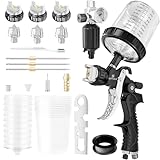
This kit is built around convenience. The listing names three nozzle sizes (1.4, 1.7 and 2 mm), an air compressor regulator and ten 600 cc mixing cups with lids. That cup count matters in furniture work, where a single project can involve a wash coat, stain, sealer and two topcoats. Mixing each product in its own cup keeps leftovers sealed and ready for the next session.
- Type: HVLP air spray gun
- Nozzles: 1.4, 1.7 and 2 mm
- Regulator: air compressor regulator included per listing
- Cups: ten 600 cc mixing cups with lids
- Marketed for automotive and general painting; confirm feed type on the listing
The multi-cup approach also helps with consistency. Mix a full batch of topcoat once, strain it through a paper cone filter into a cup, and snap on the lid between coats so the remainder does not skin over. Label each lid with the product and thinning ratio so you do not grab the wrong one. The 2 mm nozzle is useful for primer or latex paint on cabinet boxes, while the 1.4 mm tip is the one to use for clear finish on a tabletop. Because the kit is marketed broadly, give it a scrap-board trial pass and adjust fluid, air and fan controls before you spray a real piece.
Pros
- Plenty of cups for multi-step finishing schedules
- Three nozzles cover thin finish through primer
Cons
- Extra cups do not improve atomization quality
- Marketing leans automotive; adjust your viscosity for wood finishes
Next to the REFINE kit, it offers more cups but a slightly narrower nozzle spread, so it suits people who value organization over range.
3. 1000W Electric HVLP Sprayer – Best for Painting Furniture Without a Compressor

This is the outlier: an electric sprayer, so there is no hose, compressor or regulator to set up. The listing names a 1400 ml container, four copper nozzles, three spray patterns and adjustable flow control. That is a good fit for a weekend painter refinishing a dresser or bookcase with paint, where speed and simple setup matter more than a glass-smooth clear coat. Fine-furniture lacquer and catalyzed finishes are better handled by an air-fed gun.
- Type: electric sprayer, 1000W motor
- Container: 1400 ml
- Nozzles: four copper nozzles
- Patterns: three spray patterns, adjustable flow
- No compressor required; listing mentions easy cleaning
A few practical points apply to any electric unit. Strain every batch of paint, because the small nozzles clog on dried bits. Thin only as far as the paint maker allows, since electric sprayers are often more sensitive to viscosity than air guns. Mask hardware, lay drop cloths, and expect more overspray mist than a tuned air gun would produce on a large flat surface. Cleanup is normally quick for water-based paints if you flush immediately, but follow the included instructions and disconnect power before opening anything. It is a sensible tool for painted dressers, shelving and kids’ furniture, less so for a clear coat on a showpiece table.
Pros
- Simple setup, no air supply needed
- Large container for tabletops and cabinet runs
Cons
- Fine atomization is usually coarser than an air-fed gun
- Heavier handling over long sessions
Compared with the air-fed guns, trade finish quality for convenience; the closest alternative is the InoKraft D1 if you want faster cleanup but already own a compressor.
4. REFINE RS8808G HVLP Kit – Best All-Round Furniture Gun

The RS8808G is the pick for most readers. The listing names 1.4, 1.8 and 2.0 mm nozzles, an air regulator, and it explicitly includes furniture among its target jobs. A 1.4 mm nozzle handles lacquer, shellac and thin water-based clear coats, the 1.8 mm tip fits waterborne poly and sanding sealer, and the 2.0 mm tip handles primer and thicker paint.
- Type: HVLP air spray gun kit
- Nozzles: 1.4, 1.8 and 2.0 mm
- Regulator: air regulator included per listing
- Model: RS8808G
- Marketed for cars, furniture and household painting
For a typical project such as a painted-and-glazed hutch, you could shoot primer with the 2.0 mm tip, switch to the 1.8 mm for color, and finish with the 1.4 mm tip and a clear topcoat, all without buying a second gun. That workflow is the reason this kit leads the list. Remember to confirm cup capacity and air consumption on the product page, since the listing name does not state them, and make sure your compressor can supply the volume at working pressure before you commit.
Pros
- Nozzle spread maps cleanly to furniture finishing stages
- Regulator lets you set cap pressure properly
Cons
- No 2.5 mm option for very thick coatings
- Cup capacity and air consumption: confirm on listing
It sits between the 10-cup kit, which has more cups, and the four-nozzle kit, which has more nozzle range, and gives the most balanced mix of both.
5. HVLP Kit with 1.4/1.7/2.0/2.5 mm Nozzles – Best for Mixed Jobs from Clear Coat to Thick Primer

With four nozzle sizes, this gravity-feed kit has the widest range of the air-fed guns here. The 1.4 mm nozzle handles clear finishes, 1.7 and 2.0 mm cover most paints, and the 2.5 mm nozzle is meant for heavier primers and high-build coatings. The listing is marketed for cars and walls, but gravity-feed HVLP guns follow the same principles on a chair or a bookshelf.
- Type: HVLP gravity-feed spray gun kit
- Nozzles: 1.4, 1.7, 2.0 and 2.5 mm
- Marketed for car paint and wall painting
- Gravity-feed cup mounted on top
- Regulator and cup volume: confirm on listing
The extra 2.5 mm nozzle is most useful if you also plan to spray thick latex or high-build primer on walls, fences or cabinet boxes. For furniture alone you will live in the 1.4 and 1.7 mm tips. Gravity-feed design is a benefit for small projects because the last few ounces in the cup still spray cleanly, so you waste less expensive finish. Check the regulator situation, check the fittings (a common quarter-inch NPT inlet is typical for air tools, but confirm), and plan to buy an inline filter if you do not already have one.
Pros
- Widest nozzle range of the air-fed guns
- Gravity feed uses less air and wastes less material
Cons
- 2.5 mm tip is rarely needed for furniture
- Marketing is not furniture-specific
Versus the REFINE kit, you get one extra nozzle but no listed regulator, so check what is in the box before relying on it.
6. InoKraft D1 LVLP Kit – Best for Disposable-Cup, Quick-Cleanup Finishing
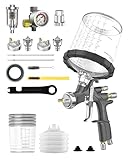
The D1 is an LVLP kit that comes with 22 ounce disposable paint cups, which is its main appeal. You mix a color or finish in a cup, snap it on, spray, and discard the cup rather than scrubbing a rigid pot. The listing names 1.3, 1.5 and 1.7 mm nozzles and markets it for cars and house DIY painting. It is LVLP rather than HVLP, so treat it as a runner-up for this topic.
- Type: LVLP spray gun kit
- Nozzles: 1.3, 1.5 and 1.7 mm
- Cups: 22 ounce disposable paint cups
- Marketed for car and house DIY painting
- Designed for easy use per listing
The disposable-cup approach really pays off on furniture jobs with many small colors or sheens, such as a set of chairs finished in several stains. You can mix small quantities, skip solvent flushing between colors, and keep leftover finish sealed in a spare cup. Disposable liners also reduce the amount of solvent you wash down the drain. The trade-off is the need to keep buying replacement cups and some limits on the angles you can spray from, which is worth keeping in mind for undersides and inside cabinets. Confirm the cup adapter and what comes in the box on the listing.
Pros
- Disposable cups make color changes quick
- Lower air volume suits smaller compressors
Cons
- Replacement cups must be bought regularly
- Not a true HVLP design
Compared with the AEROPRO R500, the other LVLP gun, this one trades a conventional pot for cleanup speed.
Specs Compared
| Gun | Type | Nozzles | Feed / cup | Air regulator |
|---|---|---|---|---|
| AEROPRO R500 (A610) | LVLP | 1.3 / 1.5 / 1.7 mm | Gravity, cup size: confirm on listing | Confirm on listing |
| HVLP Air Spray Gun, 10 cups | HVLP | 1.4 / 1.7 / 2 mm | Ten 600 cc mixing cups | Listed |
| 1000W Electric HVLP | Electric HVLP | Four copper nozzles | 1400 ml container | Not applicable (no compressor) |
| REFINE RS8808G | HVLP | 1.4 / 1.8 / 2.0 mm | Gravity, cup size: confirm on listing | Listed |
| HVLP Kit, four nozzles | HVLP | 1.4 / 1.7 / 2.0 / 2.5 mm | Gravity, cup size: confirm on listing | Confirm on listing |
| InoKraft D1 | LVLP | 1.3 / 1.5 / 1.7 mm | 22 oz disposable cups | Confirm on listing |
How We Chose These
We started from the six listings supplied for this topic and read each product name and specification field closely: gun type, nozzle sizes, cup arrangement and whether a regulator is named. We then compared them against general finishing guidance from manufacturer and coatings documentation, giving more weight to nozzle sizes that match furniture finishes and to anything that helps control air pressure. Where a listing did not state a value, we say so rather than guess. This is a desk-research shortlist, so it says nothing about real-world spray quality; confirm details on each product page.
What to Look For
HVLP, LVLP and Electric: What the Letters Mean
HVLP guns run at high air volume and low pressure. The common regulatory standard is a maximum of about 10 psi at the air cap, or a proven transfer efficiency of roughly 65 percent or better, meaning most of the material ends up on the work. Note that cap pressure is lower than the inlet pressure you set at the gun, so follow the gun maker’s inlet figure. That is why HVLP became the standard in cabinet and furniture shops. LVLP guns use less air volume at a similar cap pressure, so they run on smaller compressors; the trade-off is a somewhat slower application. Electric sprayers use a motor-driven pump or turbine, so you skip the compressor but typically get a coarser spray.
Matching Nozzle Size to the Finish
Nozzle size does most of the work. A reasonable rule of thumb, which varies a little between sources and coatings: roughly 1.2 to 1.4 mm for lacquer, shellac, stain and thin clear coats; 1.5 to 1.8 mm for waterborne polyurethane and sanding sealer; 1.8 to 2.0 mm for latex paint and primer; 2.5 mm only for heavy, high-build coatings. The coating’s technical data sheet has the final word. A finish that is too thick for the nozzle will orange-peel or spit, and one that is too thin will run. Always follow the finish maker’s thinning instructions and use a viscosity cup if the label gives a flow time.
Air Supply: CFM and Regulation
A gun is only as good as the air behind it. Compare the air consumption the gun’s maker lists with the CFM your compressor delivers at the working pressure, not its peak number. As a rule, a gun that needs 10 CFM will starve on a compressor that makes 5. A regulator at the gun inlet, or a gauge on the gun itself, is more useful than one at the compressor because hose length drops pressure. Also fit a moisture trap and filter; water or oil in the air shows up as fisheyes in clear finishes.
Controls That Matter on Furniture
Every gun here has some combination of fluid control, fan (pattern) control and an air inlet. The fluid knob limits how far the needle opens, so it sets how much finish you put down per pass. The fan control changes the pattern from round to a wide oval. For tabletops, set a wide vertical or horizontal fan and move across the surface in straight, overlapping passes. For chair spindles and carved parts, narrow the pattern so you do not waste material. Adjust one control at a time on a cardboard or scrap board, because changing air, fluid and fan together makes problems hard to trace.
Cups, Cleanup and Safety
Gravity-feed cups sit on top and use less air with less material left behind. Disposable cup systems save cleanup time but add a recurring supply. Whatever you buy, flush the gun right after use with the correct solvent or water, and clean the nozzle and needle seat with the right tools rather than a nail.
Safety matters more than gun choice. Solvent-based finishes need an organic-vapor respirator with fitted cartridges, not a dust mask. Spray in ventilated space away from pilot lights, heaters and sparks, because atomized solvents are flammable. Dispose of finish-soaked rags flat or in water, as some finishes can heat up as they cure.
A Worked Example
Say you are finishing a 4-by-2-foot oak desk top with waterborne poly. Use a 1.4 to 1.8 mm nozzle, set the gun inlet pressure to the maker’s recommendation, hold the gun about 6 to 8 inches away, and overlap passes by about half. Work a trial pass on a scrap board to check the pattern. Two to three thin coats with a light sand between coats will look better than one heavy coat, and a 1.4 or 1.8 mm tip on the RS8808G fits that job.
Questions
Is an HVLP gun good enough for fine furniture finishes?
Yes. Many professional shops use HVLP for lacquer and waterborne topcoats because it lays finish smoothly with little overspray. Results still depend on correct thinning, nozzle size and technique.
What nozzle size should I use for furniture?
For clear coats, lacquer and stain, start around 1.3 to 1.4 mm. For waterborne poly or sealer, 1.5 to 1.8 mm is common, and paint or primer typically wants 1.8 to 2.0 mm.
Do I need a big compressor for an HVLP gun?
Often yes. HVLP guns can need more air than hobby compressors provide, and LVLP guns exist partly to solve that. Check the gun’s air consumption and compare it with your compressor’s CFM at working pressure.
Can I use an electric sprayer instead of an air gun?
For paint on dressers, cabinets and shelves, an electric sprayer works well and saves the compressor setup. For glass-smooth clear coats on fine pieces, an air-fed gun usually gives finer atomization.
Can I spray stain with these guns?
Generally yes, using a small nozzle around 1.3 to 1.4 mm and thinned material as the stain maker allows. Wear a respirator and wipe or back-brush where the stain instructions call for it.
How do I clean a spray gun after finishing?
Flush with the solvent suited to your finish (water for waterborne, lacquer thinner or mineral spirits for solvent products), then wash the cup, nozzle and air cap. Never soak the whole gun if the maker advises against it, and keep rags out of enclosed trash.
Update History
- October 20, 2026 – Initial publication; product set drawn from current catalog listings.
- Check the product page for current specifications and availability before buying.
Sources
- Retailer listing titles and specification fields for the six guns discussed
- Published spray-finishing guides from wood-finishing trade and spray-equipment sources covering HVLP definitions, transfer efficiency and nozzle sizing
- South Coast AQMD HVLP definition, as summarized in those guides

0 Comments