Our Top Picks
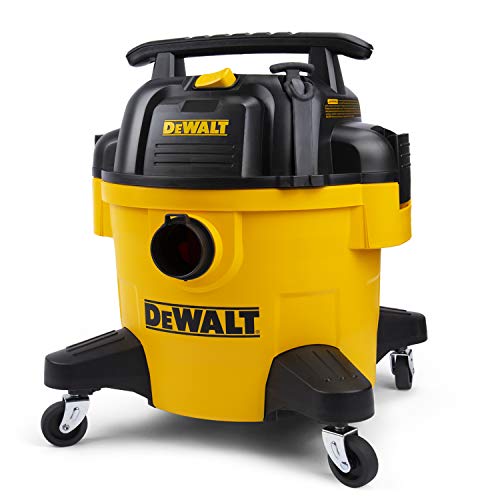
 Amazon Basics Wet Dry Shop Vacuum Cleaner4 gallon Shop, 3 HP12.4 x 12.4 x 18.15 Inches10 PoundsCheck on Amazon


What's inside
- Top 3 Picks
- Quick Comparison
- How We Chose
- 1. Stanley SL18116P 6 Gallon – Best Everyday Mid-Size
- 2. CRAFTSMAN CMXEVBE17250 2.5 Gallon – Best for Small Spills and Car Interiors
- 3. 4 Gallon Stainless Steel Shop Vacuum (Basics Line) – Best Compact Stainless-Tank Option
- 4. CRAFTSMAN CMXEVBE17595 16 Gallon – Best for Heavy-Duty Cleanup
- 5. CRAFTSMAN CMXEVBE17594 12 Gallon – Best for General Workshop Cleanup
- 6. VEVOR 5 Gallon 6.0 Peak HP – Best Portable 3-in-1 Vac and Blower
- 7. Vacmaster VOC507PF 5 Gallon – Best for Light-Duty Utility Cleanup
- 8. DEWALT DXV06P 6 Gallon Poly – Best Portable 3-in-1 With Blower
- 9. DEWALT DXV06PL 6 Gallon – Best 6-Gallon Kit With Accessories
- 10. DEWALT DXV12P 12 Gallon – Best Overall for a One- or Two-Car Garage
- How to Choose
- Safety With Wet and Dry Shop Vacuums
- Maintenance
- Frequently Asked Questions
- Our Recommendation by Situation
- Top 3 Picks
- Quick Comparison
- How We Chose
- 1. Stanley SL18116P 6 Gallon – Best Everyday Mid-Size
- 2. CRAFTSMAN CMXEVBE17250 2.5 Gallon – Best for Small Spills and Car Interiors
- 3. 4 Gallon Stainless Steel Shop Vacuum (Basics Line) – Best Compact Stainless-Tank Option
- 4. CRAFTSMAN CMXEVBE17595 16 Gallon – Best for Heavy-Duty Cleanup
- 5. CRAFTSMAN CMXEVBE17594 12 Gallon – Best for General Workshop Cleanup
- 6. VEVOR 5 Gallon 6.0 Peak HP – Best Portable 3-in-1 Vac and Blower
- 7. Vacmaster VOC507PF 5 Gallon – Best for Light-Duty Utility Cleanup
- 8. DEWALT DXV06P 6 Gallon Poly – Best Portable 3-in-1 With Blower
- 9. DEWALT DXV06PL 6 Gallon – Best 6-Gallon Kit With Accessories
- 10. DEWALT DXV12P 12 Gallon – Best Overall for a One- or Two-Car Garage
- How to Choose
- Safety With Wet and Dry Shop Vacuums
- Maintenance
- Frequently Asked Questions
- Our Recommendation by Situation
As an Amazon Associate I earn from qualifying purchases. This post may contain affiliate links at no extra cost to you.
The DEWALT 12 Gallon 5.5 HP Poly Wet/Dry Vacuum (DXV12P) is the best overall wet dry shop vacuum for garage cleanup in this guide. Its listing names a 12-gallon poly tank and a 5.5 peak horsepower motor, and published product details add a 2-1/2 inch by 7 foot hose and a 20 foot cord, which is the combination that matters in a garage: a wide hose that swallows sawdust, leaves, gravel and spilled screws without clogging, a cord long enough to reach most of a two-car bay from one outlet, and a tank big enough to avoid emptying every few minutes. If your garage is small and you need something you can hang on a wall, the Stanley 6-gallon or DEWALT 6-gallon models are easier to store, and if you routinely clean up big spills or construction debris, the CRAFTSMAN 16-gallon is the heavy-duty option. The comparison below covers ten shop vacs from 2.5 to 16 gallons, with notes on hose diameter, cord length, filtration and the safety rules that apply to wet pickup.
Top 3 Picks
Best overall: DEWALT 12 Gallon 5.5 HP Poly Wet/Dry Vacuum (DXV12P). A mid-large poly tank, a wide 2-1/2 inch hose, a long cord, a built-in drain and a blower port. It suits a one- or two-car garage that sees sawdust, tracked-in dirt and the occasional spill.
Best for heavy-duty cleanup: CRAFTSMAN 16 Gallon 6.5 Peak HP (CMXEVBE17595). The largest tank in the list, a 2-1/2 inch locking Dual-Flex hose and a high airflow figure in published specifications. It suits workshops, renovation debris and flood cleanup.
Best everyday mid-size: Stanley SL18116P 6 Gallon 4 HP. A compact poly tank on casters with a rear blower port and onboard accessory storage. It suits garages where you want something you can lift onto a shelf between uses.
Quick Comparison
| Product | Best for | Key specs (per listing) |
|---|---|---|
| Stanley SL18116P | Everyday garage cleanup, easy storage | 6 gal, 4 peak HP, poly tank, about 6 ft x 1-1/4 in hose, 10 ft cord, blower port |
| CRAFTSMAN CMXEVBE17250 | Small spills and car interiors | 2.5 gal, listed 2.5 peak HP, filter bag, hose and attachments, light and portable |
| 4 Gallon Stainless Steel Wet Dry Shop Vacuum (Basics line) | Compact stainless-tank vacuum | 4 gal, 3 HP, stainless steel tank, about 6 ft hose, 8 ft cord |
| CRAFTSMAN CMXEVBE17595 | Big messes and heavy debris | 16 gal, 6.5 peak HP, 2-1/2 in x 7 ft hose, 20 ft cord, drain, blower port |
| CRAFTSMAN CMXEVBE17594 | General workshop cleanup | 12 gal, 6.0 peak HP, 2-1/2 in x 7 ft hose, 20 ft cord, drain |
| VEVOR 5 Gallon 6.0 Peak HP | Portable 3-in-1 vac and blower | 5 gal, wet/dry/blower, filter, hose and attachments, lightweight |
| Vacmaster VOC507PF | Light-duty utility cleanup | 5 gal, 3 peak HP, polypropylene tank, about 6 ft hose, blower |
| DEWALT DXV06P | Portable 3-in-1 with blower | 6 gal, 4 HP, poly tank, wet/dry/blower, rubberized casters |
| DEWALT DXV06PL | 6-gallon kit with hose and accessories | 6 gal, 4.0 HP, poly tank, hose and accessories included |
| DEWALT DXV12P | Best overall for a 1-2 car garage | 12 gal, 5.5 HP, poly tank, 2-1/2 in x 7 ft hose, 20 ft cord, drain, blower port |
How We Chose
This guide is research-based. We read each listing name, the manufacturers’ published specifications, and general knowledge of how wet dry vacuums are built, then ranked the models on the criteria that decide garage performance: tank capacity, hose diameter and length, cord length, motor rating expressed in amps or airflow where the listing provides them, wet and dry filtration, blower function, drain, casters, weight and storage. We treated peak horsepower as a marketing class rather than a measure of actual power, because it describes a motor’s brief startup output and not what it delivers while running, and we gave more weight to amps, airflow and hose diameter. We did not run our own trials and we do not claim to own these vacuums. Where retailer pages disagree on weight, airflow or cord length, we describe the range and tell you to confirm on the product page or in the manual. We also considered how easy each model is to store in a typical garage.
1. Stanley SL18116P 6 Gallon – Best Everyday Mid-Size
As an Amazon Associate we earn from qualifying purchases at no extra cost to you.

The Stanley SL18116P is a 6-gallon, 4 peak horsepower wet dry vacuum with a black poly tank. Published specifications describe a 1-1/4 inch hose of roughly 6 feet, a 10 foot cord with a cord wrap, a rear blower port, onboard accessory storage and four swivel casters. It suits garage owners who want a general-purpose vacuum that is small enough to carry down steps and store on a shelf, yet large enough for a weekend of cleanup.
Key specs
- 6-gallon polypropylene tank.
- 4 peak HP; electrical ratings around 120 V and 8 A on retailer pages.
- About 85 CFM airflow in published listings.
- Hose around 1-1/4 inches by 6 feet; cord 10 feet.
- Weight listed near 13 to 15 pounds, depending on the source.
The size is its advantage. A 6-gallon tank is large enough to swallow the contents of a dustpan and a small spill without constant emptying, but small enough to carry in one hand. It rolls on casters across smooth concrete and takes a standard dust bag, foam filter or cartridge. A 1-1/4 inch hose is typical for this class; it handles dust and small debris but can clog with larger items such as leaves and wood chips, so you may need to pre-clear big pieces by hand.
Because some retailer pages list different amp ratings and hose lengths for the same model, confirm these on the label or in the manual before you plan around them. The unit is intended as a general-purpose household and garage tool, not as a contractor-grade machine.
A practical way to size this class of vacuum is to think in loads. A 6-gallon tank holds roughly the contents of a large kitchen trash can, so after a weekend of sanding or a fall leaf sweep it will typically need emptying once or twice. Emptying is quick: unlatch the lid, lift out the filter, and tip the tank into a bin. Keep a spare dust bag on hand, since bags make fine-dust cleanups less messy and help protect the filter. If you keep the vacuum on a wall hook, make sure the hook is anchored into a stud, because a 6-gallon unit with its accessories adds up in weight.
Pros
- Compact enough to store on a shelf or hook.
- Rear blower port and onboard accessory storage.
- Casters make it easy to move.
- Fits a typical garage routine of sweeping and wiping up spills.
Cons
- 1-1/4 inch hose can clog with larger debris.
- 6-gallon tank fills quickly with a big spill.
- Cord length is moderate; you may need an extension cord.
How it compares
The DEWALT DXV06P and DXV06PL are the nearest competitors, matching its tank size and peak horsepower rating. The DEWALT models list a larger hose diameter in some product details and add a rubberized caster design, while the Stanley is the simpler, more traditional machine. Against the 12-gallon models, it gives up capacity and hose width in exchange for portability. Choose it if storage space is your main constraint.
2. CRAFTSMAN CMXEVBE17250 2.5 Gallon – Best for Small Spills and Car Interiors

The CRAFTSMAN CMXEVBE17250 is the smallest vacuum in the list: a 2.5-gallon portable wet and dry vac with a filter bag, hose and attachments. The title lists 2.5 peak horsepower, although the maker and several retailers list a lower figure of 1.75 peak HP, so treat horsepower as unverified and check the amp rating on the product page. Published details describe a 1-1/4 inch by about 5 foot hose, a 10 foot cord, a blower port and a weight near 7 pounds.
Key specs
- 2.5-gallon polypropylene tank.
- Peak horsepower listed differently by different sources.
- Roughly 3 A electrical rating and about 50 CFM airflow on retailer pages.
- About 5 foot hose and 10 foot cord.
- Filter bag, hose and attachments included.
At this size, a vacuum is a convenience tool. It lives in the corner of the garage and comes out for the car mats, the workbench top, a spilled bag of potting soil or a puddle from a leaking cooler. The small tank means it is not the right machine for a flooded floor, because it will fill and shut off or overflow, but for the common little messes it is quick to deploy and quick to empty.
Weight is the real selling point. At roughly seven pounds, it can be carried in one hand, set on a car seat or hung from a hook. The tradeoff is suction and capacity, which are far more modest than in the 12- and 16-gallon models.
Because it is small, a few habits help it perform. Empty it after every use so the filter does not clog, and tap the filter or swap the bag when suction drops. Keep the attachments in a bin next to the vacuum, because the narrow crevice tool is what makes it useful for seat seams and workbench corners. For wet spills, use it only if the product page confirms wet pickup with the correct filter or foam sleeve installed, and stop before the tank fills, since a small tank reaches its limit sooner than you might expect.
Pros
- Very light and easy to store.
- Well suited to car interiors and workbench cleanup.
- Includes a filter bag and basic attachments.
- Blower port for clearing dust from corners.
Cons
- Small tank fills fast.
- Lower airflow than larger models.
- Listings disagree about horsepower, so verify specifications.
How it compares
The 4-gallon stainless model and the VEVOR 5-gallon are the closest in size and portability. This CRAFTSMAN is the lightest of the three. If your cleanup is mostly small and frequent, it is the most convenient, but for a garage with regular heavy messes, step up to the 6- or 12-gallon models.
3. 4 Gallon Stainless Steel Shop Vacuum (Basics Line) – Best Compact Stainless-Tank Option

This Basics-line wet dry shop vacuum is a 4-gallon, 3 HP model with a stainless steel tank in grey and black. Published specifications describe a locking hose of about 6 feet by 1-1/4 inches, an 8 foot cord with a cord wrap, about 960 watts at 120 volts, a weight around 10 pounds, and accessories such as a cloth filter, a foam wet filter, extension wands, a floor nozzle, a utility nozzle and a crevice tool. It suits small garages and workshops where a metal tank is a plus.
Key specs
- 4-gallon stainless steel tank.
- 3 HP rating; roughly 960 watts at 120 volts.
- About 6 foot by 1-1/4 inch locking hose.
- About 8 foot cord with a cord wrap.
- Four wheels; a cloth filter, foam filter and attachments listed.
A stainless tank resists dents and does not hold odors in the way some plastics can. It also feels solid on a concrete floor. The trade-off is that metal tanks conduct noise, so some users find them louder than poly tanks. At 4 gallons, the capacity sits between the 2.5-gallon and the 5- and 6-gallon units, which is a reasonable fit for sweeping up after a project, wiping up a spill or cleaning a car.
The cord is the shortest in the list. Some users report that an extension cord is necessary for reaching the far side of a garage, so plan for a properly rated cord (see the safety section below) and avoid running the vacuum on a long, thin household extension. Dimensions differ between regional product pages, so verify them if shelf space is tight.
Think of it as the machine you use for the end-of-weekend tidy: the garage floor after a project, the corner where leaves collect, the car trunk after a trip to the hardware store. Its stainless tank is easy to wipe clean, and a metal drum does not hold smells the way some plastics can after a wet spill. If you share the vacuum with family members, the lightweight body and four wheels make it easy for anyone to move, and the onboard storage keeps the attachments from wandering around the garage.
Pros
- Stainless tank looks tidy and resists dents.
- Includes wet and dry filters and a good accessory set.
- Lightweight for its capacity.
Cons
- Short cord limits reach.
- Smaller capacity than the 6-gallon class.
- Metal tank can sound louder in use.
How it compares
Against the Vacmaster and VEVOR, its stainless construction is the standout, while those models offer a larger 5-gallon tank in poly. Against the Stanley and DEWALT 6-gallon units, it is lighter but holds less. It is a reasonable pick for a one-car garage with occasional use.
4. CRAFTSMAN CMXEVBE17595 16 Gallon – Best for Heavy-Duty Cleanup

The CRAFTSMAN CMXEVBE17595 is the largest vacuum here: 16 gallons, 6.5 peak horsepower, with a filter, dust bag, hose and attachments. Published details list a 2-1/2 inch by 7 foot locking Dual-Flex hose, a cord of about 20 feet, a built-in drain, a rear blower port, onboard hose and cord storage, a 12 amp rating and a 3-year limited warranty. It suits workshops, renovation sites, and homeowners who face large spills or lots of debris.
Key specs
- 16-gallon tank.
- 6.5 peak HP; roughly 12 A on retailer pages.
- 2-1/2 inch by 7 foot locking Dual-Flex hose with 180-degree end swivel.
- About 20 foot cord.
- Airflow figures of roughly 185 to 190 CFM, with suction numbers that differ by source.
- Weight listed anywhere from about 20 to 26 pounds depending on the source.
The hose and drain are the real upgrades. A 2-1/2 inch hose takes in wood chips, leaves, gravel, and even small fasteners without clogging, which is a day-to-day problem in a workshop. The built-in drain makes emptying a wet tank easy: tilt, open, and let the water run out without lifting a full tank. At 16 gallons, you can run a long cleanup before you need to dump the tank.
Electrical draw is the thing to plan around. At roughly 12 amps, this vacuum can use most of a standard 15 amp household circuit by itself, so do not run it at the same time as a space heater, a compressor or another high-draw tool on the same circuit.
If you go this large, plan the storage before you buy. The footprint is wide enough that it will not slide neatly under a standard workbench, and a full tank is heavy, so use the drain and the casters instead of lifting. Keep the 20 foot cord coiled over the handle, and use the hose storage so the Dual-Flex hose does not kink while stored. For fine dust such as sanding residue, pair the vacuum with a filter and bag rated for it, because a big motor moves a lot of air and can spread fine particles if the filter is not up to the job.
Because it is the largest unit, it is also the one where a dolly or a wide-wheeled base pays off. If you plan to move it up steps or into a truck, empty it first and use the handle on the lid and the cord wrap as grips. Keep the filter dry between uses, and replace the dust bag as soon as it is about two-thirds full.
Pros
- Largest capacity in the list.
- Wide, flexible hose resists clogs.
- Built-in drain and blower port.
- Long cord reaches across a garage bay.
Cons
- Bulkier and harder to store.
- Heavy when full.
- High amp draw requires circuit awareness.
How it compares
Its 12-gallon sibling, the CMXEVBE17594, shares the hose, cord and drain with a smaller tank. The DEWALT DXV12P is the closest competitor with a 12-gallon tank. Choose the 16-gallon if you routinely handle big volumes; otherwise the 12-gallon models are easier to move and store.
5. CRAFTSMAN CMXEVBE17594 12 Gallon – Best for General Workshop Cleanup

The CRAFTSMAN CMXEVBE17594 is a 12-gallon, 6.0 peak horsepower wet dry vacuum described as a general-purpose model with a filter, dust bag, hose and attachments. Published specifications list a 7 foot by 2-1/2 inch Dual-Flex hose, a 20 foot cord that wraps around the handle, about 10.5 amps, airflow near 160 CFM, a built-in drain and a blower port, plus a weight around 24 pounds and a 3-year limited warranty.
Key specs
- 12-gallon tank on casters.
- 6.0 peak HP; roughly 10.5 A in retailer details.
- 2-1/2 inch by 7 foot locking hose.
- 20 foot cord with a wrap on the handle.
- Built-in drain and blower port; onboard accessory storage.
The 12-gallon class is the sweet spot for a garage. It holds enough to clean up after a project without constant emptying, but it fits in a corner and rolls easily. With the same wide hose and long cord as the 16-gallon sibling, it behaves like a smaller version of the heavy-duty model, with a lower amp draw that is easier on shared circuits.
The accessory set includes extension wands, a utility nozzle, a car nozzle and a wet nozzle, which covers most garage tasks. The Qwik Lock filter system is designed for relatively quick filter swaps, but as with every shop vac, make sure the filter you use matches the job: wet pickup and fine dust require different media.
Where this model shines is flexibility. With the wet nozzle, car nozzle, utility nozzle and two wands, you can clean a floor, vacuum a car and pick up a puddle on the same day. The drain makes the wet jobs less of a chore, and the blower port helps clear leaves from a garage door track or dust from a workbench. Pair it with a bag for fine dust and a foam sleeve for water, and keep spare filters on hand so you can swap them as the task changes.
Compared with a small shop vac, the 12-gallon size changes how you work. You can vacuum an entire garage floor, a workbench and a car without stopping, and you can clean a larger spill in one or two passes. The extra mass also makes the unit stable when you pull it by the hose, so it is less likely to tip over than a light 5-gallon unit.
Pros
- Big enough for workshop use, small enough to store.
- Wide hose and long cord.
- Built-in drain and blower port.
Cons
- Not as portable as 6-gallon models.
- Peak horsepower is a marketing rating.
- Louder in use than smaller units.
How it compares
Against the DEWALT DXV12P, it offers a similar 12-gallon size and hose width, with a slightly lower amp draw. The DEWALT lists a higher horsepower figure and a poly tank with a washable cartridge filter. Choose the CRAFTSMAN if you prefer its filter system and its warranty terms, or the DEWALT if you prefer that maker’s accessories.
6. VEVOR 5 Gallon 6.0 Peak HP – Best Portable 3-in-1 Vac and Blower

The VEVOR is a 5-gallon portable shop vacuum and blower, rated at 6.0 peak HP, with a filter, hose and attachments for home and car cleaning. Published product details list around 1,200 watts, about 60 CFM, a hose near 6 feet by 1.26 inches, a 21-foot cleaning reach, swivel wheels, a water-resistant switch, three filter types for floors, fine dust and liquids, a weight near 9 pounds and a 2-year warranty. It suits homeowners who want light weight and a built-in blower.
Key specs
- 5-gallon tank in a portable body.
- Wet, dry and blower functions.
- Roughly 1,200 watts; the peak HP rating is a marketing number.
- About 60 CFM in published specifications.
- Three filters: floor and carpet, fine dust, and liquids.
- About 9 pounds net weight.
The wattage is a more honest number than the horsepower rating, because it describes the electrical input. At 1,200 watts and 120 volts, the vacuum draws about 10 amps, which is more than the amp ratings of the smaller 5-gallon competitors. Airflow around 60 CFM places it in the same range as the Vacmaster, so do not expect heavy-duty suction despite the 6.0 peak HP label.
What makes it useful is the weight and the filters. At roughly nine pounds, it is among the lightest 5-gallon vacs, and having separate filters for floors, fine dust and liquids helps you match the media to the job. Always change the filter before switching from dry to wet pickup, and follow the manual on foam sleeves.
A few cautions help you get the most from a lighter vacuum. Do not assume the peak horsepower number tells you how it will perform on heavy debris; use the wattage and airflow, and expect good results on dust and light spills rather than on gravel and wet leaves. Fit the correct filter before switching between dry and wet use, rinse the washable filter and let it dry fully, and check that the lid latches seat firmly. Because the body is light, it can tip when pulled by the hose, so pull the vacuum by the handle, not the hose.
Pros
- Very light for a 5-gallon tank.
- Three filter types listed.
- Blower function and 21-foot cleaning reach.
Cons
- Peak HP label overstates the practical power.
- Narrower hose than the 12- and 16-gallon models.
- Shorter brand track record than the established tool makers.
How it compares
The Vacmaster VOC507PF is its closest rival, with the same tank size and similar airflow. The VEVOR emphasizes light weight and filter variety, while the Vacmaster is a more traditional utility vac. Against the DEWALT 6-gallon models, it holds less and is less proven, but it weighs less.
7. Vacmaster VOC507PF 5 Gallon – Best for Light-Duty Utility Cleanup
The Vacmaster VOC507PF is a 5-gallon, 3 peak HP utility wet dry vacuum in blue with a rugged polypropylene tank. The maker lists a 7 amp motor at 120 volts, about 65 CFM, 56 inches of water lift, a 1-1/4 inch by 6 foot hose, an 8 foot cord, a weight near 10 pounds, integrated hose and cord storage, a dust-sealed switch and a 2-year warranty. It suits light-duty use around the garage and home.
Key specs
- 5-gallon polypropylene tank.
- 7 A at 120 V; 3 peak HP.
- About 65 CFM and 56 inches of water lift per the maker’s figures.
- 1-1/4 inch by 6 foot hose; 8 foot cord (one retailer lists 10 feet).
- Blower function, wide-stance casters, integrated storage.
The 7 amp rating makes this vacuum easy on household circuits, which is useful in older garages with limited power. The 56 inch water lift figure suggests solid suction for a small machine, but remember that lift measures pressure, not volume, and airflow of 65 CFM is on the modest side. In practice, that is plenty for dust, pet hair, small spills and car mats, and less ideal for heavy debris.
The attachment set includes a floor nozzle, a combination utility nozzle, extension wands, a cloth filter, a foam filter and a dust bag. As with similar vacuums, one retailer page lists a cartridge filter and a different reach figure, so confirm which version you are looking at. The chart on some pages indicates no drain port, which means you tip the tank to empty it.
Light-duty does not mean low-value. For many garages, the vacuum’s job is to pick up grass clippings tracked in on shoes, dust from a workbench and the contents of a dustpan, and a 5-gallon machine does that without fuss. It also pairs well with a larger, more expensive unit as the quick-grab second vacuum, so that the big machine stays parked until it is needed. Remember to confirm the version you are looking at, because the maker’s page and retailer pages sometimes list slightly different filters and cord lengths.
Noise is worth a thought as well. Smaller poly-tank vacuums usually run at a high pitch, and if you work with the garage door closed, hearing protection is a good idea for longer jobs. Check the manual for guidance, and take breaks if you are vacuuming for an extended period.
Pros
- Low amp draw suits shared circuits.
- Integrated hose and cord storage.
- Lightweight with a balanced handle.
Cons
- Short cord.
- Narrow hose for heavy debris.
- No drain on some versions.
How it compares
The VEVOR matches its tank size, while the Stanley and DEWALT 6-gallon models add capacity and, in the DEWALT case, a larger hose in some details. The Vacmaster is the lowest-draw option here, which is its real advantage for a garage with a modest circuit.
8. DEWALT DXV06P 6 Gallon Poly – Best Portable 3-in-1 With Blower
The DEWALT DXV06P is a 6-gallon, 4 HP poly wet/dry vacuum with a blower function, described as a portable 3-in-1 with rubberized casters. Published details list a 1-7/8 inch by 7 foot hose, a 10 foot cord with a wrap, 120 volts and about 8 amps, a weight near 15 pounds, and a kit of extension wands, a cartridge filter, a dust bag and floor, utility and crevice nozzles.
Key specs
- 6-gallon poly tank.
- 4 peak HP, single-stage motor; about 8 A.
- Hose near 1-7/8 inches by 7 feet.
- 10 foot cord with cord wrap.
- Rubberized, non-marring casters and a blower port.
The hose is a quiet advantage. At about 1-7/8 inches in published details, it is wider than the 1-1/4 inch hoses on the Stanley and Vacmaster, which reduces clogging on garage debris such as sawdust, wood shavings and leaves. The casters are designed to avoid scuffing floors, which matters if your garage has an epoxy coating.
The cord is short for a garage, so an extension cord is likely. Use a properly rated cord, keep the connection off wet floors, and plug into a ground-fault protected outlet when picking up liquid.
The blower port is a surprisingly useful feature in a garage. Attach the hose to the exhaust and push dust out of corners, clear leaves from a door threshold, or blow sawdust off a table saw before vacuuming what is left. Wear eye protection, point the nozzle away from people and pets, and do not use the blower on loose, hazardous dust such as insulation fibers. The rubberized casters are another quiet detail: on a painted or epoxy-coated floor, hard plastic wheels can leave black marks, and softer ones help avoid them.
Another practical detail is the hose connection. A 1-7/8 inch hose with a friction fit or locking end is easier to attach and detach than a narrow snap-on hose, and it stays put when you pull on it. Check that the hose seats firmly in the inlet before you start, and inspect the hose for cracks or splits, since a leaking hose cuts suction. If you plan to store the vacuum in an unheated garage, coil the hose loosely to avoid cold-weather cracking.
Pros
- Wider hose than most 6-gallon vacs.
- Rubberized casters protect floors.
- Portable and has a blower port.
Cons
- Short cord.
- 6-gallon tank fills with large spills.
- Weight differs by source; confirm.
How it compares
Its sibling, the DXV06PL, shares the same capacity and rating and is described as a package with hose and accessories. Against the Stanley, it adds a wider hose and caster design. Against the 12-gallon DXV12P, it is smaller and more portable.
9. DEWALT DXV06PL 6 Gallon – Best 6-Gallon Kit With Accessories

The DEWALT DXV06PL is a 6-gallon, 4.0 HP poly wet/dry vacuum sold with a hose and accessories. Published details list a polypropylene tank, a 1-7/8 inch by 7 foot hose, a 10 foot cord (about 17 feet of reach), airflow near 80 CFM, around 50 inches of water lift, four swiveling rubberized casters, a rear blower port and an inflation kit, with a weight near 15 pounds.
Key specs
- 6-gallon polypropylene tank.
- 4.0 peak HP.
- About 80 CFM and 50 inches of water lift in published details.
- 1-7/8 inch by 7 foot hose; 10 foot cord.
- Four swivel casters, rear blower port and an inflation kit.
It is essentially a close cousin of the DXV06P with a kit-style list of accessories, including an inflation kit for balls and small inflatables. That is a small but real extra in a garage, where air pump needles and bike tires are common. The blower port also helps blow dust off a workbench or out of a corner before vacuuming.
Because the two 6-gallon DEWALT listings overlap, compare the included accessories and any differences in the filter or nozzles on each product page before you choose. If both appear similar, either will serve the same purpose.
If you often inflate things, the inflation kit is a handy extra. Basketballs, pool toys and air mattresses can be filled using the blower function with the right adapter, though you should check the manual for instructions and never use the vacuum to inflate anything beyond its stated use. For most buyers, the main attraction is simply a well-known brand with a complete accessory set. The wider hose helps with garage debris, and the four swivel casters make it easy to pivot around tight corners and workbenches.
As with the other 6-gallon models, it works best as a quick-response tool. Keep it near the door where you can grab it after a muddy-boots moment or a spilled bag of fertilizer. For heavy wet jobs, switch to the larger models, because six gallons fill quickly and each trip to the drain slows you down. A good compromise is to keep this unit for daily upkeep and borrow or rent a larger vacuum for the rare flood or renovation.
Pros
- Includes accessories, including an inflation kit.
- Wider hose than many 6-gallon vacs.
- Four swivel casters and a blower port.
Cons
- Overlaps with the DXV06P.
- Short cord.
- Smaller than the 12-gallon models.
How it compares
Next to the DXV06P, the main difference is the kit contents and some listed specifications. Against the Stanley SL18116P, it matches capacity and adds the wider hose. Against the CRAFTSMAN 12-gallon, it is lighter and more compact but moves less debris per pass.
10. DEWALT DXV12P 12 Gallon – Best Overall for a One- or Two-Car Garage
The DEWALT DXV12P is a 12-gallon, 5.5 peak HP poly wet/dry vacuum with a hose and accessories. Published details list a 2-1/2 inch by 7 foot hose, a 20 foot cord, a washable cartridge filter, a built-in drain and blower port, an accessory storage bag, and a 3-year warranty. Airflow is reported near 105 to 110 CFM by the maker’s sheets, with water lift and weight figures varying by source.
Key specs
- 12-gallon poly tank.
- 5.5 peak HP; amperage around 8 to 10 A depending on source.
- 2-1/2 inch by 7 foot hose.
- 20 foot cord.
- Washable cartridge filter, drain and blower port.
- Weight from about 23 to 28 pounds depending on the source.
The wide hose, long cord and drain make this the most garage-friendly configuration in the list. You can plug in near the door and reach the far wall, pick up a spill, and then drain the tank on the driveway. A quieter StealthSonic version exists, so if noise matters to you, check that the listing you are viewing is the standard model and read about the alternative.
A 12-gallon tank is a good fit for the most common garage jobs: after-project dust, fall leaves, a washing machine overflow or a puddle from a leaking cooler. It is heavy when full, so use the drain and the casters rather than lifting it.
One of the details worth confirming is which version of the DXV12P you are viewing, since DEWALT also sells a quieter variant with extra bags and a contractor kit. The standard model is typically described with a single filter bag and a washable cartridge filter. Keep a few disposable bags on hand for fine dust, rinse the cartridge filter when it is clogged and let it dry fully, and always switch to a foam sleeve or a no-filter configuration for wet pickup, following the manual. With a 20 foot cord and 7 foot hose, you get roughly 27 feet of reach from a single outlet.
Finally, think about what you will do with the blower port. Many people use it to clear garage floors, the driveway edge and workshop benches, and it works well on lightweight debris such as leaves and sawdust. Keep the exhaust clear of people and pets, and do not point it at open containers of fine powder.
Pros
- Wide hose and long cord.
- Built-in drain and blower port.
- Washable cartridge filter.
- Good balance of capacity and size.
Cons
- Louder than the quiet variants.
- Bulky for shelf storage.
- Specifications differ between retailer pages.
How it compares
The CRAFTSMAN 12-gallon is its nearest rival, with a similar hose and cord. The CRAFTSMAN 16-gallon is bigger, and the 6-gallon DEWALTs are smaller. For a typical garage, the DXV12P offers the best mix of features.
How to Choose
Garage cleanup has a few predictable tasks: sawdust and dirt, leaves and debris tracked in from outside, liquid spills, and the occasional water event. The right vacuum matches those tasks to tank size, hose diameter, cord length, filtration and storage space.
Tank size and the water-volume calculation
Capacity matters most with liquids. Suppose a washing machine overflow or a rainwater leak covers a two-car garage floor of 20 by 20 feet, or 400 square feet, with water an eighth of an inch deep. Convert 1/8 inch to 0.0104 feet, then multiply by 400 square feet to get about 4.2 cubic feet. At roughly 7.5 gallons per cubic foot, that is about 31 gallons. A 6-gallon vacuum would need about five emptying trips, a 12-gallon would need about three, and a 16-gallon would need two. A drain makes each trip faster, and for large spills, a floor squeegee that moves water to a drain can do most of the work before you vacuum the rest.
Hose diameter
A 1-1/4 inch hose is fine for dust and small spills but clogs on wood chips and leaves. A 1-7/8 inch hose is a good middle ground, and a 2-1/2 inch hose handles the widest range of debris. If you build or repair things, favor the wider hose.
Power: amps, airflow and the horsepower myth
Peak horsepower is a rating measured under unrealistic conditions, so use amps, watts and airflow to compare. A 15 amp household circuit supports about 12 amps of continuous load. A 10.5 amp vacuum leaves about 1.5 amps spare, which means you should not run a space heater or compressor on the same circuit at the same time. A 7 or 8 amp vacuum leaves more room. Airflow in CFM tells you how much air moves, and water lift tells you how hard it can pull, so a good vacuum balances both.
Decision matrix
| Your garage | Pick | Why |
|---|---|---|
| One-car, occasional use, tight storage | Stanley SL18116P or DEWALT DXV06P | Compact 6-gallon with blower |
| Two-car, woodworking or spills | DEWALT DXV12P | 12 gallon, wide hose, drain |
| Workshop or renovation debris | CRAFTSMAN 16-gallon | Largest tank, wide hose |
| Car interiors and tiny spills | CRAFTSMAN 2.5-gallon | Light and portable |
| Older garage with a weak circuit | Vacmaster VOC507PF | 7 A rating |
| Want a stainless tank | Basics-line 4-gallon stainless | Metal tank, compact |
| Want a light 5-gallon with blower | VEVOR 5-gallon | Light body and three filters |
Filters
Use the right filter for the job. Dry pickup uses a cartridge or bag filter, and wet pickup usually uses a foam sleeve or no paper filter at all. Never vacuum wet material with a paper filter installed, and do not pick up fine dust, such as drywall dust, with a standard filter, because it passes through and can clog the motor. For very fine dust, use a rated fine-dust or HEPA filter and a bag.
Understanding the specifications you will see
Listings use several numbers that are easy to confuse. Tank capacity in gallons is the volume of the container, but usable capacity is a little lower. Peak horsepower is a startup rating. Amps and watts describe real electrical draw. CFM is airflow, which determines how quickly the vacuum moves debris, and water lift (in inches) is suction strength, which determines how well it pulls through a long hose or lifts heavy material. A vacuum with a wide hose and a moderate motor can outperform a stronger motor on a narrow hose because less air is lost to friction. When two listings disagree on a figure, look for the manufacturer’s manual and trust that number.
Wet versus dry pickup in practice
For dry pickup, the filter is the key component. A cartridge filter handles general dust and debris, and a bag adds protection for fine dust. For wet pickup, remove the paper or cartridge filter unless the manual says otherwise and use a foam sleeve if provided. A float valve, where present, shuts the airflow off when the tank is full, and you should empty the tank immediately when it triggers. After wet use, wipe the tank, dry the filter, and leave the lid off so that moisture can escape.
Storage and mobility
Measure your space. A 16-gallon tank needs a floor footprint of about two feet by two feet, while a 6-gallon unit can hang on a wall hook or sit on a shelf. Casters help, but a tank that is full of water weighs a lot, so drain it before moving it.
Safety With Wet and Dry Shop Vacuums
Plug the vacuum into a ground-fault protected outlet, particularly for wet pickup, and keep the cord and plug off wet floors. Unplug the unit before emptying it, changing filters or clearing a clog. Do not use a shop vac to pick up gasoline, solvents, flammable liquids or their vapors, or hot ashes and embers, since the motor can ignite them. Never pick up water with the wrong filter installed, and if the tank is full, shut it off. Use a cord rated for the vacuum’s amperage, such as a 14-gauge or heavier extension cord for runs up to about 50 feet, and uncoil the cord fully so it does not overheat. Wear eye and ear protection when using the blower or running a loud motor.
Maintenance
Empty the tank after each job, rinse it after wet pickup, and let it dry with the lid off to prevent odor and mildew. Tap or rinse washable filters, replace dust bags when they are about two-thirds full, and inspect the hose for cracks. Store the hose coiled loosely, and keep the cord wrapped without tight kinks. A clean filter keeps suction up and the motor cool.
Frequently Asked Questions
What does peak horsepower mean on a shop vac?
It is the highest output a motor can reach for a moment during startup, not what it delivers while running. Compare amps, watts and airflow instead. Two vacuums with the same peak HP can perform very differently.
What size shop vac do I need for a garage?
A 6-gallon unit suits light tasks and small garages, a 12-gallon unit is the all-round choice for two-car garages and woodworking, and a 16-gallon unit suits heavy debris and large spills. Choose based on your largest typical mess.
Can I use a shop vac for fine dust like drywall dust?
Only with the right filtration. Standard filters let fine dust pass into the motor and the air. Use a filter rated for fine dust or a HEPA filter, along with a filter bag, and follow the manual.
Can I vacuum water with a shop vac?
Yes, if the vacuum is wet/dry rated, the correct filter or foam sleeve is installed, and the outlet is ground-fault protected. Stop when the tank is full, and empty it before it overflows.
Is a bigger hose better?
For debris, yes. A wider hose clogs less and moves more per pass, but it is also stiffer and heavier. For dust and light spills, a narrower hose is fine.
Why does my shop vac lose suction?
The usual causes are a clogged filter, a full bag or tank, a blocked hose or a loose lid. Clean or replace the filter, empty the tank and check the hose.
Do I need an extension cord?
If the cord does not reach, use a heavy-gauge, properly rated extension cord. Avoid thin household cords, which can overheat at the vacuum’s current draw.
Can a shop vac blow air?
Many models have a blower port. Connect the hose to the exhaust port to clear leaves and dust from corners, and wear eye protection.
Our Recommendation by Situation
For most garages, buy the DEWALT DXV12P. For heavy debris and big spills, choose the CRAFTSMAN 16-gallon. If space is tight, the Stanley SL18116P or the DEWALT 6-gallon models are easier to store. For car interiors, the CRAFTSMAN 2.5-gallon is the lightest choice, and if your circuit is limited, the Vacmaster has the lowest listed amp draw. Confirm hose length, cord length and filter type on the product page before you buy.

0 Comments