What's inside
As an Amazon Associate I earn from qualifying purchases. This post may contain affiliate links at no extra cost to you.
Power outage anxiety is specific. A fridge full of food, a sump pump that won’t run, a furnace cycling off in January. Standby generators solve this by detecting an outage in seconds and carrying your home’s load automatically — no extension cords, no going outside in the dark. The catch is that “best rated” means very different things depending on whether you need permanent whole-home coverage or a portable unit you store in the garage.
We compared published specs, listed prices, and aggregated owner feedback across eight generators that consistently appear in top-rated lists. The separation comes down to three things: how much load each unit can sustain without stalling, whether the controller supports remote monitoring, and whether the transfer switch is included or quietly adds hundreds to your real cost. In 2026 the gap between a good standby generator and a mediocre one is mostly visible in the small print.
As an Amazon Associate we earn from qualifying purchases at no extra cost to you.


Our Top Picks
 Westinghouse 14500 Peak Watt Dual Fuel Home Backup28.9 x 29.6 x 26.9 inches230 PoundsCheck on Amazon


Quick Picks
| Product | Best for | Price |
|---|---|---|
| Generac 22kW (Cellular) | Whole-home coverage with remote monitoring | $5,570.10 |
| Generac 18kW (Cellular) | Mid-size homes on a tighter budget | $5,039.10 |
| Generac 22kW (Transfer Switch & Cellular) | Bundled installation value | $6,506.10 |
| Generac 26kW (Cellular) | Large homes with high power demands | |
| Westinghouse 14500 Peak Dual Fuel | Dual-fuel flexibility without permanent install | $1,349 |
| Honeywell 18kW Standby | Quiet operation and brand reliability | $5,819 |
| Honeywell 14kW Standby | Smaller homes needing automatic backup | $4,859 |
| DuroStar DS13000MX | Lowest-cost portable backup | $899 |
How We Picked
Four criteria drove our shortlist. First, wattage headroom: a generator sized exactly to your running load will stall the moment a compressor kicks in, so we prioritized units with meaningful margin above typical home draw. Second, connectivity: cellular or Wi-Fi monitoring changes the ownership experience dramatically, especially for second homes or frequent travelers. Third, total installed cost: transfer switches, propane hookups, and electrical permits can add 30-40% to sticker price, so we flagged which listings bundle critical components. Fourth, fuel flexibility: dual-fuel portables give you options during extended outages when one supply runs dry.
The 8 Best Rated Standby Generators in 2026
Generac 22kW Whole Home Generator, Cellular Capability
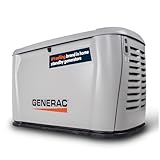
This is the sweet spot Generac model for most three-bedroom homes. At 22 kilowatts it carries central air, a well pump, refrigerator, and lights without the owner worrying about rolling blackouts inside the house.
- Cellular connectivity lets you check status and fault codes from your phone without visiting the unit.
- Generac’s dealer network is the deepest in residential standby, which means faster service if something breaks.
- Transfer switch is sold separately, so budget another few hundred before installation.
Skip this if your home already has a compatible Generac transfer switch; you’ll pay more than the bundled option below. Also skip if your peak load exceeds 18kW — go bigger instead of straining the engine.
Generac 18kW Whole Home Generator, Cellular Capability
The 18kW is the value play in Generac’s standby line. For homes that run window units or a single HVAC system, it covers the essentials without the premium of the 22kW model.
- Price sits noticeably below the 22kW variant while retaining the same controller and connectivity.
- Propane consumption is lower, which matters in regions where fuel deliveries add up over a long outage.
- Owners with multiple simultaneous large loads report voltage sag when compressors start together.
Skip this if you have electric heat, a second AC unit, or a pool pump. The 4kW gap between 18 and 22 is meaningful in practice, and once an outage hits you cannot resize the unit.
Generac 22kW Whole Home Generator, Transfer Switch & Cellular Capability
This listing bundles the automatic transfer switch, which is the single largest hidden cost in standby generator ownership. If you are starting from scratch, the package price is simpler than sourcing a switch separately.
- One purchase covers the generator and its most critical accessory, reducing compatibility risk.
- The included switch is Generac-branded, so warranty support flows through a single channel.
- Total price is the highest in this roundup; DIY-friendly buyers may overpay versus separate components.
Skip this if your electrician already quoted a specific transfer switch model. The premium here is for convenience, not performance.
Generac 26kW Whole Home Generator, Cellular Capability
For homes over 3,000 square feet or those with multiple HVAC zones, the 26kW is the only unit here that gives you true whole-home comfort without load management gymnastics.
- Highest continuous output in this list; runs electric dryers and EV chargers alongside normal household loads.
- Same cellular platform as the smaller models, so monitoring parity regardless of size.
- Physical footprint and propane demand are both meaningfully larger than the 22kW.
Skip this if your peak demand under 20kW. You’ll pay a premium in fuel and installation for headroom you never use.
Westinghouse 14500 Peak Watt Dual Fuel Home Backup Portable Generator
This is the strongest portable option in the roundup for buyers who cannot or will not install a permanent standby unit. The 14500 peak watt rating covers most essential home circuits through a manual transfer switch.
- Dual fuel (gasoline and propane) means you can keep running when one supply is scarce.
- Remote electric start eliminates the pull-cord hassle in cold weather or low light.
- Peak versus running wattage gap is significant; plan your loads against the running figure, not the headline number.
Skip this if you want automatic switchover in under ten seconds. No portable generator matches a true standby unit on response time.
Honeywell 18kW Whole Home Standby Generator
Honeywell’s standby line is quieter than Generac’s equivalents in owner reports, which matters if your unit sits near a bedroom or neighbor’s fence. The 18kW rating targets the same mid-size homes Generac aims at.
- Lower sound signature is the standout advantage; several owners specifically chose it for noise complaints.
- Build quality and finish get consistent praise in long-term ownership reviews.
- Honeywell’s dealer network is thinner than Generac’s, which can mean longer wait times for service calls.
Skip this if you prioritize a broad parts and service ecosystem. Generac’s network advantage is real and growing.
Honeywell 14kW Home Standby Generator
The 14kW is Honeywell’s entry point into whole-home standby. For apartments, townhomes, or small houses under 1,500 square feet, it handles the essentials without oversizing.
- Lowest-priced permanent standby option in this roundup; installation costs drop because propane line sizing is simpler.
- Compact footprint fits tight side-yard or rear-yard placements that larger units cannot.
- 14kW is a hard ceiling; one electric water heater plus an AC unit can exhaust the budget.
Skip this if your home has any electric-resistance heating or a central AC larger than two tons. The margin for error is slim.
DuroStar DS13000MX 13,000-Watt Dual Fuel Portable Generator
At under $900, the DuroStar is the cheapest way to put meaningful power behind a transfer switch. The 500cc engine and dual-fuel design make it a legitimate emergency workhorse.
- Price-to-capability ratio is the best in this list; no other unit comes close under $1,000.
- Remote electric start and transfer-switch readiness mean it slots into a semi-automatic setup.
- Fit and finish are utilitarian; owners report occasional QC inconsistencies compared to premium brands.
Skip this if you need silent operation or unattended auto-start capability. It is a manual-start, portable-class machine no matter how you configure it.
Buying Guide
Running Watts vs. Peak Watts: The Number That Actually Matters
Manufacturers advertise peak (surge) watts prominently because they look impressive on a label. Running watts are what the generator sustains for hours, and they are typically 10-15% lower. When comparing units, match running watts against your calculated home load — not the biggest number in the title. A 14500 peak portable likely runs at 11,000-12,000 watts continuously, which changes what circuits you can power simultaneously.
Transfer Switches and Total Installed Cost
Standby generators require an automatic transfer switch (ATS) to connect to your home’s panel. Many listings sell the ATS separately. A 200-amp ATS adds $500-$900 on top of the generator. Portable units use manual transfer switches, which are cheaper but require you to physically flip a lever. Always calculate sticker price plus switch plus local electrical permit before comparing units across brands.
Cellular Monitoring and Long-Term Ownership
Modern standby generators offer smartphone apps that send push notifications during outages, monthly exercise cycles, and fault codes. Cellular models transmit without home Wi-Fi, which means monitoring works even during a prolonged grid failure that also takes down your router. If you travel seasonally or rent the property, cellular is worth the premium. Wi-Fi-only controllers are fine for primary residences where you are usually home.
Our Verdict
Top pick: Generac 22kW with Transfer Switch & Cellular Capability ($6,506.10). For most homeowners installing from scratch, the bundled package eliminates a compatibility headache and a separate purchase, and 22kW covers the majority of three-bedroom homes without straining. Budget pick: DuroStar DS13000MX ($899). If you need real backup power and cannot justify a permanent installation, nothing else in this list gets you as close to whole-home coverage for under a thousand dollars. Condition where another wins: if noise is your primary constraint and your home fits within 18kW, the Honeywell 18kW is the quieter path.
FAQ
How far from my house can I install a standby generator?
Most manufacturers require five feet from windows and doors, plus eighteen inches from the property line and three feet from any combustible surface. Local codes can be stricter, so check with your permit office before finalizing placement.
Can a portable generator be used as a standby generator?
Not automatically. A true standby generator starts itself within seconds of detecting an outage. A portable unit requires someone to start it manually and connect it through a transfer switch. You get backup power, but not automatic backup power.
What size generator do I need for a 2000 square foot home?
A 2,000-square-foot home with central air, electric kitchen appliances, and a well pump typically needs 18-22kW. The exact figure depends on your HVAC tonnage and how many large loads you want running simultaneously during an outage.
How long do standby generators last?
With annual oil changes and exercise-cycle maintenance, most air-cooled residential standby units reach 20-30 years of service life. The electronics and controller are usually the first components to fail, which is why warranty length and dealer support matter as much as the engine rating.




0 Comments