Our Top Picks
 WEN Quiet and Lightweight 3600-Watt Dual Fuel RV-ReadyDual Fuel + CO Alarm18 x 11.63 x 19.68 Inches49 PoundsCheck on Amazon
What's inside
As an Amazon Associate I earn from qualifying purchases. This post may contain affiliate links at no extra cost to you.
Campground generators live or die by two numbers: how many watts they can hold while running, and how loud they are at the next site over. A small inverter unit in the 2,000 to 2,800 watt range handles a cooler, lights, phone chargers, and a coffee maker. Jump to 3,600 watts or more and you can start thinking about a travel-trailer air conditioner, but you also pay in weight, fuel burn, and noise. Picking the right tier is the whole decision, and it starts with writing down what you actually plug in.
This guide is for tent and trailer campers who want portable backup power for weekends away, and who might also keep the same unit ready for a home outage. It covers seven inverter generators, from light 2,350 watt models to a 4,500 watt unit, judged only on what the listings say. Anything about performance beyond the listed specs is left for you to confirm on the manufacturer’s sheet. In 2026, many campgrounds also enforce quiet hours and generator rules, so a quiet inverter design matters as much as the wattage figure.
Quick Picks
As an Amazon Associate we earn from qualifying purchases at no extra cost to you.


| Product | Best for | Key spec from the title |
|---|---|---|
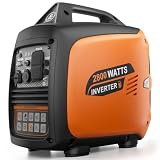
| 2800W Quiet Inverter Generator | Tent camping plus home backup | 2800W, EPA compliant, camping and RV use |
| SIOKIUU 2500W | Lightweight carry-in camping | 2500W, CO sensor, ECO mode |
| WEN DF360iX | Trailers and flexible fuel | 3600W dual fuel, CO Watchdog |
| PowerSmart 4000W | Runtime and clean power | Under 59 dBA, 8-hour runtime, parallel ready |
| POXURIO 2450W | Long weekend runtime | 1.6 gallon tank, 8.3 hours listed |
| WEN 56235i 2350W | Smallest, lightest option | 2350W, fuel shut off, ultra lightweight |
| ERAYAK 4500W | Highest output of the group | 4500W, ECO mode, super quiet |
How to Choose
Add up running watts first
List every device you plan to run at once and add their running watts, then add a cushion of about 20 percent. A mini fridge, lights, and chargers might total under 800 watts, which almost any unit here covers. A 13,500 BTU air conditioner often needs around 2,800 running watts and more to start, so it points to a 3,600 watt unit or two units in parallel. Do not shop by the largest number on the box; shop by your actual load.
Remember that the starting surge of motors, such as a fridge compressor or a fan, can briefly double the draw. If you are sitting right at the limit of a unit’s running output, that surge can make the generator stall or shut off. Staggering what you switch on, rather than starting everything at once, keeps a smaller and lighter generator workable for longer.
Noise and the inverter advantage
Inverter generators vary engine speed to match load, which is why they are quieter than open-frame contractor units. The PowerSmart listing quotes under 59 dBA, and several others use the words super quiet or low noise, but those are claims to compare against the manufacturer’s measured figure at a stated distance. An ECO mode, found on most models here, lowers engine speed at light loads and usually saves fuel as well.
Runtime, tank size, and fuel type
Runtime depends on tank size and load. The POXURIO listing gives a 1.6 gallon tank and 8.3 hours, while the PowerSmart lists 8 hours. Dual fuel models like the WEN DF360iX can run on propane too, which stores better and burns cleaner, a real advantage if you camp far from a gas station. Always keep fuel in approved containers and never refuel a hot engine.
Weight and handling deserve a second look as well. A 4000 watt open-frame or wheeled unit can be a two-person lift into a truck bed, while a 2,000 to 2,500 watt inverter is often manageable with one hand. Look for a sturdy carry handle, a fuel gauge you can read at a glance, and enough outlets, including a 120 volt household receptacle and USB ports if you charge devices directly.
Safety features and what to ignore
Carbon monoxide protection is the feature to prioritize. The SIOKIUU and WEN DF360iX listings mention CO sensing or a CO Watchdog, and an automatic fuel shut off appears on several WEN models. Look for EPA compliance too, since some states restrict sales of non-compliant units. Ignore vague wording like ultra powerful, and be careful with peak-watt marketing; budget models tend to cut corners on wheels, handles, and outlet variety rather than on the headline wattage.
The 7 Best Options
2800W Quiet Inverter Generator
This unbranded 2800 watt inverter is positioned for camping, RVs, home backup, and outdoor activities, and the listing notes EPA compliance. It targets campers who want one machine to cover a weekend in a trailer and a power outage at home.
- Strength: 2800 watts is enough headroom for a small RV air conditioner setup plus basics, depending on startup demand.
- Strength: the title explicitly covers camping, RV, and home backup use, so it is a flexible buy.
- Trade-off: the title gives no CO feature or runtime figure, so those need to be checked on the full listing.
Skip it if you want a recognizable service network or detailed safety features confirmed up front.
SIOKIUU 2500W
The SIOKIUU is described as super quiet, ultra lightweight, and suited to home backup and outdoor camping. The listing calls out a CO sensor, EPA compliance, and an ECO mode, a solid feature set for a mid-size inverter.
- Strength: the CO sensor adds protection that matters when you camp close to a tent or trailer.
- Strength: ECO mode and a lightweight build suit carry-in sites and light loads.
- Trade-off: 2500 watts will not comfortably run a full-size RV air conditioner.
Skip it if your trailer’s air conditioner is the main reason you need a generator.
WEN DF360iX
This WEN model is a 3600 watt dual fuel inverter that the title describes as quiet, lightweight, and RV-ready, with a fuel shut off and a CO Watchdog. The dual fuel design lets it run on gasoline or propane.
- Strength: propane capability offers storage and convenience options for remote trips.
- Strength: RV-ready labeling plus CO Watchdog covers the two features trailer campers ask about most.
- Trade-off: 3600 watts is more weight and cost than a tent camper needs.
Skip it if you only charge devices and run a cooler, since a smaller unit is simpler to carry and store.
PowerSmart 4000W
The PowerSmart is listed at 4000 watts with noise under 59 dBA, an 8-hour runtime, parallel readiness, ECO mode, and less than 3 percent total harmonic distortion. That last figure points to clean power for sensitive electronics.
- Strength: parallel ready, so you can add a second unit later for larger loads.
- Strength: the low distortion claim suits laptops, medical devices, and other sensitive gear.
- Trade-off: a 4000 watt frame is heavier and harder to haul to a walk-in site than the compact models.
Skip it if portability matters more than maximum output.
POXURIO 2450W
The POXURIO is a 2450 watt, 120 volt inverter generator whose listing highlights a 1.6 gallon tank and 8.3 hours of use. It suits campers who prioritize a long run between refuels over peak power.
- Strength: the stated tank size and runtime are specific and easy to compare.
- Strength: the title positions it for both home use and camping.
- Trade-off: the quoted runtime depends on load, so heavier use will shorten it.
Skip it if you plan to run an air conditioner, which needs more output than this unit offers.
WEN 56235i 2350W
The 56235i is a gasoline inverter generator listed at 2350 watts, super quiet, ultra lightweight, with a fuel shut off. It is the smallest output in the group, which makes it the most carry-friendly.
- Strength: an ultra lightweight design helps when you carry gear from the car to a site.
- Strength: the fuel shut off helps drain the carburetor before storage.
- Trade-off: the title does not mention a CO sensor, so verify safety features before buying.
Skip it if you may eventually need to run a trailer air conditioner.
ERAYAK 4500W
The ERAYAK is the highest output here at 4500 watts, described as super quiet and small, gas powered, with an ECO mode. It is meant for emergency backup and heavier camping loads in the same machine.
- Strength: 4500 watts leaves headroom for several appliances at once.
- Strength: ECO mode lets the engine ease off when loads are light.
- Trade-off: highest output usually means the heaviest unit and the highest fuel use in this set.
Skip it if you are a weekend tent camper; the extra capacity will mostly go unused.
Which One Fits Your Situation
You tent camp and carry gear in
Choose the WEN 56235i for its ultra lightweight listing, or the SIOKIUU 2500W if you want a CO sensor in the package. Both keep the load modest, which suits a cooler, lanterns, and device charging without hauling an oversized machine down a trail.
You tow a travel trailer with an air conditioner
The WEN DF360iX is the best match from the group for an RV-ready unit with dual fuel and CO Watchdog, while the PowerSmart 4000W gives you parallel readiness for larger loads.
You want long runs between refuels
The POXURIO 2450W lists a specific 8.3 hour runtime from its 1.6 gallon tank, making it the easiest to plan around for long weekends.
You want one machine for camping and storms
The 2800W Quiet Inverter Generator and the ERAYAK 4500W both cover home backup alongside camping, with the ERAYAK suited to heavier household needs.
Common Mistakes
- Buying on peak watts instead of running watts and then tripping the breaker, especially when a compressor or pump adds a startup surge on top of the steady load.
- Running a generator inside a tent, trailer, or garage; always keep it outdoors and well away from openings.
- Ignoring campground generator hours and noise rules until you arrive.
- Leaving gasoline in the carburetor for months instead of draining or stabilizing it.
- Skipping a CO alarm inside the camper, even when the generator has its own sensor.
Related guides
- How To Strip Old Varnish From Furniture Without Sanding
- Random Orbital Sanders For Furniture Refinishing
- How Long To Wait Between Coats Of Polycrylic
Frequently Asked Questions
How many watts do I need for camping?
For lights, chargers, and a cooler, 1,000 to 2,000 watts is usually plenty. Add 3,600 watts or more if you want to run a trailer air conditioner. If you cook with an electric kettle or induction burner, those single appliances can pull 1,500 watts or more by themselves, so count them first.
Is dual fuel worth it for camping?
It can be, since propane stores longer and burns cleaner. It does add some complexity and typically slightly lower output on propane than on gasoline.
What does parallel ready mean?
It means you can link two compatible generators with a parallel kit to double the available power. It is handy if you want to start small and expand.
How should I store a generator between trips?
Run the carburetor dry or use fuel stabilizer, then keep the unit in a dry, ventilated spot. Follow the maintenance schedule in the manual. Before the next trip, check the oil level and the spark arrestor, and run the engine briefly at home so a problem shows up in the driveway rather than at the campsite.



0 Comments