What's inside
As an Amazon Associate I earn from qualifying purchases. This post may contain affiliate links at no extra cost to you.
Best Ice Cube Trays for Easy Release and Long-Lasting Ice
The best ice cube trays for most kitchens are rigid plastic trays with a flexible silicone base: they release cubes more easily than all-hard plastic, resist freezer odors better than low-quality silicone, and use space more efficiently than oversized “large cube” molds. Choose silicone for effortless release, plastic for compact everyday batches, or metal for the fastest freezing and longest-lasting cubes.
Quick picks by situation
| Kitchen situation | Best tray type | Why it fits | What to accept |
|---|---|---|---|
| Lowest cost and frequent use | Rigid plastic, 14–21 cubes | Light, stackable, and usually the most affordable | Cubes may need twisting or a brief warm-water rinse |
| Easy release with minimal force | Silicone, 8–12 large cavities | Flexible walls let individual cubes pop out | Silicone can retain odors and take longer to freeze |
| Long drinks or slow melting | Large silicone or metal mold, 4–8 cavities | Large cubes have less surface area relative to volume | Lower capacity and slower freezing |
| Small freezer or crowded drawer | Compact plastic tray, 20–30 ml cubes | High cube count per unit of freezer space | Smaller cubes melt sooner |
| Maximum freezing speed | Thin metal tray | Metal transfers heat away from water quickly | Release can be awkward, and metal may scratch shelves |
Silicone, plastic, and metal compared
Material determines more than release effort. It affects how quickly water freezes, how securely a tray can be carried, how much freezer space is wasted, and how easy it is to remove smells after storing food nearby.
As an Amazon Associate we earn from qualifying purchases at no extra cost to you.

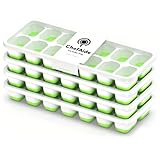

Silicone trays: easiest release, not always easiest ownership
Food-grade silicone is flexible, so you can push the underside of one cavity rather than twisting the whole tray. This is the best choice when hard trays cause hand discomfort or when you need only a few cubes at a time.
The trade-off is structural support. A soft silicone tray filled with water can flex and spill while being carried to the freezer. A model with a rigid rim, lid, or separate support frame is much easier to load. Silicone also has a larger surface area than many people expect, and lower-quality material can absorb freezer odors or leave a faint smell in ice.
For odor resistance, look for platinum-cured or clearly food-grade silicone, a close-fitting lid, and a design with smooth, nonporous cavities. Washing the tray before first use and drying it completely reduces the chance of transferring manufacturing or freezer smells.
Plastic trays: the practical everyday option
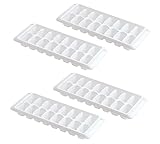
Rigid plastic trays are usually the most efficient for producing many small or medium cubes. They hold their shape when full, slide neatly into narrow freezer shelves, and often stack more predictably than soft silicone.
The main weakness is release. Thin plastic can become brittle after repeated freezing and flexing, while thick plastic may require more force to twist. Avoid striking a frozen tray against a counter: that is a common cause of cracked corners and broken dividers. Instead, let the tray stand at room temperature for one or two minutes, or rinse the underside briefly with cool-to-warm water.
Polypropylene is a useful material to look for because it is commonly used for reusable food containers and tolerates repeated washing better than very thin, brittle plastic. Check the manufacturer’s dishwasher guidance rather than assuming every plastic tray is dishwasher-safe.
Metal trays: fast freezing and sturdy construction
Aluminum and stainless-steel trays conduct heat more efficiently than silicone or thick plastic. In a normally loaded freezer, that can help water freeze sooner, especially when the tray is placed on a flat shelf with good air circulation.
Metal does not automatically mean easy release. A cube can bond firmly to a metal cavity, and flexing is limited. Some metal trays use a lever or divider mechanism to release several cubes at once; those mechanisms save effort but add moving parts that can bend, corrode, or become difficult to clean.
Stainless steel offers good odor resistance and durability, but it is often heavier and more expensive. Aluminum is lighter and conducts heat well, but it can dent and should be checked for a food-safe coating or construction. Do not use sharp tools to pry out stuck ice, since they can damage the tray or create a cut hazard.
Cube size matters more than material for melting performance
| Approximate cube size | Water per cube | Typical tray capacity | Best use | Expected melting behavior |
|---|---|---|---|---|
| 25–30 mm | 15–25 ml | 20–30 cubes | Everyday water, soda, and blended drinks | Fastest melting |
| 35–40 mm | 35–55 ml | 12–18 cubes | General-purpose drinks and reusable bottles | Balanced cooling and dilution |
| 45–50 mm | 70–100 ml | 6–10 cubes | Slow-sipping drinks and insulated glasses | Slower melting |
| 50–60 mm sphere or cube | 65–120 ml | 4–8 pieces | Large glasses and presentation | Slowest melting, slowest freezing |
The reason large ice lasts longer is geometry. A 50 mm cube has eight times the volume of a 25 mm cube but only four times the surface area. That gives the larger cube less exposed surface relative to the amount of ice. It will not remain frozen indefinitely, however: a warm drink, direct sunlight, or a glass with poor insulation can overwhelm the size advantage.
Freezer-space efficiency: a simple calculation
Compare two common formats. A 14-cavity tray producing 45 ml cubes holds about 630 ml of water. A 21-cavity tray producing 25 ml cubes holds about 525 ml. The larger-cube tray makes more durable ice, but the smaller-cube tray gives 50% more individual cubes while using a similar footprint.
For a household that uses 10 small cubes per day, the 21-cavity tray provides roughly two days of supply per batch. The 14-cavity large-cube tray provides only about one day if each drink uses five cubes. This is why cube size should follow your consumption pattern rather than being chosen only for appearance.
Measure the freezer shelf before buying. Leave at least 10 mm of clearance above the tray if you plan to stack another tray, and check whether the tray can pass through the drawer opening when full. A lid is especially valuable in crowded freezers because it prevents spills and reduces exposure to odors.
Dishwasher safety and odor control
- Dishwasher-safe silicone: Usually tolerates the dishwasher, but place it on the upper rack if the manufacturer permits. High heat can accelerate warping in thin designs.
- Dishwasher-safe plastic: Confirm the symbol or instructions. Repeated high-heat cycles can cloud plastic, distort thin rims, or weaken snap-on lids.
- Metal: Stainless steel is generally easier to clean than coated or painted metal. Avoid mixing dissimilar metals in a wet dishwasher load if corrosion or discoloration is a concern.
- Lids: Wash the underside and sealing groove, where sticky freezer residue can collect. A lid that is difficult to remove is likely to be used less often, reducing its practical value.
For persistent odor, wash with unscented dish soap, rinse thoroughly, and air-dry completely. A short soak in a baking-soda solution can help with smells, but do not mask an odor with strongly scented detergent. If the ice still tastes or smells unusual after cleaning, replace the tray; porous, damaged, or heavily scratched surfaces are difficult to restore.
What wears out first
On silicone trays, the first failure is often a stretched rim, torn corner, or lid that no longer seals. On plastic trays, repeated twisting can create whitening stress marks before a crack appears. On metal trays, the vulnerable points are bent dividers, damaged coatings, and hinges or release bars.
Do not overfill cavities. Water expands as it freezes, so leave approximately 3–5 mm of headspace. Overfilling makes lids bulge, joins neighboring cubes, and increases stress on the tray. Let a tray sit briefly before forcing release, and store it dry when it will not be used for several days.
Final buying advice
Choose a rigid plastic tray when freezer efficiency, price, and high cube counts matter most. Choose silicone when easy individual release is the priority, preferably with a rigid frame or firm rim. Choose metal when rapid freezing, durability, and odor resistance outweigh convenience.
For the broadest usefulness, a 12–18-cavity tray making 35–40 mm cubes is the best middle ground. It offers enough ice for daily use without the slow freezing time and wasted freezer capacity of oversized molds. Add a second small-cube tray only if you regularly need quick-cooling ice for bottles or large batches of drinks.
0 Comments