What's inside
As an Amazon Associate I earn from qualifying purchases. This post may contain affiliate links at no extra cost to you.
The best dollhouses depend on whether you want a durable playroom toy, a compact display model, or a build-it-yourself project: for most children, the KidKraft Chelsea Dollhouse is the easiest all-round choice, while Greenleaf kits suit experienced builders and Lundby houses offer the strongest option for detailed, expandable display play.
As an Amazon Associate we earn from qualifying purchases at no extra cost to you.
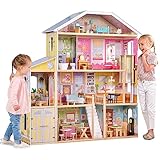


Best dollhouses at a glance
| Model or type | Approximate scale | Approximate footprint | Main material | Assembly | Furniture included | Best for |
|---|---|---|---|---|---|---|
| KidKraft Chelsea Dollhouse | Fashion-doll scale, roughly 1:12 to 1:10 | 29 × 13 × 29 inches | Engineered wood, MDF, and plastic | Moderate; about 1–2 hours | Usually yes, depending on package | First large playroom dollhouse |
| Melissa & Doug Victorian Dollhouse | Large 1:12-style play scale | Approximately 28 × 22 × 28 inches | Engineered wood and MDF | Moderate to demanding; about 2–4 hours | Limited or none in the basic house | Sturdy pretend play and decorating |
| Lundby Småland | 1:18 scale | Approximately 26 × 14 × 25 inches, depending on configuration | Wood-based panels and molded plastic | Low to moderate | Often sold separately or in room sets | Compact, detailed display play |
| Greenleaf wooden kit | Commonly 1:12 scale | About 18–30 inches wide, depending on kit | Unfinished plywood and wood | High; several hours to many weekends | No, unless purchased separately | Crafting, customization, and display |
| Small plastic starter house | Often 1:12 or fashion-doll scale | Approximately 16 × 8 × 18 inches | ABS or polypropylene plastic | Low; usually under 30 minutes | Usually a small starter set | Preschool-friendly, portable play |
Dimensions and included accessories vary by edition, so check the current box specifications before buying. The important comparison is not simply house size: it is the amount of usable floor space, the scale of the furniture, and whether replacement pieces are easy to find.
Our picks by buying situation
Best all-round playroom choice: KidKraft Chelsea
The KidKraft Chelsea is a practical choice when several children need room to play at once. Its open-front layout provides multiple floors and rooms without requiring the builder to install wiring, wallpaper, or miniature trim. The engineered-wood construction is heavier and more stable than a thin plastic shell, while the broad rooms accommodate many fashion dolls and larger accessory sets.
Its main limitation is floor space. A footprint of roughly 29 by 13 inches requires a permanent shelf or low table, and the height can make the upper rooms difficult for younger children to reach. Assembly is also more involved than the package may suggest: aligning many panels, tightening fasteners without stripping them, and keeping the structure square all affect the finished result.
Best for robust imaginative play: Melissa & Doug Victorian Dollhouse
The Melissa & Doug Victorian Dollhouse is better suited to children who want a substantial house rather than a highly accessorized miniature scene. Its wood-based panels give it a solid feel, and the large rooms leave space for children to move furniture and dolls around freely. It is particularly useful when the dollhouse will be played with every day instead of displayed behind glass.
Buyers should budget for furniture separately if the chosen version does not include a complete interior set. This can make the total cost higher than the initial house price, but it also lets families choose furniture that matches the dolls already owned. The broad proportions are forgiving for play, though they may look less realistic beside true 1:12 collector furniture.
Best compact detailed option: Lundby Småland
Lundby Småland uses a smaller 1:18 scale, which reduces the space needed for the house and its furniture. The smaller rooms can still look detailed, especially when combined with Lundby accessories and lighting components. This makes it a strong fit for an older child, a family room shelf, or a collector who wants a display that can be rearranged.
The trade-off is handling. Small furniture, lamps, and accessories are easier to lose and less comfortable for preschool hands. A 1:18 house also does not mix well with most 1:12 furniture or larger fashion-doll accessories. Choose this scale only if you are prepared to stay within one miniature system.
Best build-and-customize project: Greenleaf kit
Greenleaf offers unfinished wooden dollhouse kits for people who want control over the architecture and decoration. Depending on the model, you may add shingles, siding, paint, wallpaper, flooring, trim, lighting, and handmade furniture. The result can be more personal and visually convincing than a ready-built toy, but the kit is a craft project rather than an instant gift.
Expect to dry-fit panels, sand edges, glue joints, fill gaps, and allow paint or adhesive to cure between stages. Plywood can warp if stored damp or painted on one side only. A beginner should start with a smaller kit and simple acrylic finishes rather than a large multi-room design with complicated electrical work.
Scale matters more than it first appears
Scale determines whether a house can use the furniture and dolls you already have. Traditional dollhouses commonly use 1:12 scale, where 1 inch represents 1 foot. A 6-inch-tall adult miniature therefore represents a 6-foot person. Lundby’s 1:18 scale is smaller, while fashion-doll houses often use generous rooms that are not strictly proportional.
Before ordering, measure the tallest doll and the widest piece of furniture. Leave at least 1 inch of clearance above a seated or standing figure and about 2 inches of open floor in front of a doorway. For example, if a wardrobe is 4 inches wide and a child needs space to move a doll beside it, a 6-inch room zone is a more useful minimum than simply checking whether the wardrobe technically fits.
Decision matrix: which type fits your home?
| Your situation | Recommended type | Why | Watch out for |
|---|---|---|---|
| Budget under about $100 | Small plastic starter house or basic wooden house | Lower initial cost and fewer required accessories | Thin panels, limited room depth, and less realistic proportions |
| Several children playing frequently | Large open-front engineered-wood house | More hand space, better visibility, and greater stability | Needs a permanent 30-inch-wide area in many cases |
| Small bedroom or apartment | 1:18 Lundby-style house or compact plastic model | Smaller footprint and easier storage | Accessories may be tiny and scale-specific |
| Experienced crafter | Greenleaf or another unfinished wood kit | Maximum control over finish, layout, and details | Tools, adhesives, paint, and many hours add to the cost |
| Occasional display | Finished wood or 1:18 detailed house | Looks complete without constant rearranging | Dust and sunlight can damage finishes and fabrics |
Assembly, safety, and ownership realities
For a ready-to-assemble wooden house, sort every panel and fastener before starting. Build on a flat surface, hand-tighten screws until the frame is aligned, and only then secure them fully. This prevents a common problem: forcing a roof or floor into place after the lower structure has twisted. A cordless screwdriver set to a low torque can help, but hand tools give better control on MDF and particleboard.
Assembly time also affects the true price. Suppose a $120 house takes two hours to assemble and needs $60 of furniture. The initial ownership cost is $180. If it is used three times per week for two years, that is about 312 play sessions, or roughly $0.58 per session before accessories and storage. A $70 kit that requires $100 in materials and 20 hours of finishing may be a better creative project, but not a cheaper ready-to-play toy.
The parts most likely to wear first are door hinges, thin roof trim, stickers, small plastic furniture legs, and screw holes in repeatedly moved MDF panels. Lift a large house from its base rather than by the roof. Keep loose accessories in divided containers, wipe painted surfaces with a barely damp cloth, and avoid soaking unfinished wood. Do not place the house beside a radiator or in direct sun, where panels and printed finishes can warp or fade.
For younger children, choose large, firmly attached components and inspect the house regularly for loosened screws, splintered edges, or detached small parts. Small furniture and miniature accessories are better treated as supervised play items when the manufacturer’s age guidance requires it. A stable low platform is preferable to a tall dresser, especially when children will lean on the front of the house.
Final buying advice
Choose the KidKraft Chelsea when you want a conventional, spacious playhouse with a manageable assembly project. Choose the Melissa & Doug Victorian Dollhouse when durability and open-ended play matter more than included furniture. Choose Lundby Småland when floor space is limited and you value a coherent miniature system. Choose a Greenleaf kit when the making, painting, and customization are part of the purpose.
Before purchasing any of the best dollhouses, confirm three measurements: the available shelf width, the maximum height children can comfortably reach, and the scale of the dolls and furniture you already own. Those checks prevent the most expensive mistake—a beautifully made house that cannot fit the room or the people meant to play with it.

0 Comments