What's inside
As an Amazon Associate I earn from qualifying purchases. This post may contain affiliate links at no extra cost to you.
The best disc golf bags for comfortable course carrying depend on how many discs you bring, how long you play, and whether you need room for water, rain gear, or a cooler; for most players, a stable backpack with padded shoulder straps and space for roughly 18–22 discs is the most versatile choice.
As an Amazon Associate we earn from qualifying purchases at no extra cost to you.
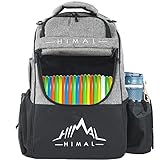


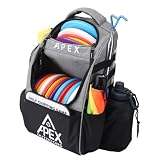
Best disc golf bags by playing situation
- Short rounds and minimal gear: Choose a compact shoulder bag or small backpack with capacity for about 6–12 discs. Less empty space means less shifting, and a lighter load is easier to carry between holes.
- Regular casual play: A mid-size backpack for roughly 14–20 discs balances selection and comfort. Look for two padded straps, a water-bottle pocket, and a separate place for keys or a phone.
- Tournament-length rounds: Choose a structured backpack with a reinforced base, comfortable straps, and capacity around 20–30 discs. A larger bag is useful only if you can carry it comfortably when fully loaded.
- Hot-weather rounds with drinks to share: Consider a bag with a dedicated cooler compartment. Check whether the stated disc capacity assumes that compartment is empty; cooler space often comes at the cost of disc storage.
- Wet courses or frequent rain: Prioritize a rain cover, water-resistant fabric, and a raised or reinforced bottom. Water-resistant fabric can shed light rain, but it does not make a bag waterproof at the seams or zippers.
What the capacity and weight numbers really mean
Disc capacities are usually estimates, not fixed measurements. Putters have different shapes and rims, and a bag’s listed total may count discs in accessory pockets or depend on a particular arrangement. Treat capacity as a range, and leave some room for discs to slide in and out without forcing them.
Weight matters most after you add discs, water, snacks, and wet-weather gear. A one-pound difference in the empty bag is noticeable, but the contents can add several pounds. The table below gives practical comparison ranges for common bag types; individual models vary, so confirm dimensions and listed weight before buying.
| Bag type | Typical disc capacity | Empty weight range | Best suited to | Trade-off to check |
|---|---|---|---|---|
| Compact shoulder bag | 6–12 discs | 0.5–1.5 lb | Short rounds and beginners carrying a small set | Single-strap load can feel uneven on longer walks |
| Small backpack | 12–18 discs | 1.5–3 lb | Casual play with room for water and essentials | Check whether the disc compartment stays upright when partly filled |
| Full-size backpack | 18–30 discs | 2.5–5 lb | Long rounds, tournaments, or players carrying several molds | More capacity adds bulk and encourages overpacking |
| Cooler-style backpack | About 10–20 discs, depending on layout | 3–6 lb | Warm-weather rounds where chilled drinks are a priority | Insulation and drinks reduce usable disc space and increase load |
How to choose for comfort, weather, and stability
Start with the discs you actually carry
Count the discs you use regularly, then add only a modest buffer for a backup or a course-specific option. If you usually play with 10 discs, a 30-disc bag may add cost and bulk without improving your round. If you bring 20 or more discs, verify that the main compartment is wide enough for easy access rather than relying on a headline capacity figure.
Before buying, check whether the bag has a dedicated putter pocket and whether it can hold your preferred putter shape. A separate, easy-to-reach putter slot makes quick stops less fussy. If the main compartment is too loose for your usual load, discs may lean or shift as you walk.
Judge shoulder support with the full load in mind
For frequent or long rounds, two padded backpack straps generally distribute weight more evenly than a single shoulder strap. Look for straps that are adjustable, securely stitched, and wide enough to sit comfortably over your clothing. A chest strap can help keep a loaded bag from shifting, though fit and strap placement matter more than the feature’s presence on a product page.
Think about the complete carry weight. For example, a 3 lb bag holding 20 discs at an average of 0.4 lb each weighs about 11 lb before water, snacks, or accessories: 3 + (20 × 0.4) = 11 lb. Add a full bottle and a rain layer, and the real load can climb further. If you are deciding between two sizes, pack the smaller one with your normal kit and see whether you can remove discs without squeezing or rearranging everything.
Match storage to your round
- Waterproof storage: A water-resistant valuables pocket is useful for a phone, wallet, or scorecard, but check that its zipper and seams are protected. For heavy rain, a removable rain cover offers better coverage. Keep sensitive electronics in a separate dry pouch if conditions are uncertain.
- Cooler space: Cooler compartments suit players who regularly carry multiple cold drinks, but they add weight even when partly filled. Confirm the compartment’s dimensions and whether it shares space with discs. A small insulated sleeve may be a better compromise than a full cooler bag.
- Water-bottle pockets: Elastic side pockets are convenient, but a tall bottle can make a narrow bag tip sideways. Check that the pocket has enough depth and tension to hold the bottle during a walk.
- Stability: A flat reinforced base, a wide stance, and a structured frame help a bag stand upright on uneven ground. A top-heavy bag or one with a soft, narrow bottom is more likely to fall over, especially when a bottle is mounted on one side.
Buying decision matrix
| Your situation | Good target | Why it fits |
|---|---|---|
| New player, occasional short rounds | 6–12-disc shoulder bag or compact backpack | Keeps the kit light while leaving room for water and essentials |
| Weekly casual rounds, 10–18 discs | 12–18-disc backpack with two padded straps | Balances capacity, comfort, and manageable bulk |
| Tournaments or long walks, 18–25 discs | Structured backpack with reinforced base and chest strap | Supports a heavier, more organized load and resists tipping |
| Hot-weather group rounds | Backpack with a defined cooler compartment | Provides drink storage; verify the remaining disc capacity when loaded |
| Frequent wet-weather play | Water-resistant backpack with rain cover and raised base | Helps protect gear while keeping the bag off wet ground |
Price, durability, and ownership details
As a broad market guide, compact bags commonly fall around $20–$50, mid-size backpacks around $50–$120, and feature-rich tournament or cooler bags around $100–$250. These are general ranges rather than fixed prices; construction, brand, and seasonal availability affect the cost.
Over time, the parts most worth checking are strap stitching, zipper pulls, elastic bottle pockets, and the bottom panel. These areas take repeated stress from full loads, opening and closing, and contact with wet or gritty ground. A reinforced base and replaceable zipper pulls can be more useful for longevity than extra pockets you rarely use.
After a muddy or rainy round, empty the bag and let it air-dry with the compartments open. Brush off dried dirt rather than grinding it into the fabric, and avoid storing damp towels or clothing inside for long periods. Don’t overload a cooler compartment or force discs into a packed main section: both can strain seams and make access awkward.
The practical pick
For one bag that covers most casual and tournament play, choose a structured backpack in the 18–22-disc range with two padded straps, a stable base, a bottle pocket, and a protected valuables pocket. Go smaller if you play short rounds with a limited set; choose a cooler model only if chilled drink storage is a regular need. The best disc golf bags make the load you actually carry comfortable and organized—not merely the largest capacity on the label.
0 Comments