What's inside
As an Amazon Associate I earn from qualifying purchases. This post may contain affiliate links at no extra cost to you.
Best Dry Eye Moisture Chamber Sleep Masks for Overnight Relief
The best dry eye moisture chamber sleep masks for overnight relief are usually sealed, rigid-cup goggles with adjustable straps: they hold a humid pocket around the eyes more reliably than soft, flat sleep masks, while leaving room for lashes and eyelids. Choose a low-profile model for side sleeping, a deeper cup if your lashes touch the lens, and a design with replaceable foam or silicone parts if you expect to use it nightly.
What matters more than the product name
Moisture-chamber masks are not all the same. Some use a firm cup that sits around the eye socket; others rely on a soft gasket or flexible shield to create a seal. The seal is the key trade-off: a snug perimeter helps limit airflow and moisture loss, but excessive pressure can irritate skin or make the mask uncomfortable against a pillow.
As an Amazon Associate we earn from qualifying purchases at no extra cost to you.
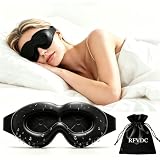


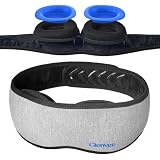
- Seal design: A continuous, soft-contact gasket is generally easier to position than a hard edge. A seal that leaks at the nose bridge may be less useful than one that feels comfortable but does not block every tiny gap.
- Moisture retention: A deeper, more enclosed chamber can slow evaporation, but fit and room conditions matter. No mask guarantees a particular humidity level or prevents all overnight dryness.
- Lens clearance: The cup should not press on closed eyelids, lashes, or the eye itself. People with long lashes, eyelid swelling, or prominent eyes may need a deeper chamber.
- Strap adjustability: A broad, adjustable strap distributes tension better than a narrow elastic band. More tension is not a substitute for the right cup shape.
- Cleaning: Skin oils, residue, and damp padding accumulate with regular use. Check whether the cushion can be removed and whether the manufacturer permits washing or replacement.
- Sleep position: A protruding cup may shift or press into a pillow for side sleepers. Back sleepers can usually tolerate more depth and a wider frame.
Compare the main options
Exact dimensions and weights vary by model and size. The figures below are practical selection ranges for common designs, not manufacturer specifications; verify the individual product’s measurements before buying. Prices are broad market ranges and can change by retailer and region.
| Mask type | Typical profile | Seal and clearance | Best fit | Typical price range |
|---|---|---|---|---|
| Rigid-cup moisture chamber goggles | About 25–40 mm of cup depth; roughly 30–80 g | Enclosed chamber; usually the most consistent lash and eyelid clearance | Back sleepers or anyone needing a deeper chamber | About $15–$45 |
| Soft-seal chamber mask | About 15–30 mm of depth; roughly 20–60 g | Flexible contact edge; conforms more easily, but fit varies with face shape | People prioritizing a gentler-feeling perimeter | About $10–$35 |
| Low-profile moisture goggles | About 10–20 mm of depth; roughly 15–45 g | Less bulk; limited clearance for long lashes or prominent eyes | Side sleepers who find deeper cups cumbersome | About $10–$30 |
| Moisture-retaining eye shield or wrap | Typically a flexible shield rather than a deep cup; roughly 15–60 g | May cover a broad area, but seal and airflow control depend on its shape | People who dislike rigid goggles and can tolerate less structure | About $10–$40 |
These categories describe designs, not guaranteed performance. For example, a rigid cup is not automatically a better choice if its rim presses on your face or its strap pulls the mask out of place.
Choose by your sleeping situation
| Your situation | What to prioritize | Likely starting point |
|---|---|---|
| You sleep mostly on your back | Stable seal, comfortable strap, and adequate eye clearance | Rigid-cup or soft-seal chamber mask |
| You sleep on your side | Low profile, flexible perimeter, and a strap that does not shift on the pillow | Low-profile goggles or a soft-seal design |
| Your lashes touch the inside of the mask | Greater chamber depth; avoid solving the problem by tightening the strap | Deeper rigid-cup goggles |
| You are new to moisture chambers | Easy adjustment and a return policy; start with a design that feels comfortable at low tension | Soft-seal or adjustable rigid-cup style |
| You want minimal upkeep | Smooth surfaces, removable washable padding, and readily available replacement cushions | A simple chamber mask with few fabric or adhesive parts |
Fit it without creating new pressure points
A well-fitting mask should stay in place without being pulled tight. Use this short fitting check before relying on it overnight:
- Check the cup depth: Close your eyes and confirm that the lens does not touch lashes or press on your eyelids. Leave enough space for blinking.
- Center the seal: Position the rim evenly around each eye, paying particular attention to the nose bridge and outer corners. A small gap in either area can let air circulate through the chamber.
- Set strap tension gradually: Tighten only until the mask remains in place when you turn your head. If you see deep marks, feel pinching, or wake with pressure discomfort, loosen it or try another shape.
- Test your sleep position: Lie on your back and side for a few minutes. Notice whether the frame shifts, the seal breaks, or a cup presses into the pillow.
- Recheck after waking: Note whether the mask stayed positioned and whether the skin around the seal feels comfortable. Adjust one feature at a time so you can tell what helped.
Cleaning, wear, and ownership costs
For regular use, cleaning is part of the fit equation: residue on a gasket can make it slippery or uncomfortable, while damp padding may take longer to dry than a rigid cup. Follow the product’s care instructions, since some cushions cannot be soaked or cleaned with strong detergents. In general, remove washable components only as directed, use a mild cleaning method approved for the material, and let parts dry completely before reassembly.
The parts most likely to need attention are usually the strap and the contact cushion, not the hard shell. Elastic can stretch, hook-and-loop fasteners can collect lint, and soft seals can flatten, split, or lose their shape. Before choosing a model, check whether its cushion or strap is replaceable; a low initial price can be less appealing if the complete mask must be replaced when one small part wears out.
A common mistake is overtightening to compensate for a poor seal. That can create pressure marks without fixing a gap caused by the wrong size or face shape. Another is treating a chamber mask as a substitute for prescribed eye care. It is a comfort aid, not a diagnosis or treatment plan.
Bottom line
For back sleepers and people who need generous lash clearance, start with a deeper rigid-cup chamber. For side sleepers or anyone sensitive to a hard perimeter, compare low-profile and soft-seal designs, with comfort against the pillow as the deciding test. If irritation, pain, blurred vision, discharge, or persistent dryness continues, or if the mask itself causes discomfort, stop using it and ask an eye-care professional for guidance.
0 Comments