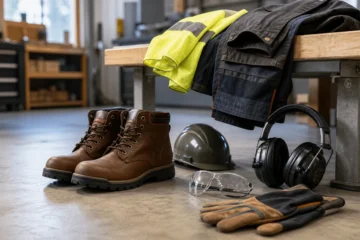
Shop Setup & Safety
Safety Glasses For Woodworking
A plain-language guide to how safety glasses for woodworking actually work, what Z87+ really certifies, and how to pick a pair you will keep wearing.
A plain-language guide to how safety glasses for woodworking actually work, what Z87+ really certifies, and how to pick a pair you will keep wearing.
NRR is a lab number, not a promise: how shop noise actually damages hearing, and how to pick protection you will keep on for the whole session.
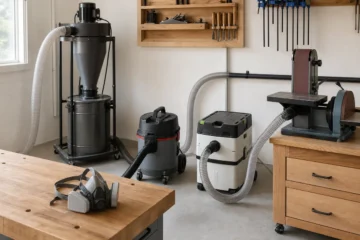
A plain-language guide to how a workshop air filtration system works, what CFM and MERV numbers really mean, and how to size and place one in a small shop.
A plain-language guide to dust collection for small shops, covering airflow versus suction, duct sizing, filtration, and what to buy first.
A plain-language guide to woodworking dust protection, covering why fine invisible dust matters most and how respirators, collectors and air cleaners each do a different job.
A plain-language guide to choosing the best respirator for woodworking, including how filter ratings work, why fit beats filter class, and which style suits your shop.
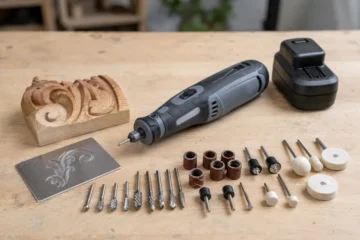
Engraving depends on tip control and low-speed torque, not peak RPM, and that changes which cordless rotary tool you should buy.
A plain-language guide to choosing the best rotary tool for wood carving, starting with how the bit actually cuts wood.
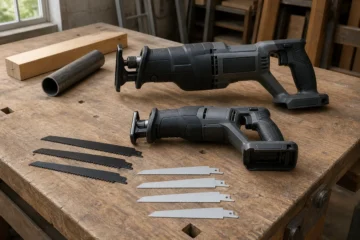
A plain-language guide to choosing reciprocating saw blades by tooth count, tooth material and blade thickness instead of guessing at the store.
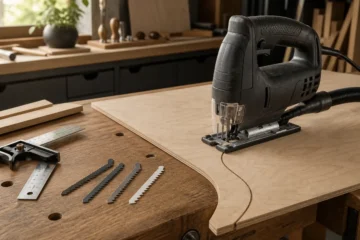
Jigsaw blades fail in predictable ways, so here is how tooth pitch, steel type, and blade width really control your cut, plus the small blade set that covers almost every woodworking job.