Our Top Picks
 Varathane Total Control Dark Walnut Gel StainQuart (Pack of 1)4.25 x 4.25 x 4.9 inches2.07 poundsCheck on Amazon


What's inside
As an Amazon Associate I earn from qualifying purchases. This post may contain affiliate links at no extra cost to you.
The best wood stain for most furniture projects is a wipe-on, fast-drying stain in a dark walnut shade, and the Varathane Total Control Dark Walnut Gel Stain is our top overall pick among these six listings. Its thick gel consistency stays put on vertical surfaces such as chair backs and cabinet sides, and the water-based formula is low odor and cleans up with soap and water. Stain adds color to bare wood but does not protect it, so every pick here still needs a clear topcoat unless the listing says it is a stain-and-sealer. One listing is a touch-up marker kit, not a stain, and is treated as an accessory.
Quick List
- Varathane Premium Fast Dry, Dark Walnut – best for a classic oil-based, one-coat color on interior furniture
- COATEZ Stain and Sealer in One, Brown Walnut – best for water-based color and sealing in a single step
- Furniture Clinic Water-Based Stain, Teak – best for a low-odor, matte teak tone
- Varathane Total Control Dark Walnut Gel Stain – best overall for chairs, cabinets and vertical surfaces
- Furniture Repair Kit Wood Markers, 13-Piece Set – best as a touch-up accessory, not a stain
- Varathane Total Control Dark Walnut Gel Stain (second listing) – best as an alternate listing of the same gel
Which One Is Right for You?
| If you… | Choose |
|---|---|
| stain chairs, legs, doors or other vertical or spindled parts | Varathane Total Control Gel Stain |
| want traditional oil-based penetration on interior wood | Varathane Premium Fast Dry Dark Walnut |
| want color and sealer together, including for outdoor furniture | COATEZ Stain and Sealer in One |
| prefer a low-odor, water-based teak tone with a matte look | Furniture Clinic Teak |
| only need to hide scratches and nicks on finished pieces | Furniture Repair Kit Wood Markers |
| want the gel stain in the other available listing | Varathane Total Control Gel Stain (second listing) |
Choose between oil-based and water-based first. Oil-based stains penetrate deeply, give a rich, traditional color and need good ventilation and careful rag disposal. Water-based stains dry faster, smell less and clean up with water, but they can raise the grain and often need extra sanding between coats. Gel stains sit on the surface more than they soak in, which helps on blotch-prone woods and vertical parts.
All 6 Picks in Detail
1. Varathane Premium Fast Dry Dark Walnut – Best for Classic Oil-Based, One-Coat Color
As an Amazon Associate we earn from qualifying purchases at no extra cost to you.

This is an oil-based interior stain marketed as fast-drying, with one coat of color and a one-hour dry time according to the listing. Rust-Oleum’s own support information describes about an hour to dry to the touch and recoat, and a full cure of around a day, with darker colors possibly needing a bit longer. Oil-based stains penetrate into the wood fibers, which brings out grain on oak, ash and walnut and gives a depth that many woodworkers still prefer.
The listing names furniture, cabinets and doors among its uses. Apply it with a brush or lint-free cloth, let it soak briefly, and wipe off the excess following the label. Because the product is oil-based, ventilate the area and handle used rags carefully.
- Type: oil-based interior wood stain
- Shade: Dark Walnut
- Dry time: about one hour, per listing
- Coverage: one-coat color, per listing
- Marketed for furniture, cabinets and doors
On furniture, the practical rhythm with an oil-based stain is to work one panel or leg at a time. Brush or wipe on a generous coat, give it the few minutes the label specifies, and wipe back with a clean cloth along the grain. Keep a wet edge so lap marks do not form on wide tabletops. Because dark shades like walnut hide less, any sanding scratches and glue smears show up strongly, so inspect the piece under raking light before you begin.
Pros
- Deep penetration and traditional look
- Short dry time for an oil-based stain
Cons
- Solvent odor and rag-fire precautions
- Can blotch on pine, maple and cherry without conditioner
Compared with the Total Control gel stain in the same shade, it soaks in more, while the gel stays put better on vertical parts.
2. COATEZ Wood Stain and Sealer in One, Brown Walnut – Best for Color and Sealing in One Step

COATEZ offers a water-based stain and sealer in one, in a 6.35 fluid ounce container, in Brown Walnut. The listing describes multiple finishes, fast drying and suitability for indoor and outdoor furniture. A combined product saves a step: you color and seal at once, which appeals if you want a quick refresh of a side table or garden chair.
Combination products usually give less depth and less protection than a separate stain plus a dedicated topcoat. For a heavily used dining table, a separate clear coat is still the safer approach. The small container size is sensible for a chair or two but will not stretch across a large project.
- Type: water-based stain and sealer in one
- Shade: Brown Walnut
- Size: 6.35 fl oz
- Marketed for indoor and outdoor furniture
- Finish options: multiple, per listing; exact sheens: confirm on listing
When using a combined stain and sealer, resist the urge to apply it heavily. Thin, even coats dry harder and look better than a single thick one, and a light sanding between coats gives a smoother result. For outdoor pieces, check the label for the number of coats and recoat intervals, and plan for periodic maintenance coats because sun and rain wear any exterior finish down over time.
Pros
- One product handles color and protection
- Water-based and fast drying
Cons
- Small container limits project size
- May need extra coats for durability on tables
Next to the Furniture Clinic stain, it adds a sealer but gives you a smaller bottle and a different shade.
3. Furniture Clinic Water-Based Wood Stain, Teak – Best for a Low-Odor, Matte Teak Tone

Furniture Clinic markets this teak stain as water-based, fast drying, low odor and non-toxic, in an 8.5 ounce bottle with a natural matte finish. It suits indoor projects where you want to avoid strong solvent fumes, such as stained shelves or chairs worked on in a spare room. Teak is a warm mid-brown, a useful choice when you want less red than a walnut.
As with any water-based stain, expect the grain to lift slightly after the first coat. Lightly sand once dry, wipe off dust, and apply a second coat or a topcoat as the label directs. Confirm the topcoat compatibility on the product page.
- Type: water-based wood stain
- Shade: Teak
- Size: 8.5 oz
- Described as low odor, non-toxic, with natural matte finish
- Application tool recommendations: confirm on listing
Teak is a good shade for matching existing furniture in mid-tone woods or for lightening a too-red piece. Because water-based stains dry quickly, work in small sections and avoid stopping in the middle of a panel. A trial on the underside of the piece, or on a scrap of identical wood, shows how the shade will look before you commit the visible surfaces.
Pros
- Low odor and easy cleanup
- Matte, natural look
Cons
- Grain raising on bare wood
- Bottle size is best for small and medium projects
It is the gentler, lower-odor alternative to the oil-based Varathane Premium, in exchange for less penetration.
4. Varathane Total Control Dark Walnut Gel Stain – Best Overall for Chairs, Cabinets and Vertical Surfaces

This gel stain is a thick, water-based formula designed for vertical surfaces, and the listing says it works on wood, metal and fiberglass with low odor. Rust-Oleum states a one-hour dry time on wood, and a typical retailer description gives quart coverage up to about 250 square feet, though one retailer lists a lower range, so coverage depends on the wood and application. Gel stains do not run, which makes them forgiving on doors, banisters, cabinet sides and chair backs.
The gel also helps on woods that tend to blotch, since it stays more on the surface than a thin liquid. Apply it with a cloth or brush, work in sections, wipe off the excess, and add another coat for a darker tone. Topcoat it for durability, and do not use it on floors, decks or siding, per the maker.
- Type: water-based gel stain
- Shade: Dark Walnut
- Dry time: about one hour on wood, per maker
- Surfaces: wood, metal and fiberglass, per listing
- Low odor, soap-and-water cleanup, per maker
For a spindled chair, load a foam brush or a folded cloth with gel, press it into the turnings, and wipe back lightly so the color stays in the details without puddling. A second thin coat after the first dries deepens the shade evenly. Since the gel is thick, stir rather than shake it, to avoid bubbles that can leave tiny marks in the finish.
Pros
- No drips on vertical surfaces
- Low odor, water cleanup
Cons
- Less penetration than oil-based stain
- Needs a topcoat for durability
It is nearly identical to the final listing, so the main choice is the size or variant you want.
5. Furniture Repair Kit Wood Markers, 13-Piece Set – Best as a Touch-Up Accessory
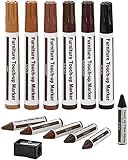
This listing is not a stain. It is a set of 13 markers and wax sticks with a sharpener, meant for hiding scratches and nicks on stained wood furniture, floors, tables and desks. It does not color bare wood and cannot replace a stain for refinishing, so it sits at the end of this guide as a touch-up accessory. It is useful alongside the other picks, since even a careful stain job gets knocked at the edges over time.
Use it by matching the marker to the surrounding color, filling the scratch, and wiping the excess. Wax sticks fill deeper gouges. For a new piece, keep the kit and use it after your topcoat has fully cured.
- Type: furniture touch-up markers and wax sticks
- Count: 13-piece set with sharpener
- Uses: scratches, nicks on tables, desks and floors
- Not a stain or sealer
- Color range: confirm on listing
The best moment to use markers is after the topcoat is cured. Clean the area, choose the marker slightly lighter than the surrounding wood because most fills darken as they set, draw along the scratch in the direction of the grain, and buff gently. For deeper gouges, melt in a bit of wax filler first, scrape it level, and finish with a marker on top.
Pros
- Quick fixes for small scratches
- Multiple colors for common wood tones
Cons
- Not suitable for staining bare wood
- Color matching can be imperfect
It complements any stain on the list instead of competing with it.
6. Varathane Total Control Dark Walnut Gel Stain (Second Listing) – Best as an Alternate Listing of the Same Gel

This second listing carries the same product name as the fourth pick: Varathane Total Control Dark Walnut Gel Stain, a thick gel for vertical surfaces, usable on wood, metal and fiberglass, low-odor and water-based. The listing names do not reveal how the two differ, so the difference is likely container size or pack, but that is an assumption you should confirm on the product page before choosing.
Maker information shows the line in more than one size, including a half pint and a quart, so check which one a listing offers against the surface area of your project. As a rough guide, a half pint covers a couple of small pieces, and a quart handles a set of chairs or a cabinet run.
- Type: water-based gel stain
- Shade: Dark Walnut
- Same product name as the fourth pick
- Size or pack: confirm on listing
- Low odor, per listing
If you are weighing the two Total Control listings, scan the product pages for the container size, any included extras and the shipping or return details. Availability changes, so pick the one that fits the project size. Either way, the application advice is the same as for the fourth pick: thin coats, wipe back, allow the dry time, and add a compatible topcoat.
Pros
- Same easy-to-control gel as the top pick
- Gives you a second listing to compare for size and availability
Cons
- Listing does not explain how it differs
- Duplicates the top pick in a guide
Choose between the two Total Control listings based on container size and availability.
Specs Compared
| Product | Base | Shade | Size | Dry time / notes |
|---|---|---|---|---|
| Varathane Premium Fast Dry | Oil-based | Dark Walnut | Confirm on listing | About 1 hour, per listing |
| COATEZ Stain and Sealer in One | Water-based | Brown Walnut | 6.35 fl oz | Fast drying; indoor and outdoor |
| Furniture Clinic Stain | Water-based | Teak | 8.5 oz | Fast drying, low odor, matte |
| Varathane Total Control Gel | Water-based gel | Dark Walnut | Confirm on listing | About 1 hour on wood, per maker |
| Furniture Repair Kit Markers | Markers and wax (accessory) | Assorted | 13-piece set | Touch-up only |
| Varathane Total Control Gel (second listing) | Water-based gel | Dark Walnut | Confirm on listing | About 1 hour on wood, per maker |
How We Chose These
We started with the six listings supplied for this topic and read each product name and specification field for base type, shade, size and intended use. For the Varathane products we also checked the maker’s published product and support information on dry times and coverage. We favored stains with clear furniture use cases and flagged the marker kit as an accessory and the duplicate gel listing as an alternate. Where a listing did not state a value, we mark it to confirm. This is a research-based shortlist and does not describe finished color on any particular wood.
What to Look For
Oil-Based, Water-Based or Gel
Oil-based stains soak deeply, deepen grain and give a rich color, but they smell stronger, dry slower and call for solvent cleanup. Water-based stains dry quickly, have low odor, clean up with water and are easier on indoor workspaces, though they can raise the grain and give a flatter look. Gel stains are thicker and sit on the surface, which controls blotching and drips and makes them well suited to vertical parts and woods like pine, birch and maple. Choose based on the wood, the room you are working in and how much control you want.
Prep Work That Decides the Result
Stain only shows through bare, evenly sanded wood. Sand progressively, usually to 150 or 180 grit for stain, remove old finish completely, and wipe off dust. Sanding too fine can close the pores and make stain look pale. On blotch-prone woods such as pine, cherry and maple, a pre-stain conditioner or a gel stain evens out color. Trial the color on a hidden spot or scrap of the same wood, because the same stain looks different on oak than on pine.
Application and Topcoats
Work with the grain, apply in manageable sections, let the stain rest for the time on the label, and wipe off the excess so it does not stay tacky. A second coat deepens the shade. Stain is color only: unless the product is a stain-and-sealer, finish with polyurethane, varnish, lacquer or wax, and follow the recoat window on the label. A worked example: a set of four oak chairs in Dark Walnut gel might take one coat, a day of drying, then two thin coats of clear topcoat with a light sand between them.
Choosing a Shade and Matching Existing Pieces
Brand names for shades are only a starting point, because the wood underneath changes everything. Walnut-toned stains look chocolate on pale maple, nearly black on oak with a second coat, and reddish on cherry. When matching an existing piece, stain a scrap of the same species, let it dry fully and finish it with the topcoat you plan to use, since clear finishes warm the color. Lighter shades such as teak are easier to deepen with a second coat than a dark shade is to lighten, so start light if you are unsure and build color gradually.
Safety and Cleanup
Work in a well-ventilated space, wear gloves and eye protection, and follow the label. Oil-based stain rags can heat up as the oil cures and may catch fire if left in a pile; the Varathane data sheet for its oil-based stain warns of this and recommends sealed, water-filled metal containers for used rags. Lay rags flat outdoors to dry or submerge them in water before disposal, and keep solvents away from sparks. Water-based products wash off tools with soap and water, but dispose of leftover material according to local rules.
Questions
Do I need a topcoat over wood stain?
Usually yes. Stain colors the wood but does not protect it from wear, moisture or scratches, so most projects need a clear finish such as polyurethane. Stain-and-sealer products reduce that need, but heavy-use surfaces still benefit from a separate topcoat.
Is gel stain better than liquid stain?
For vertical surfaces and blotch-prone woods, often yes, because it does not run and sits more evenly. Liquid stains penetrate deeper and suit flat surfaces and open-grain woods.
Why does water-based stain make the wood feel rough?
Water makes wood fibers swell and stand up. Lightly sand after the first coat dries, wipe off the dust, and apply the next coat for a smoother surface.
Can I stain over an existing finish?
Not without preparation. Stain needs to reach bare wood, so strip or sand through the old finish. Gel stains are more forgiving in some cases, but follow the maker’s directions.
How do I avoid blotchy results on pine?
Use a pre-stain wood conditioner or a gel stain, and keep coats thin and even. Trial the stain on a scrap piece of the same lumber before committing to the project.
How long should stain dry before topcoating?
It depends on the product. Maker information for the Varathane fast-dry oil stain lists about an hour to recoat and a full cure of roughly a day, but always follow the label for your stain and topcoat combination.
Update History
- October 20, 2026 – Initial publication; product set drawn from current catalog listings.
- Check the product page for current specifications and availability before buying.
Sources
- Rust-Oleum and Varathane product pages, support articles and technical data for the Premium Fast Dry and Total Control Gel stains
- Retailer listing titles and specification fields for all six products

0 Comments