What's inside
- Best Memory Foam Mattresses for Comfortable Support
- Quick comparison of notable memory foam options
- How firmness should match your sleeping position
- Foam density, thickness, and durability
- Cooling, edge support, and motion isolation
- Choose by situation
- Ownership details buyers often overlook
- Final recommendation
- Best Memory Foam Mattresses for Comfortable Support
- Quick comparison of notable memory foam options
- How firmness should match your sleeping position
- Foam density, thickness, and durability
- Cooling, edge support, and motion isolation
- Choose by situation
- Ownership details buyers often overlook
- Final recommendation
As an Amazon Associate I earn from qualifying purchases. This post may contain affiliate links at no extra cost to you.
Best Memory Foam Mattresses for Comfortable Support
The best memory foam mattresses for comfortable support are the Nectar Classic for value, TEMPUR-Adapt for deep pressure-relieving contouring, Saatva Loom & Leaf for a more substantial premium build, and a medium-firm hybrid memory foam mattress for sleepers who need stronger edge support and easier movement.
The right choice depends less on brand than on four specifications: firmness, foam density, total thickness, and the way the mattress manages heat. A soft, thick mattress can feel excellent for side sleeping but make stomach sleeping uncomfortable, while a dense, firm mattress can support larger bodies well but feel too resistant for lightweight sleepers. Use the comparisons below to narrow the field rather than choosing solely by advertised comfort.
As an Amazon Associate we earn from qualifying purchases at no extra cost to you.

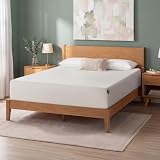


Quick comparison of notable memory foam options
Specifications and construction can change by size or production year, so treat these figures as useful comparison ranges and confirm the current specification before ordering.
| Mattress or type | Typical firmness | Height | Foam construction | Best suited to | Main compromise |
|---|---|---|---|---|---|
| Nectar Classic | Medium-firm, about 6.5/10 | Approximately 12 in | Quilted cover, comfort foam, gel-infused memory foam, high-density support foam | Value shoppers, combination sleepers, couples | Moderate edge support and slower response than a spring hybrid |
| TEMPUR-Adapt | Medium or medium-firm, depending on version | Approximately 11 in | Pressure-responsive TEMPUR material over a supportive foam core | People who prefer close contouring and strong motion isolation | Higher price and more pronounced heat retention for some sleepers |
| Saatva Loom & Leaf | Relaxed firm or firm | Approximately 12 in | Multiple foam layers with higher-density support and lumbar-oriented zoning | Adults wanting a substantial, firm all-foam feel | Heavy construction and less buoyant movement than a hybrid |
| Classic all-foam budget mattress | Medium-firm, about 6–7/10 | 10–12 in | 2–3 in of memory foam over polyurethane support foam | Guest rooms, occasional use, tight budgets | Often thinner edge reinforcement and lower-density comfort foam |
| Memory foam hybrid | Medium-firm to firm | 12–14 in | Memory foam comfort layers over individually pocketed coils | Heavier sleepers, couples, hot sleepers, people needing edge stability | More motion transfer and more weight than an all-foam design |
How firmness should match your sleeping position
Side sleepers
Side sleepers generally need enough cushioning for the shoulders and hips without allowing the waist to sag. A medium or medium-soft mattress, roughly 4.5 to 6.5 on a 10-point firmness scale, is a sensible starting range. Look for at least 3 inches of pressure-relieving foam above the support core, especially if you have prominent shoulders or hips.
A mattress that feels soft in a showroom or during a brief trial may feel considerably firmer after several minutes of full-body loading. Body weight also changes the result: lighter sleepers may experience a medium-firm mattress as firm, while heavier sleepers may compress through the comfort layer and feel the support core.
Back sleepers
Back sleepers usually benefit from medium-firm construction, approximately 6 to 7.5 out of 10. The foam should contour beneath the lower back while resisting excessive sinking at the pelvis. A 10- to 12-inch mattress can work well, but foam density and layer arrangement matter more than thickness alone.
For this position, avoid choosing the softest model simply because it feels comfortable at first contact. If the hips sink substantially lower than the shoulders, the mattress may feel unsupportive even when its surface is plush.
Stomach sleepers and combination sleepers
Stomach sleepers typically need a firmer, more supportive surface—often about 7 to 8 out of 10—to reduce excessive midsection sinking. A memory foam hybrid is frequently easier to move on than a deeply contouring all-foam mattress.
Combination sleepers should prioritize faster response over maximum hug. Medium-firm foam, a thinner comfort layer, or pocketed coils beneath the foam can make rolling and changing positions less effortful. Very slow-recovery foam provides excellent motion isolation but can feel restrictive during repositioning.
Foam density, thickness, and durability
Density is not the same as firmness. A high-density memory foam can be soft, medium, or firm, but it generally resists permanent impressions better and has a heavier, slower feel. As a practical guide, comfort-layer memory foam around 3 to 4 pounds per cubic foot is common in midrange construction; approximately 4 to 5 pounds or more is generally associated with a denser premium feel. Support-core polyurethane foam is often in the approximate 1.5- to 2.5-pound range, although manufacturers do not always publish these figures.
Thickness determines how far your body can sink before meeting firmer layers. A 10-inch mattress may be adequate for a lighter adult or guest bed, while a 12- to 14-inch model offers more room for graduated comfort layers. More inches do not automatically mean better support. A thick mattress made from soft, low-density foam can wear sooner than a thinner mattress with better materials.
For two adults, consider the total load rather than just individual comfort. For example, two sleepers weighing 180 and 220 pounds create a combined 400-pound load before bedding. A 12-inch hybrid with reinforced perimeter coils may remain easier to use at the edge than a 10-inch all-foam mattress, even if both have similar advertised firmness.
Cooling, edge support, and motion isolation
Memory foam tends to retain more body heat than an open coil system because it surrounds the body and restricts air movement. Cooling covers, graphite or gel additives, convoluted transition foam, and ventilated layers may improve the initial feel, but none guarantees a cool night. The most meaningful construction change is usually replacing some solid foam with pocketed coils or using a relatively thin foam comfort layer.
Edge support matters if you sit on the mattress to dress, share a small sleep surface, or use the full width of the bed. All-foam mattresses may use firmer foam rails, but perimeter compression can still be noticeable. Hybrids usually provide a more stable edge through reinforced coils. Test the edge by sitting for several minutes, not just by pressing it with one hand.
For couples, all-foam construction usually wins at motion isolation. Dense memory foam absorbs movement rather than transmitting it across the surface. The trade-off is slower response and a greater chance of heat buildup. A hybrid with individually wrapped coils can still isolate movement reasonably well, but it will usually feel more lively.
Choose by situation
| Your situation | Best starting choice | What to prioritize |
|---|---|---|
| Lowest practical cost | 10–12-inch medium-firm all-foam mattress | At least 2–3 inches of comfort foam, transparent trial and warranty terms |
| Side sleeping | Medium or medium-soft all-foam mattress | 3 inches or more of pressure-relieving foam and adequate hip clearance |
| Stomach sleeping | Firm all-foam mattress or firm hybrid | Stable pelvis, thinner comfort layer, strong transition support |
| Frequent partner movement | Dense all-foam mattress | Motion isolation, sufficient width, and manageable heat |
| Hot sleeping or weak edge support | Memory foam hybrid | Pocketed coils, breathable cover, reinforced perimeter |
| Guest room or occasional use | 10-inch value all-foam model | Reasonable warranty, easy handling, and low initial cost |
Ownership details buyers often overlook
Allow a compressed mattress to expand on a flat, supportive base. Most boxed mattresses need several hours before use and may take longer to reach their intended height and feel. A solid platform or closely spaced slats are important; widely spaced slats can allow sagging and may invalidate warranty coverage.
Rotate an all-foam mattress every three to six months if the manufacturer permits it. Do not flip a one-sided mattress unless specifically designed for two-sided use. The cover, upper comfort foam, and the area around the preferred sleeping position usually show wear before the support core. A waterproof, breathable protector is one of the simplest ways to prevent stains, moisture damage, and premature cover wear.
Do not use a steam cleaner or saturate the foam. Remove the cover only if its care label says it is removable and washable. For spills, blot rather than rub, use minimal approved cleaner, and let every layer dry completely before covering the bed. Persistent body impressions, unusual odors, or new discomfort after the trial period are reasons to review the warranty and exchange policy.
Final recommendation
Choose the Nectar Classic or a similar 12-inch medium-firm all-foam mattress when value and balanced comfort matter most. Choose the TEMPUR-Adapt when motion isolation and close contouring are the priorities and the budget allows it. Choose Saatva Loom & Leaf when you want a denser, more substantial firm all-foam feel. Choose a memory foam hybrid when cooling, edge support, body weight, or easy movement outweighs absolute motion isolation.
These are general buying guidelines, not medical advice. If sleep discomfort is persistent, severe, or associated with numbness, weakness, or pain, consult a qualified healthcare professional rather than relying on a mattress change alone.

0 Comments