What's inside
As an Amazon Associate I earn from qualifying purchases. This post may contain affiliate links at no extra cost to you.
Best grooming clippers for large dogs: the short answer
For most large dogs, the best grooming clippers are a professional-grade detachable-blade clipper with enough torque for a dense coat, plus a quieter cordless or corded option chosen around your dog’s tolerance and your grooming setup. Choose a corded model for long, uninterrupted sessions; a cordless model for freedom of movement, provided its runtime covers the job with time to spare. Coat condition matters as much as motor power: severely matted coats may need a professional groomer rather than a more powerful clipper.
Choose by coat and grooming situation
- Dense, double, or curly coat: Prioritize a high-torque professional clipper and detachable blades. A clipper cannot safely replace de-matting or coat-specific grooming advice; consult a groomer if mats are tight against the skin.
- Short, smooth coat or occasional touch-ups: A lighter, quieter clipper may be easier to manage than a heavy salon model. Check that the blade system supports the length you want.
- Long sessions or several dogs: A corded clipper avoids battery interruptions. If you prefer cordless, plan around published runtime and keep a spare charged battery if the model allows it.
- Nervous dog or first-time owner: Favor manageable weight, low vibration and sound, and a comfortable grip. Introduce the turned-off clipper first, then build up gradually. A quieter tool cannot guarantee a dog will tolerate grooming.
- Limited budget: A dependable corded clipper can be better value than a low-cost cordless kit with short runtime or hard-to-find replacement blades.
Clipper types compared
Specifications vary by version and region, so confirm them with the manufacturer before buying. The ranges below describe common configurations, not guaranteed specifications for every model.
As an Amazon Associate we earn from qualifying purchases at no extra cost to you.


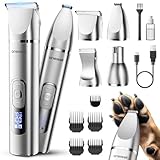

| Clipper or blade type | Typical power or runtime | Blade options | Best fit | Ownership trade-off |
|---|---|---|---|---|
| Andis AGC2 corded clipper | Two-speed rotary motor; continuous corded use | Detachable A5-style blades | Frequent grooming and longer sessions | No battery downtime; cord management takes attention |
| Andis Pulse ZR II cordless clipper | Five speeds; approximately 3 hours of runtime per charge, depending on use | Detachable A5-style blades | Owners who want cordless movement and adjustable speed | Battery condition and replacement cost matter over time |
| Wahl KM Cordless clipper | Up to approximately 2 hours of runtime per charge, depending on use | Detachable blades | Home or professional grooming without a cord | Allow charging time between extended sessions |
| Detachable size 10 blade | Not applicable | Leaves about 1.5 mm of hair | Short clipping where that finish is appropriate | Very short; may not suit every coat or area |
| Detachable size 4F blade | Not applicable | Leaves about 9.5 mm of hair | A longer, fuller finish than a size 10 | Coat condition and technique affect the finish |
Blade lengths refer to common finishing-blade specifications and can differ by manufacturer. A blade number is not a power rating. Guard combs can add length, but they work best on a clean, fully brushed coat; they are not a reliable way to clip through mats.
How to decide between corded and cordless
Estimate the time your dog will comfortably tolerate, not just the time required to clip the coat. For example, if a full groom is likely to take 90 minutes and a cordless clipper offers up to 120 minutes under ideal conditions, that leaves only 30 minutes of nominal margin. Dense coat, higher speed, battery age, and interruptions can reduce practical runtime. For a job that may stretch longer, use a corded model, split grooming into shorter sessions, or choose a cordless model with a battery system that suits your workload.
On corded models, keep the cable behind you and away from the dog’s feet. On cordless models, check that replacement batteries are actually available and reasonably priced. Either way, a detachable blade system can be a better long-term investment than a clipper tied to proprietary, difficult-to-replace blades.
Power, noise, and heat: what matters in practice
Motor speed alone does not tell you how well a clipper will handle a large dog’s coat. Look for a model intended for sustained grooming, with a blade system that is easy to clean and a motor designed to keep cutting without repeated snagging. A slow, pulling cut often means the coat needs more brushing, the blade is dull or dirty, or the blade length is unsuitable—not simply that the motor needs a higher speed.
Noise and vibration are difficult to compare across brands because manufacturers do not always publish measurements using the same method. If sensitivity is a concern, seek a quiet-running design, but treat sound as one part of the decision. Let the dog see and smell the clipper while it is off, then turn it on at a distance and reward calm behavior. Stop if the dog becomes distressed; a groomer or veterinarian can help advise on a safer plan.
Blades warm during use, particularly when clipping dense hair continuously. Check blade temperature frequently against the inside of your wrist, switch to a clean, cool blade when needed, and use clipper coolant or lubricant as directed by its label. Do not press a hot blade against the skin or assume that a powerful motor makes heat less likely.
Blade care and durability
Blades are the consumable most likely to affect cutting quality. Hair and skin oils build up between the teeth; impact damage or dulling can make a blade pull even when the motor is working properly. Brush out hair during the session, clean and oil the blade according to the manufacturer’s instructions, and store it dry. Replace or professionally sharpen blades that remain blunt, snag, or show damage. Do not use a cracked or bent blade.
Clipper bodies also need basic care: keep vents free of hair, avoid dropping the unit, and follow the manufacturer’s charging and storage guidance for cordless batteries. A heavy clipper may be durable but tiring to hold during a long session, so weight and balance are practical ownership considerations, not just comfort extras.
Bottom line
For frequent full-body grooming, start with a professional detachable-blade clipper such as the corded Andis AGC2 if uninterrupted power is your priority. Choose a cordless option such as the Andis Pulse ZR II or Wahl KM Cordless when freedom of movement matters and its stated runtime fits your session length. For a large dog with a dense or matted coat, do not buy on motor power alone: coat preparation, blade choice, temperature checks, and the dog’s tolerance determine whether grooming at home is practical and safe.
0 Comments