What's inside
- Best Bar Stools for Kitchen Islands: Choose by Height, Space, and Daily Use
- First, measure the island—not the stool’s overall height
- How many stools will fit comfortably?
- Choose the stool style for your situation
- Comfort is more than padding
- Materials, cleaning, and what wears first
- Before you buy: a quick fit check
- Bottom line
- Best Bar Stools for Kitchen Islands: Choose by Height, Space, and Daily Use
- First, measure the island—not the stool’s overall height
- How many stools will fit comfortably?
- Choose the stool style for your situation
- Comfort is more than padding
- Materials, cleaning, and what wears first
- Before you buy: a quick fit check
- Bottom line
As an Amazon Associate I earn from qualifying purchases. This post may contain affiliate links at no extra cost to you.
Best Bar Stools for Kitchen Islands: Choose by Height, Space, and Daily Use
The best bar stools for kitchen islands match the distance from floor to countertop, leave enough room for knees and neighboring seats, and use materials that suit how often the island is used. For most standard kitchen islands, a counter-height stool with a seat about 24–26 inches high is the right starting point; reserve 28–32-inch seats for genuinely bar-height counters.
First, measure the island—not the stool’s overall height
Stool listings distinguish seat height from total height. Seat height determines whether your legs fit beneath the counter; overall height includes the back and matters when tucking stools under an overhang or beneath a window. Measure from the floor to the underside of the counter, then check that the stool’s seat leaves roughly 10–12 inches of vertical space between the seat and the counter’s underside.
As an Amazon Associate we earn from qualifying purchases at no extra cost to you.


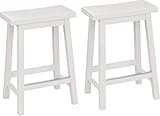
Common categories are useful guides, not substitutes for measuring. Countertops can vary, and a thick countertop or low apron changes the usable knee space. If the island has a dropped section or an unusually deep apron, measure to its lowest obstruction.
| Island surface height | Typical seat height | Approximate seat-to-surface gap | Best fit |
|---|---|---|---|
| 34–36 inches | 24–26 inches | 10–12 inches | Standard kitchen counter |
| 40–42 inches | 28–32 inches | 10–14 inches | Raised bar or bar-height island |
| Variable or nonstandard | Measure before buying | Aim for 10–12 inches | Custom, thick, or stepped counters |
These are typical ranges, not a guarantee of fit. With adjustable stools, check that the minimum and maximum seat heights actually cover your measured target.
How many stools will fit comfortably?
Count seats by usable width, not by the island’s full length. Allow about 24–26 inches of counter frontage per person for ordinary dining; compact, armless stools may work at around 22 inches, but elbows will be closer together. Leave extra space for wide seats, arms, or people who tend to spread out.
Worked example: An island with 72 inches of clear seating frontage can usually accommodate three stools at 24 inches each. If each stool is 19 inches wide, the set occupies 57 inches, leaving 15 inches total for gaps and end clearance. Check the actual footprint: a wide base or projecting arms can take up more practical space than the seat width suggests.
Also plan for movement. A stool that fits along the counter can still block a walkway when pulled out. Measure the path behind seated people and preserve the circulation space your household needs; there is no useful one-size-fits-all clearance for every kitchen layout.
Choose the stool style for your situation
| Situation | Useful choice | Trade-off to consider |
|---|---|---|
| Small island or tight walkway | Backless, armless stool that tucks fully beneath the overhang | Less support for long meals; check whether it is easy to lift and move |
| Everyday family meals | Stool with a supportive back, footrest, and wipeable seat | Backs and arms need more clearance and may prevent full tuck-under storage |
| Mixed-height users | Height-adjustable stool with a stable base and secure adjustment mechanism | More moving parts to inspect; confirm its height range and base footprint |
| Frequent spills or young children | Sealed wood, metal, or easy-clean molded seat | Hard surfaces can feel less comfortable during longer sittings |
| Long conversations or remote work | Contoured seat, back support, and a well-positioned footrest | Upholstery adds cleaning and wear considerations |
Comfort is more than padding
A footrest is valuable on a tall stool because it gives feet somewhere to rest and reduces the feeling of dangling legs. Check that it is positioned comfortably for the intended user and made to withstand regular pressure. A curved or contoured seat can feel better over a longer meal than a flat, narrow seat. Padding helps, but thin upholstery can compress or wear through with daily use.
Back support is worthwhile when stools serve as regular dining seats. A low back may offer some support while preserving a lighter appearance; a taller back generally occupies more visual and physical space. Arms can make sitting down easier for some users, but they may stop a stool from sliding under the counter. Compare the arm height with the underside of the island before ordering.
If several people will use the same stools, try to make the seat height and footrest placement work for the shortest regular user as well as the tallest. An adjustable model can help, but choose one with a broad, stable base and a clearly specified weight capacity. Do not infer capacity from appearance.
Materials, cleaning, and what wears first
- Wood: Warm-looking and repairable, but finishes can scratch or be damaged by standing moisture. Wipe spills promptly, especially around joints and unfinished edges.
- Metal: Often practical for busy kitchens and easy to wipe down. Check for smooth welds, sturdy footrests, and floor-protecting glides; chipped coatings can expose the underlying metal.
- Plastic or molded seats: Lightweight and usually simple to clean, though scratches may be conspicuous and comfort depends on shape and support.
- Upholstery: Comfortable, but fabric can hold spills and odors. Performance fabrics and removable covers may simplify care; read the cleaning instructions rather than assuming a fabric is stain-proof.
- Woven or cane details: Add texture but can trap crumbs and are harder to wipe completely. Consider them for lower-spill areas or households willing to clean carefully.
In daily use, the first problems are often loose screws, worn floor glides, a wobbly frame, or upholstery at high-contact edges—not a dramatic frame failure. Recheck fasteners after assembly and periodically thereafter, following the manufacturer’s instructions. Replace damaged glides before a stool starts scratching the floor. Avoid soaking wood or using abrasive cleaners on finishes, coated metal, or seat coverings.
Before you buy: a quick fit check
- Measure the counter and underside. Record floor-to-surface height and floor-to-lowest-obstruction height.
- Select the seat-height range. Target about 10–12 inches between the seat and the underside, then verify the measurement against the actual stool dimensions.
- Measure clear frontage. Divide it by roughly 24–26 inches per seat, adjusting for wide seats, arms, and household preferences.
- Check the pull-out zone. Confirm that occupied and pulled-out stools will not obstruct a doorway, appliance, or main walking route.
- Match the finish to the routine. Consider spills, cleaning time, expected sitting duration, floor type, and whether the stools will be moved often.
- Confirm the practical specifications. Look for seat height, overall dimensions, weight capacity, assembly requirements, care instructions, and a return option in case the fit is wrong.
Bottom line
For a typical 36-inch kitchen counter, start with a 24–26-inch seat; for a 42-inch bar-height surface, look around 28–32 inches. Then narrow the choice by spacing, comfort, and cleanup: a compact backless stool suits a tight island, while a backed, footrest-equipped model is generally more comfortable for regular meals. The right stool is the one that fits the measured counter and your kitchen’s everyday use—not simply the one that looks right in a product photo.
0 Comments