What's inside
As an Amazon Associate I earn from qualifying purchases. This post may contain affiliate links at no extra cost to you.
The best assisted braking belay device for most climbers is the Petzl GriGri for broad rope compatibility and reliable lowering control, while the Black Diamond ATC Pilot is the better lightweight, budget-friendly choice for gym climbing and the Edelrid Mega Jul is the strongest option when low weight and rappel versatility matter.
As an Amazon Associate we earn from qualifying purchases at no extra cost to you.
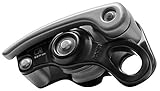


Best assisted braking belay devices at a glance
| Device | Weight | Published rope range | Braking style | Best suited to | Typical market range |
|---|---|---|---|---|---|
| Petzl GriGri | 200 g | 8.5–11 mm | Cam-assisted, semi-automatic | General indoor and outdoor climbing | About $110–$130 |
| Petzl GriGri + | 200 g | 8.5–11 mm | Cam-assisted, semi-automatic | Instruction, top-rope and frequent gym use | About $130–$150 |
| Petzl Neox | 180 g | 8.5–11 mm | Cam-assisted with assisted-feeding design | Sport climbing and fast rope payout | About $150–$170 |
| Black Diamond ATC Pilot | 92 g | 8.7–10.5 mm | Body-assisted braking | Gym climbing and budget-conscious buyers | About $45–$60 |
| Mammut Smart 2.0 | 210 g | 8.7–10.5 mm | Body-assisted braking | Single-rope belaying indoors or outside | About $45–$60 |
| Edelrid Mega Jul | 65 g | 7.8–10.0 mm | Body-assisted braking, tube-style | Alpine climbing and rappelling | About $45–$60 |
| Wild Country Revo | 245 g | 8.5–11 mm | Cam-assisted, reversible anti-panic mechanism | Users prioritizing additional lowering protection | About $130–$160 |
Weights and rope ranges are manufacturer specifications; check the current manual before use because approved rope diameters and operating instructions can change between product revisions.
Our picks by climbing situation
Best all-rounder: Petzl GriGri
The GriGri remains the easiest recommendation when one device must cover gym sessions, sport climbing and top-rope instruction. Its 8.5–11 mm range accommodates common single ropes, and its cam engages when the climber falls or loads the rope. The lever gives a comparatively controlled way to lower, particularly with thicker ropes that provide more friction.
Its disadvantages are equally important. At 200 g, it is much heavier than a tube-style device, and the cam can make slack management feel less natural for a beginner. It is also not a substitute for keeping the brake hand on the rope. The GriGri is for single-rope belaying, not ordinary twin- or half-rope use.
Best for gym value and low weight: Black Diamond ATC Pilot
The ATC Pilot is a compact, 92 g device that adds assisted braking to a familiar tube-device format. It is particularly appealing for indoor climbing, where one commonly used single rope is available and the belayer wants more braking assistance than a standard ATC provides without paying for a cam-based device.
Its braking is body-assisted rather than semi-automatic. The brake hand still has to remain behind the device, and the device will not lock in the same way as a cam-assisted unit. In return, it has a simple, direct feel and is inexpensive to replace. Its 8.7–10.5 mm range is narrower than the GriGri’s, so check the gym rope diameter before buying.
Best for smooth rope payout: Petzl Neox
The Neox is designed to make paying out rope during lead belaying more fluid than with a conventional cam-assisted design. That can matter on routes where the climber needs quick, generous clips and the belayer must feed rope efficiently. It weighs 180 g and accepts 8.5–11 mm single ropes.
Choose it when lead belay handling is your priority and the higher price is acceptable. It is less compelling if most of your climbing is top-roping, where the Neox’s faster-feeding characteristics may not justify the extra cost.
Best for instruction and top-roping: Petzl GriGri +
The GriGri + has a similar 200 g weight and 8.5–11 mm rope range to the standard GriGri, but adds modes intended for top-rope and lead belaying. It also includes an anti-panic feature on the lowering lever: pulling the lever too far causes the mechanism to interrupt the descent rather than continuing to open the cam.
That feature can provide useful forgiveness during instruction, but it does not make incorrect technique safe. The device costs more and can feel less immediate to experienced users who already have precise lowering habits.
Best for alpine versatility: Edelrid Mega Jul
At approximately 65 g, the Mega Jul is the lightest device in this comparison. It works with single, half and twin ropes within its specified diameter range, making it more useful for alpine routes than single-rope-only devices. It can also be used for rappelling when configured according to Edelrid’s instructions.
The trade-off is handling. Feeding slack and lowering can require more deliberate technique than with a standard tube device, especially on thin, stiff or icy ropes. It is an excellent weight-saving choice for experienced climbers, but not the most intuitive first assisted-braking device for a new gym belayer.
Assisted braking: what the comparison really means
Cam-assisted devices such as the GriGri, GriGri +, Neox and Revo can rotate a cam into the rope when the loaded rope accelerates or is weighted. They offer strong braking assistance and generally make holding a fall less strenuous. They are not automatic belay systems: the brake strand must still be held, and the device must be installed correctly.
Body-assisted devices such as the ATC Pilot, Mammut Smart 2.0 and Mega Jul use the belayer’s brake-hand position, the device’s geometry and the carabiner to increase friction. They tend to preserve a more tube-like rope feel and are often lighter or cheaper, but they demand especially disciplined brake-hand technique.
Neither category is universally “safer.” A device that feels comfortable encourages better rope control; a device used outside its rope range or with the wrong method can create serious risk.
Lowering control and handling differences
- Most predictable lowering: The GriGri is known for a progressive lever, although thin ropes can descend quickly and require finesse.
- Most forgiving lever behavior: The GriGri + and Wild Country Revo include anti-panic features that can interrupt lowering when the lever is pulled too far.
- Most direct tube-device feel: The ATC Pilot and Mammut Smart 2.0 suit climbers who prefer controlled, manual rope movement.
- Best thin-rope and multi-rope flexibility: The Mega Jul covers more rope types, but its handling is more technique-sensitive.
- Fastest lead-rope feeding: The Neox is aimed at smoother, quicker slack payout than traditional cam-assisted devices.
For any device, lowering should be practiced close to the ground with the exact rope and carabiner combination you will use. Rope diameter, sheath texture, moisture and wear can noticeably alter friction.
How to choose using your rope and routine
| Your situation | Best direction | Why |
|---|---|---|
| Climb twice weekly at a gym with a standard single rope | ATC Pilot or GriGri | Both suit common gym use; the Pilot saves weight and money, while the GriGri offers stronger cam assistance. |
| One device for gym and outdoor sport climbing | GriGri | Its broad 8.5–11 mm single-rope range covers many setups. |
| Mostly lead climbing with frequent fast clips | Neox | Its design emphasizes smoother rope payout during lead belaying. |
| Top-rope instruction or teaching new belayers | GriGri + | Top-rope mode and anti-panic lowering behavior add useful instructional features. |
| Alpine routes using half or twin ropes | Mega Jul | It is light and supports multiple rope configurations within its approved range. |
| Thin rope below 8.5 mm | Check the manual first | Many popular cam-assisted devices are not approved for very thin ropes; do not infer compatibility from appearance. |
Ownership, wear and common mistakes
The rope usually shows wear before the metal device does, but repeated loading can polish or groove the rope-contact surfaces. Inspect the device for sharp edges, deep grooves, cracks, deformation and a lever or cam that does not move freely. Retire or obtain manufacturer advice for any device damaged in a significant fall or impact.
Keep the device free of grit and salt. A soft brush and clean water are generally preferable to oil or solvent; lubricants can contaminate the rope and change friction. Dry the device fully before storage. Do not file, sand or modify braking surfaces.
The most common errors are threading the rope backward, using a non-approved carabiner shape, relying on the device to lock automatically, feeding rope with the brake hand leaving its position, and assuming that a larger-diameter rope will always be easier to lower. Read the device manual, verify the rope path with a partner and practice both catching and lowering before climbing at height.
Final verdict
Choose the Petzl GriGri for the best balance of assisted braking, rope-range flexibility and lowering control. Pick the Black Diamond ATC Pilot when gym climbing, low weight and price matter most. Choose the Petzl Neox for lead-belaying fluidity, the GriGri + for instruction and anti-panic lowering behavior, and the Edelrid Mega Jul when alpine versatility and minimal pack weight outweigh ease of use.
0 Comments