What's inside
As an Amazon Associate I earn from qualifying purchases. This post may contain affiliate links at no extra cost to you.
The best budget sanding abrasives depend on how you sand
The best budget sanding abrasives are usually aluminum-oxide sheets for hand sanding, hook-and-loop discs for a compatible random-orbit sander, and wide rolls when you sand frequently or need custom sizes. Choose by cost per usable session—not sheet price alone—because backing failure, clogging, and poor fit can make a cheap abrasive expensive.
As a practical starting point, buy a small assortment of grits rather than a large bargain pack in one grit. For common furniture and shop projects, that means roughly 80, 120, 180, and 220 grit. The best selection changes with your work: sanding bare, resinous wood calls for clog resistance; flattening rough stock calls for durable backing; occasional handwork favors inexpensive sheets.
As an Amazon Associate we earn from qualifying purchases at no extra cost to you.
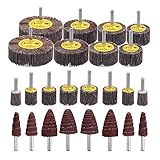


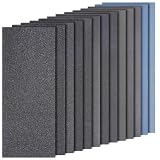
Sheets, discs, and rolls: the head-to-head
| Format | Typical grit range | Common backing | Best fit | Main cost trade-off |
|---|---|---|---|---|
| Paper sheets | 40–400 | Paper, commonly around 70–100 g/m² | Hand sanding, sanding blocks, occasional repairs | Low upfront cost; edges and folds can wear or tear early |
| Hook-and-loop discs | 40–400; higher grits are available | Paper or film with hook-and-loop attachment | Random-orbit sanders and repeat sanding tasks | More per disc; holes and diameter must match the sander |
| Abrasive rolls | Typically 40–320, depending on product | Paper or cloth | Cut-to-size hand sanding, shop blocks, frequent use | Higher initial purchase; less waste if you use the roll regularly |
These ranges and backing weights are common examples, not a standard shared by every manufacturer. Check the product label for its actual grit range, backing, dimensions, and intended machine use. For machine sanding, match both the disc diameter and dust-hole layout to the sander; a disc that fits the pad but blocks extraction can clog faster and leave dust on the work.
Choose by situation, not by the largest pack
| Your situation | Good-value choice | Why |
|---|---|---|
| Occasional repairs; little storage space | Small paper-sheet assortment | Low commitment and easy to store; cut sheets to fit a block |
| Regular furniture work with a random-orbit sander | Matched hook-and-loop discs, preferably with open coating | Fast changes and useful dust extraction; open coating can reduce loading on soft or resinous wood |
| Frequent hand sanding or custom block sizes | Paper or cloth roll in your most-used grits | Cut only what you need, with less odd-sized sheet waste |
| Heavy stock removal or rough reclaimed wood | Sturdier-backed abrasive in a coarse grit | Backing that resists tearing may outlast a cheaper sheet; inspect for embedded grit or debris that could scratch the work |
What the grit number does—and does not—tell you
Grit indicates how coarse an abrasive is within its grading system, but it does not guarantee that products from different manufacturers cut or finish identically. Start coarse enough to remove the marks or defects, then step through grits to erase the scratches left by the previous one. Skipping too far ahead often wastes the finer abrasive: it may polish the high spots while deeper scratches remain.
- 40–80 grit: rapid removal, shaping, and rough stock preparation. Use with care; these grits leave scratches that take time to remove.
- 100–150 grit: general leveling and early smoothing, depending on the wood and the preceding grit.
- 180–220 grit: final preparation for many projects, subject to the finish maker’s guidance and the wood’s response.
- Above 220 grit: useful for specific finish-preparation or between-coat tasks, but not automatically better for bare wood. Excessively fine sanding can affect how some finishes or stains take.
Always check the finish instructions and make a sample on offcuts when appearance matters. Dust between grits, and inspect the surface under angled light; remaining coarse scratches are easier to spot before applying finish.
Compare cost per usable sanding session
A pack price is only useful when you account for how much of each abrasive you can use before it stops cutting, clogs, tears, or loses its attachment. Here is a hypothetical comparison, not a quoted market price:
- Budget discs: a 50-disc pack costs $12, or $0.24 per disc. If one disc gives 12 useful minutes, the cost is $0.02 per useful minute.
- More durable discs: a 25-disc pack costs $10, or $0.40 per disc. If one lasts 25 useful minutes, the cost is $0.016 per useful minute.
Calculation: pack cost ÷ pack quantity ÷ useful minutes per abrasive. In this example, the smaller, pricier-per-disc pack costs less per useful sanding minute. Your results will depend on wood species, pressure, dust extraction, grit, and how much surface you sand. Treat a “session” as a defined task—for example, sanding one tabletop through a chosen grit sequence—if you prefer comparing project costs instead of minutes.
Backing, clogging, and what wears out first
For hand work, paper backing is economical and easy to fold, but a sharp edge or tight fold can split it before the abrasive is worn down. A sanding block spreads pressure more evenly and helps prevent finger-shaped hollows. Cloth-backed abrasives generally tolerate flexing better, though they may cost more and are not necessary for every flat surface.
On a sander, attachment failure, clogged abrasive, and worn cutting edges are common reasons to change a disc. Hook-and-loop pads also wear, especially if discs are pulled off aggressively; remove them carefully and keep the pad surface clean. Film-backed discs can resist tearing and stay flatter than paper in some tasks, but their higher price only pays off if that durability matters for your work.
Softwoods, resinous woods, and material with finish residue can load an abrasive quickly. Open-coated abrasives leave more space between grains for debris, which may help reduce clogging. Use effective dust extraction and light, even pressure: leaning harder can generate heat and pack dust into the abrasive without speeding the cut. Abrasive cleaning sticks can extend the useful life of some loaded abrasives, but cannot restore worn or damaged grit.
Buying checklist
- Confirm the actual sheet or disc size; for machine use, match the sander’s diameter and hole pattern.
- Check whether the abrasive is intended for hand use, machine use, or both.
- Buy the grits your process needs instead of paying for a bulk pack with several grits you rarely use.
- Choose open coating when clogging is a recurring problem; choose stronger backing when tearing is the main failure.
- Compare the estimated cost per usable session or sanding minute, not just the price per sheet.
For most occasional woodworkers, a modest aluminum-oxide sheet assortment plus a small pack of correctly sized discs is a sensible starting point. Move to rolls or more durable backing when repeated use, custom sizing, or early abrasive failure makes the cheaper format a false economy.
0 Comments