What's inside
- What to buy first
- Best budget wood carving tools by situation
- Head-to-head: budget knives versus budget sets
- Blade steel and edge retention
- Handle comfort, safety, and included profiles
- A practical budget decision matrix
- Setup and maintenance that protect a budget tool
- Common mistakes to avoid
- Final recommendation
- Related Guides
- What to buy first
- Best budget wood carving tools by situation
- Head-to-head: budget knives versus budget sets
- Blade steel and edge retention
- Handle comfort, safety, and included profiles
- A practical budget decision matrix
- Setup and maintenance that protect a budget tool
- Common mistakes to avoid
- Final recommendation
- Related Guides
As an Amazon Associate I earn from qualifying purchases. This post may contain affiliate links at no extra cost to you.
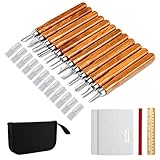
The best budget wood carving tools for beginners are a small, comfortable carving knife plus two or three useful gouges—not a large set filled with duplicate blades. For most new carvers, a 2–3 mm detail knife, a 5–8 mm medium gouge, and a V-tool cover more projects than a 20-piece low-cost kit.
As an Amazon Associate we earn from qualifying purchases at no extra cost to you.


What to buy first
Choose tools according to the wood and carving style you expect to use. A carving knife is the most versatile option for whittling, small figures, spoons, and simple relief work. Gouges remove wood faster and make controlled hollows, while a V-tool cuts lines, hair, bark texture, and lettering.
- For small figures and whittling: one detail knife and one larger roughing knife.
- For relief carving: a 6–10 mm shallow gouge, a 4–6 mm V-tool, and a detail knife.
- For spoons: a hook knife or spoon gouge, plus a straight carving knife.
- For occasional practice: a three- to six-piece starter set can be economical if its blades are properly ground and its handles are comfortable.
- For hardwood: prioritize tougher steel, a rigid blade, and a handle that lets you apply pressure without slipping.
Best budget wood carving tools by situation
| Situation | Best choice | Useful specification | Typical market range |
|---|---|---|---|
| First whittling knife | Flexcut KN12 detail knife | Carbon steel blade, approximately 1.5 in. cutting edge | $20–$35 |
| One-tool beginner setup | BeaverCraft S01 or similar sloyd knife | High-carbon steel, approximately 2.5–2.8 in. blade | $15–$30 |
| Compact mixed starter kit | Flexcut KN250 beginner set | Three knives covering roughing, detail, and medium cuts | $55–$85 |
| Relief-carving upgrade | Narex carving chisels or similar individual gouges | Common widths from 6 to 20 mm; forged or ground tool steel | $15–$35 per tool |
| Frequent hardwood carving | Pfeil carving gouge bought individually | High-quality carbon steel; many sweep and width options | $35–$70 per tool |
Prices vary by retailer, handle style, and regional taxes. Treat these as broad buying ranges rather than fixed quotes.
Head-to-head: budget knives versus budget sets
Flexcut carving knives
Flexcut knives are a strong choice when handle comfort matters more than having many profiles. Their shaped wooden handles fit the palm well, and the blades usually arrive ready for controlled carving rather than requiring extensive correction. The KN12 is suited to detail work, while the KN13 is a broader general-purpose knife.
The trade-off is blade geometry. A narrow detail knife is excellent for eyes, corners, and stop cuts but inefficient for removing large amounts of wood. Flexcut carbon steel can take a keen edge, although it should be wiped dry after use and lightly protected against corrosion.
BeaverCraft knives and sets
BeaverCraft offers accessible sloyd, detail, and spoon-carving tools, often with comfortable hardwood handles and leather sheaths. Their starter sets are attractive for beginners who want several shapes immediately, particularly for softwood such as basswood, pine, or aspen.
Quality can vary more between individual tools and sets than the low price suggests. Inspect the bevel, tip, and heel before carving. A blade that is visibly uneven or has a blunt secondary bevel may need honing before it performs well. These tools are generally a better fit for softwood and moderate hardwood projects than for forcing cuts through highly abrasive or knotty stock.
Narex and Pfeil gouges
Narex provides a practical route into relief carving without jumping immediately to premium pricing. Individual gouges allow you to select useful profiles instead of paying for rarely used tools. A 6 mm shallow gouge, 10 mm medium gouge, and 4–6 mm V-tool form a useful small set.
Pfeil gouges cost more, but their consistent profiles, well-finished edges, and broad range of sweeps make them worthwhile for frequent carving. The ownership advantage is not simply sharpness out of the box: a predictable profile makes it easier to learn how the tool will enter and exit the wood.
Blade steel and edge retention
Most affordable carving tools use carbon steel or a simple alloy tool steel. Carbon steel can become extremely sharp and is usually easy to hone, but it is less corrosion-resistant than stainless steel. The steel label alone does not determine performance; heat treatment, edge angle, blade thickness, and grinding quality matter just as much.
- Softwood: a keen edge at roughly 20–25 degrees per side works well for many knives and light gouges.
- General hardwood: a slightly more durable edge around 25–30 degrees per side reduces fragile tips and rolled edges.
- Hard or abrasive wood: use lighter cuts and accept more frequent honing rather than forcing the blade.
Edge retention is also affected by the cut. End grain, knots, bark, and dirty reclaimed wood dull tools much faster than clean side-grain basswood. A budget knife used carefully on clean softwood can feel sharper for longer than an expensive tool used as a pry bar.
Handle comfort, safety, and included profiles
Handle shape is a deciding factor because carving involves repeated pressure and many small directional changes. Look for a handle that fills the palm without sharp corners, has a secure grip when your hands are dry or slightly sweaty, and allows your index finger to guide the blade. Avoid oversized handles that force your wrist into an awkward angle.
For beginners, a short blade is usually safer and easier to control than a long general-purpose knife. Use a cut-resistant carving glove on the hand holding the wood, not as a substitute for good technique. Keep both hands behind the cutting edge, carve away from your body, secure the workpiece, and stop when the blade starts requiring excessive force.
When comparing a set, count useful profiles rather than pieces. Three different knives may be more valuable than ten nearly identical chisels. A sensible starter selection includes:
- one broad knife for removing corners;
- one narrow knife for detail and stop cuts;
- one medium straight or shallow gouge;
- one V-tool for lines and texture; and
- a hook knife only if spoon carving is part of the plan.
A practical budget decision matrix
| Budget and use | Recommended purchase | Why it fits | What to postpone |
|---|---|---|---|
| Under $30, occasional softwood | One sloyd or detail knife | Lowest cost and enough range to learn grain direction | Large sets and specialty gouges |
| $40–$80, weekly small projects | Two knives plus a V-tool or medium gouge | Covers roughing, detail, and texture | Premium hardwood-only tools |
| $80–$150, relief carving | Three or four individual gouges | Better profile selection and more efficient material removal | Hook knives unless making spoons |
| Limited workspace | Short-handled knives and two compact gouges | Easy to store and less intimidating to control | Long bench chisels and duplicate sweeps |
Setup and maintenance that protect a budget tool
- Inspect the edge. Look for a continuous bevel and a tip without a flat spot. Do not begin with heavy cuts until the edge is even.
- Hone lightly. Use a fine slipstone or strop and maintain the existing bevel. Removing too much steel changes the profile and shortens the tool’s useful life.
- Strop the inside carefully. For a V-tool or gouge, use a shaped strop or suitable slip surface. Flattening the inside can ruin the cutting geometry.
- Clean after carving. Remove resin and dust with a dry cloth. If the blade is carbon steel, apply a very thin coat of camellia oil or another appropriate rust preventive.
- Store edges separately. Use a sheath, tool roll, or rack so blades do not strike one another. Keep moisture away from both steel and wooden handles.
A simple cost-per-use calculation helps explain why buying individually can be cheaper. Suppose a $25 knife is used for 25 small projects: its tool cost is $1 per project. A $75 ten-piece set used mainly for two knives may provide only 50 combined project uses before the owner replaces or upgrades those favorites, making the effective cost $1.50 per useful project. The set is worthwhile only if its extra profiles will actually be used.
Common mistakes to avoid
- Buying a large set before deciding whether you prefer figures, reliefs, or spoons.
- Choosing the hardest-looking wood as a first project instead of clean, straight-grained basswood.
- Using a knife with a rolled edge and compensating by pushing harder.
- Sharpening away the original profile until a gouge no longer matches its intended sweep.
- Leaving carbon-steel tools damp inside a leather sheath, where trapped moisture can encourage rust.
Final recommendation
For the lowest-risk start, buy one comfortable sloyd or detail knife and a strop, then add a medium gouge or V-tool after completing a few projects. Flexcut is a dependable comfort-focused option, BeaverCraft offers accessible beginner coverage, Narex is a sensible step into individual gouges, and Pfeil is the better long-term choice when consistent profiles and frequent hardwood work justify the cost. The best budget wood carving tools are the ones that match your material, keep a stable edge, and get used often enough to repay their purchase.
0 Comments