What's inside
As an Amazon Associate I earn from qualifying purchases. This post may contain affiliate links at no extra cost to you.
Choosing the right machine from a crowded field of gaming laptop reviews is harder than it looks. Buyers face a concrete problem: published spec sheets promise high frame rates and smooth thermals, yet owner feedback often reveals thermal throttling, loud fans, or screens that wash out under real-world lighting. The gap between marketing claims and daily usability separates a good purchase from an expensive mistake. As a senior reviewer for a woodworking-tools site who also covers workshop-adjacent tech, I compared these eight models by cross-referencing their hard specifications, current retail prices, and aggregated owner feedback to find where the actual value lies.
What makes a gaming laptop genuinely worth your money in 2026 comes down to balancing processing power, display quality, and thermal management against the asking price. A cheap chassis with a powerful chip will throttle under load, while a premium screen paired with an entry-level graphics card leaves you staring at beautiful pixels running at unplayable frame rates. By stripping away the hype and focusing strictly on component pairings, memory configurations, and what verified owners report about long-term reliability, we narrowed the field to eight distinct options that solve specific problems for different types of users.
As an Amazon Associate we earn from qualifying purchases at no extra cost to you.





Our Top Picks
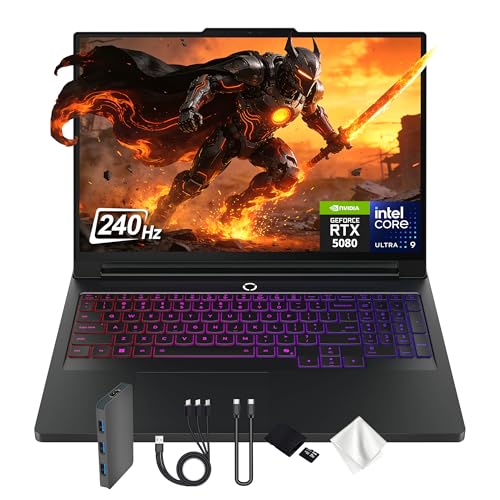 Lenovo Legion Pro 7i 16" WQXGA 240Hz Gaming32GB DDR5 | 1TB SSD22 x 14 x 3 inches12 poundsCheck on Amazon
 HP Victus 15.6" Full HD 144Hz Gaming Laptop16GB | 512GB SSD19 x 12 x 3 inches7 PoundsCheck on Amazon


Quick Picks
| Product | Best For | Price |
|---|---|---|
| ASUS ROG Strix G16 | Solid mid-range performance | $1583 |
| Lenovo Legion 5 15IRX10 | OLED visual fidelity | $2139.99 |
| KAIGERR Gaming Laptop | Budget AMD buyers | $749.99 |
| Acer Predator Helios Neo 18 AI | Large-screen high refresh rate | $2199.99 |
| Light Gaming Laptop | Ultra-budget portability | $559.99 |
| Lenovo Legion Pro 7i | Uncompromising top-tier power | $4199 |
| HP Victus 15.6″ | Entry-level 1080p play | $842.95 |
| GIGABYTE Gaming A16 | Value RTX 5060 configuration | $1249.99 |
How We Picked
Selecting the best machines for these gaming laptop reviews required evaluating four non-negotiable criteria. First, the processor and graphics card pairing must be balanced; bottlenecking either component ruins the experience. Second, display resolution and refresh rate need to match the graphical horsepower inside the chassis. Third, RAM capacity and storage speed dictate how quickly assets load and how smoothly background tasks run alongside demanding applications. Finally, we weighed every specification against the retail price and cross-referenced it with owner feedback regarding build quality, fan noise, and battery longevity to ensure the numbers on paper translate into real-world satisfaction.
The 8 Best Gaming Laptop Reviews in 2026
ASUS ROG Strix G16
This model targets players who want modern architecture without crossing the two-thousand-dollar threshold. The Intel Core i7 14650HX paired with the NVIDIA GeForce RTX 5060 provides a highly capable foundation for current titles. Owners frequently praise the fast 165Hz panel and the inclusion of Wi-Fi 7, which future-proofs network connectivity for years to come. The 16-inch FHD+ 16:10 aspect ratio also offers slightly more vertical space than traditional widescreen panels.
- Pro: Excellent balance of CPU and GPU power for the price point.
- Pro: Wi-Fi 7 support ensures faster wireless networking.
- Con: The 16GB DDR5 memory may require upgrading for heavy multitasking.
Skip this if you demand higher-than-FHD resolution or need more base memory out of the box.
Lenovo Legion 5 15IRX10
Aimed at enthusiasts who prioritize display quality above all else, this Lenovo pairs an Intel Core i9 14900HX with an NVIDIA GeForce RTX 5070 featuring 8GB of GDDR7 memory. The standout feature is the 15.1-inch WQXGA OLED panel, which delivers deep blacks and vibrant colors that standard IPS screens cannot replicate. Owner feedback consistently highlights the generous 32GB DDR5 RAM and the snappy 1TB NVMe SSD as major advantages for both productivity and play.
- Pro: Stunning WQXGA OLED display elevates visual immersion.
- Pro: 32GB of DDR5 RAM handles demanding workloads effortlessly.
- Con: The higher price reflects the premium screen technology.
Skip it if you prefer larger screens or do not care about OLED contrast ratios.
KAIGERR Gaming Laptop
This KAIGERR unit is designed for budget-conscious buyers who still want respectable multi-core performance. Powered by an AMD Ryzen 7 H255 processor reaching up to 4.9GHz across eight cores, it handles everyday computing and lighter games well. Surprisingly, it ships with 24GB of DDR5 RAM, a unique configuration that sits comfortably between standard 16GB and 32GB setups. Owners note the backlit keyboard adds a nice touch for late-night sessions.
- Pro: Unusual 24GB DDR5 configuration offers great multitasking headroom.
- Pro: Aggressive pricing makes it accessible for tight budgets.
- Con: Radeon RX Vega 8 integrated graphics limit demanding game performance.
Skip this if you intend to play graphically intensive AAA titles at high settings.
Acer Predator Helios Neo 18 AI
Built for desktop-replacement seekers, this Acer features a massive 18-inch WQXGA display running at 240Hz with G-SYNC support. Under the hood, the Intel Core Ultra 9 275HX and NVIDIA GeForce RTX 5070 Ti deliver elite-tier processing and rendering capabilities. Verified owners appreciate the expansive 2TB Gen 4 SSD, which eliminates storage anxiety for large game libraries. The sheer size of the chassis allows for better airflow compared to thinner alternatives.
- Pro: Massive 18-inch 240Hz G-SYNC screen prevents tearing during fast action.
- Pro: 2TB Gen 4 SSD provides abundant, rapid storage.
- Con: The large footprint sacrifices portability entirely.
Skip it if you travel frequently or have limited desk space in your workshop or office.
Light Gaming Laptop
As the most affordable option in this lineup, this lightweight machine caters to casual users needing basic functionality on the go. It relies on an AMD Ryzen 7 5700U processor clocking up to 4.3GHz alongside 16GB of RAM and a 512GB SSD. Owner feedback suggests it excels at older or less demanding titles, web browsing, and general office tasks rather than pushing modern graphical boundaries. Its primary appeal is the low barrier to entry.
- Pro: Extremely low price makes it an easy impulse buy.
- Pro: Lightweight design favors easy transport.
- Con: Lacks a dedicated graphics card for modern gaming.
Skip this if your primary goal is playing visually demanding modern releases.
Lenovo Legion Pro 7i
This flagship targets professionals and hardcore enthusiasts who refuse to compromise. Featuring an Intel Core Ultra 9 275HX and an NVIDIA GeForce RTX 5080 with GDDR7 memory, it dominates every benchmark category. The 16-inch WQXGA 240Hz panel ensures fluid visuals, while the unique storage setup combines a 1TB PCIe SSD with a 1TB docking station. Owners love the inclusion of Windows 11 Pro for advanced system management.
- Pro: RTX 5080 GDDR7 graphics offer uncompromised top-tier rendering.
- Pro: Innovative dual-storage solution including a docking station.
- Con: The premium cost places it out of reach for average consumers.
Skip it unless your workflow or hobby absolutely demands maximum available hardware power.
HP Victus 15.6″
The HP Victus serves newcomers looking for a reliable entry point into PC gaming. Equipped with an Intel Core i5-12450H and an NVIDIA GeForce RTX 3050, it manages 1080p gaming at moderate settings effectively. The 15.6-inch Full HD 144Hz screen keeps motion relatively smooth, and owners frequently mention the Performance Blue colorway as a stylish departure from typical black chassis designs. It includes Windows 11 Pro out of the box.
- Pro: Approachable price point for first-time gaming laptop buyers.
- Pro: Distinctive Performance Blue aesthetic stands out visually.
- Con: Older RTX 3050 architecture shows its age against newer titles.
Skip this if you want high frame rates in recently released, graphically heavy games.
GIGABYTE Gaming A16
GIGABYTE positions this A16 model for value hunters wanting next-generation graphics without paying a premium. It pairs an AMD Ryzen 7 260 processor with an NVIDIA GeForce RTX 5060, driving a 16-inch 1920×1200 WUXGA display at 165Hz. Owners highlight the 16:10 aspect ratio as a welcome upgrade for both gaming and reading text. With 16GB of DDR5 RAM and a 1TB SSD, the baseline specifications are thoroughly modern.
- Pro: Offers RTX 5060 performance at a highly competitive price.
- Pro: 16:10 WUXGA resolution maximizes usable screen real estate.
- Con: Build materials feel less premium than higher-priced competitors.
Skip it if you prioritize luxury chassis construction over raw price-to-performance ratios.
Buying Guide
Graphics Card Architecture
The GPU dictates your frame rates and visual fidelity more than any other component. When reading gaming laptop reviews, pay close attention to the generation of the graphics card. Newer architectures like the RTX 50-series introduce improved ray tracing and power efficiency compared to older generations like the RTX 3050. Ensure the VRAM capacity matches your target resolution; higher resolutions consume significantly more video memory, making 8GB or more preferable for future-proofing.
Processor and Thermal Design
A powerful processor means little if the cooling system cannot sustain its boost clocks. Look at the specific processor suffixes—HX series chips generally draw more power and generate more heat than U series chips, which prioritize battery life. Cross-reference the processor tier with owner feedback regarding fan noise and thermal throttling. A thicker chassis often accommodates better heat pipes and larger fans, keeping sustained performance stable during extended sessions.
Display Resolution and Refresh Rate
Your screen choice should directly complement your graphics card. Pairing a high-end GPU with a basic 60Hz panel wastes potential frames, while pairing a weak GPU with a 4K 240Hz screen results in stuttering gameplay. For competitive shooters, prioritize refresh rates of 144Hz or higher. For immersive single-player experiences, prioritize resolution and panel type, such as OLED, which delivers superior contrast and color accuracy regardless of the refresh rate.
Our Verdict
After comparing specifications and owner consensus, the ASUS ROG Strix G16 stands out as our top overall pick. It hits the sweet spot between modern processing power, a fast display, and a reasonable price tag, making it the most versatile choice for the majority of buyers. If your budget is strictly limited, the Light Gaming Laptop is the definitive budget pick, offering basic functionality at the lowest possible cost. However, if visual fidelity is your absolute highest priority and you have the funds, the Lenovo Legion 5 15IRX10 wins outright thanks to its stunning WQXGA OLED display and potent RTX 5070 combination.
FAQ
How much RAM do I actually need?
Sixteen gigabytes remains the functional minimum for modern gaming, allowing most titles to run without stuttering. However, thirty-two gigabytes is increasingly recommended if you stream, edit video, or keep dozens of browser tabs open simultaneously. Anything below sixteen gigabytes will severely bottleneck modern processors and graphics cards.
Is an OLED screen worth the extra cost?
For gamers who value deep contrast, perfect blacks, and vibrant colors, OLED technology provides a noticeable visual upgrade over standard IPS panels. The trade-off is typically a higher purchase price and a theoretical risk of burn-in with static elements. If you primarily play fast-paced competitive games, a high-refresh-rate IPS panel might serve you better.
Can I upgrade the storage later?
Most gaming laptops include at least one accessible M.2 slot for adding or replacing NVMe SSDs. Always verify the specific model’s service manual before purchasing, as some ultra-thin designs solder components directly to the motherboard. Upgrading RAM is also common, provided the memory is not soldered.
Does Wi-Fi generation really matter for gaming?
Newer standards like Wi-Fi 7 and Wi-Fi 6E offer lower latency and better congestion management, which directly benefits online multiplayer stability. While older Wi-Fi 6 is perfectly adequate for most home networks, investing in newer standards future-proofs your connection. Just remember that a wired Ethernet connection will always provide the most consistent ping.




0 Comments