What's inside
As an Amazon Associate I earn from qualifying purchases. This post may contain affiliate links at no extra cost to you.
Fans of the hit farming simulation Stardew Valley who want a tabletop version face a surprisingly narrow field. The official ConcernedApe cooperative board game exists and works well, but it carries a premium price and a specific player-count sweet spot that doesn’t suit every group. That gap sends buyers into a broader search for games that replicate the same satisfying loop—manage limited resources, cooperate under shared pressure, feel a gentle sense of daily progress—without the same price tag or the same design constraints.
What separates a genuinely good pick in this space from a frustrating one comes down to three things: whether the game actually rewards cooperative or low-conflict play (some alternatives are disguised competitive games that feel wrong next to Stardew Valley’s ethos), whether the rules hold up with the number of players you typically have at your table, and whether the component quality justifies the cost when you’re pulling it off the shelf again and again. A board game that captures the farming-cozy feeling matters more to these buyers than one that simply happens to be well-rated on a generic strategy list.
As an Amazon Associate we earn from qualifying purchases at no extra cost to you.



Our Top Picks
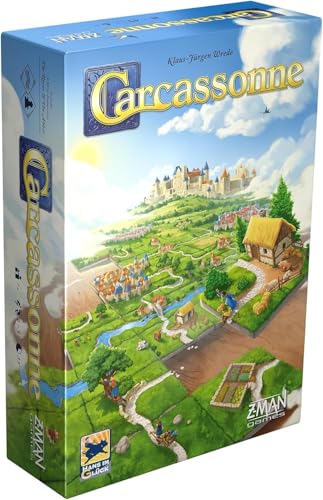 Carcassonne Tile Placement Strategy Board GameStandard2.63 x 7.5 x 10.75 inches1.6 poundsCheck on Amazon


Quick Picks
| Product | Best for | Price |
|---|---|---|
| ConcernedApe Stardew Valley Cooperative Board Game | Direct Stardew Valley fans | $61.76 |
| Asmodee Ticket to Ride | Casual gateway players | $39.99 |
| Risk | Competitive family nights | $29.99 |
| Gamewright Forbidden Desert | Cooperative puzzle lovers | $26.99 |
| Asmodee Harmonies | Solo and small-group play | $31.99 |
| Carcassonne | Tile-placement enthusiasts | $32.88 |
| Renegade Game Studios Acquire | Deep strategy gamers | $34.95 |
| Monopoly Fourth Wing Edition | Niche licensed themes | $36.99 |
How We Picked
We narrowed this list by comparing published player-count ranges, cooperative versus competitive structure, component durability signals from long-term owner feedback, and price-to-replay-value ratios. For buyers specifically searching for a Stardew Valley board game experience in 2026, cooperative or low-conflict mechanics carried the most weight. Games that are purely adversarial made the list only when their overall quality justified the tonal mismatch, giving readers a full picture of what exists at various price points.
The 8 Best Stardew Valley Board Game Options in 2026
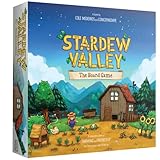
ConcernedApe Stardew Valley Cooperative Board Game
This is the only entry that is literally the Stardew Valley board game, and for fans who want a direct translation of the video game to the table, nothing else qualifies. It supports one to four players with ages 13 and up, making it ideal for solo sessions or small households. The cooperative structure means no one feels eliminated or ganged up on.
- Pros: Faithful to the source material’s farming and exploration loops; scales cleanly from solo to four players.
- Cons: Highest price on this list by a wide margin, and the component volume makes setup longer than casual alternatives.
Skip this one if your group exceeds four players or if you want a faster, lighter evening activity. The premium price also stings if Stardew Valley the video game isn’t already a shared reference point at your table.
Asmodee Ticket to Ride
Ticket to Ride captures a low-pressure, constructive feeling—laying down track, building something visible each turn—that resonates with players who liked the steady progress in Stardew Valley. At two to five players and 30-60 minutes, it fits weeknight play better than most alternatives. The age floor of 8 makes it accessible to mixed-family groups.
- Pros: Rules are simple enough to teach in under five minutes; the map board creates genuine strategic tension without direct player elimination.
- Cons: Not cooperative—players block each other’s routes, which can feel cutthroat to someone seeking Stardew Valley’s warmth.
Skip if you want pure cooperation or if your group finds competitive route-blocking stressful rather than fun.
Risk
Risk earns its place here because many buyers searching for a Stardew Valley board game haven’t fully defined what they want—some simply want a quality strategy game with family appeal. It supports two to five players and ages 10 up, with dice-driven territory control that runs long but teaches anyone how to read the board.
- Pros: Universally recognized rules mean almost any family member can join; high emotional engagement during climactic battles.
- Cons: Can eliminate players before the game ends, and sessions stretch well beyond an hour with five participants.
Skip if elimination or extended playtime are dealbreakers for your group. The tonal gap from Stardew Valley is the widest on this list.
Gamewright Forbidden Desert
Forbidden Desert is the closest spiritual alternative to the Stardew Valley board game’s cooperative structure. All players work together against the game’s escalating threats, managing limited actions each round while the board itself shifts and shrinks under them. Two to five players, ages 10 and up, at a fraction of the official game’s price.
- Pros: Genuine cooperative tension that forces negotiation and shared decision-making; the sand-erosion mechanic keeps the board dynamic and unpredictable.
- Cons: The harshness of the theme (desert survival) contrasts with Stardew Valley’s cozy tone, which may disappoint players who want aesthetic comfort.
Skip if your group prefers relaxed, low-stress evenings or if the survival-pressure mechanic triggers anxiety rather than excitement.
Asmodee Harmonies
Harmonies supports one to four players with 30-minute sessions, making it the most flexible option for solo Stardew Valley fans who want a board game they can play alone. You layer landscape tiles to meet card objectives, and the multilingual edition removes language barriers for international households. The poetic, nature-driven aesthetic echoes Stardew Valley’s visual warmth more than any other entry.
- Pros: Solo mode is a first-class design, not an afterthought; component quality and artwork feel premium for the price.
- Cons: Puzzles can become repetitive after repeated plays as players internalize optimal layering patterns.
Skip if you need a game with player interaction or if your group prefers dynamic, variable scenarios over abstract puzzle-solving.
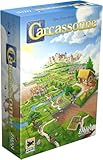
Carcassonne
Carcassonne’s tile-placement core mirrors the satisfaction of expanding a farm—each placed tile builds a larger shared landscape. Two to five players, 35 minutes, and a rules simplicity that makes it an easy gateway for people who’ve never owned a modern board game. The competitive scoring is gentle enough that it rarely causes hard feelings.
- Pros: Near-endless replayability thanks to expansion ecosystem; intuitive “place a tile, maybe score” loop that clicks instantly.
- Cons: No cooperative mode by default, and the competitive meeple-placement blocking can frustrate players seeking shared goals.
Skip if you require a fully cooperative structure. Otherwise, its low price-to-replay ratio is hard to argue against.
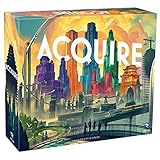
Renegade Game Studios Acquire
Acquire is a classic area-control and economic strategy game that rewards long-term planning. It offers both strategy and tycoon modes, which doubles its table life. At 34.95, it sits in the mid-price range and appeals to players who want more mental depth than the other entries on this list.
- Pros: Dual modes extend replay value significantly; the merger mechanic produces memorable, table-talking moments.
- Cons: Player elimination through bankrupt mergers can sour cooperative-minded players, and the game rarely finishes under 90 minutes.
Skip if your group includes players who dislike long, high-stakes economic games or if you need a sub-45-minute experience.
Monopoly Fourth Wing Edition
This entry exists in the roundup because officially licensed themed editions of Monopoly frequently appear in searches from buyers who want a board game tied to a beloved media property, similar to how the Stardew Valley board game appeals to gamers. The Fourth Wing Edition targets adults 17 and up with 2-6 players, and its fantasy-book aesthetic is genuinely more interesting than standard Monopoly.
- Pros: Officially licensed with thematic art and mechanics tweaks that differentiate it from the base game; wider player-count range (up to six) than most entries here.
- Cons: Still Monopoly at its core—long playtimes, player elimination risk, and a cutthroat economic structure that contradicts Stardew Valley’s spirit entirely.
Skip unless you specifically want a Monopoly variant for a different fandom. It does not fill the Stardew Valley gap for most buyers.
Buying Guide
Cooperative Versus Competitive Structure
The Stardew Valley video game is cooperative in spirit—there’s no winner or loser, just shared progress. If that feeling is why you searched for the Stardew Valley board game, prioritize entries built around cooperation (the official ConcernedApe game, Forbidden Desert) or at least constructive play (Ticket to Ride, Carcassonne). Purely adversarial games like Risk and Monopoly will feel tonally wrong for most buyers in this category, regardless of their individual quality.
Player Count and Solo Viability
Check the published minimum and maximum player counts against your actual group before committing. The official Stardew Valley board game caps at four, which excludes larger households or friend groups. Harmonies is the strongest solo option here. If you frequently host five or six people, Ticket to Ride and Monopoly Fourth Wing Edition offer the widest range, but their competitive structures mean someone always loses—and that’s fine for some groups.
Price-to-Replay Ratio
At $61.76, the ConcernedApe game costs roughly twice what Forbidden Desert or Ticket to Ride cost. The question isn’t whether the official game is worth it—it’s whether your group will play it enough to justify the premium. For dedicated Stardew Valley fans, the source-material connection carries emotional value that generic strategy games don’t. For anyone buying “a game like Stardew Valley” without that fandom anchor, cheaper cooperative or constructive alternatives deliver comparable table time at half the cost.
Our Verdict
Our top pick is the ConcernedApe Stardew Valley Cooperative Board Game if you are specifically seeking the Stardew Valley experience on a tabletop—no substitute truly fills that role. Our budget pick is Gamewright Forbidden Desert, which delivers genuine cooperative tension and replayability at $26.99, making it the best value for anyone who wants the shared-goal feeling without the source-material premium. And if your group plays solo more often than together, Harmonies wins outright at $31.99 with a first-class one-player design that none of the other entries match.
FAQ
Is the ConcernedApe Stardew Valley board game good for families with young kids?
The recommended age is 13 and up, which reflects the game’s resource-management complexity and longer play sessions. Families with younger children will likely find Ticket to Ride (ages 8+) or Carcassonne more age-appropriate while still offering a constructive, low-stress feel.
Can the Stardew Valley board game be played solo?
Yes, the official game supports one to four players and includes solo rules. However, if solo play is your primary use case, Harmonies is designed with solo as a first-class experience and costs significantly less.
Why are there non-Stardew Valley games in this roundup?
The official Stardew Valley board game is the only one that exists, but it’s expensive and player-count-limited. Buyers often need alternatives that capture similar cooperative, low-conflict, or constructive gameplay, so we included the best options across price points and player-group sizes.
Is Forbidden Desert a good replacement for the Stardew Valley board game?
Mechanically, it’s the closest cooperative alternative on this list at a much lower price. Thematically, the harsh desert-survival setting differs significantly from Stardew Valley’s cozy farming life. It’s a strong choice if you care more about shared-goal tension than aesthetic comfort.




0 Comments