What's inside
As an Amazon Associate I earn from qualifying purchases. This post may contain affiliate links at no extra cost to you.
The best gazebos for a backyard are those sized to leave safe clearance around the structure, built from materials suited to your climate, and anchored for the wind conditions your property actually experiences—not simply the largest or most decorative model you can fit.
As an Amazon Associate we earn from qualifying purchases at no extra cost to you.
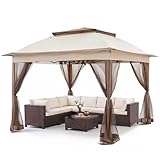


Quick picks by backyard situation
| Backyard situation | Best gazebo type | Useful size | Typical market range | Main compromise |
|---|---|---|---|---|
| Small patio or townhouse yard | Steel or aluminum soft-top gazebo | 8 × 8 ft to 10 × 10 ft | $150–$700 | Fabric and lighter frames need seasonal care |
| Frequent summer entertaining | Hardtop aluminum gazebo | 10 × 12 ft to 12 × 14 ft | $900–$3,000 | More difficult assembly and higher anchoring demands |
| Permanent garden feature | Pressure-treated or naturally durable wood gazebo | 10 × 10 ft to 14 × 16 ft | $1,500–$6,000 or more | Regular staining, sealing, and structural maintenance |
| Occasional events and storage | Folding pop-up canopy | 10 × 10 ft or 10 × 20 ft | $100–$500 | Not a permanent shelter and vulnerable when left unattended |
| Snowy or exposed location | Engineered hardtop model with robust posts | 10 × 12 ft to 12 × 16 ft | $1,500–$5,000 | Must be matched to local snow and wind requirements |
How to choose the right gazebo size
Start with the usable area, not the advertised footprint. A 10 × 12-foot gazebo occupies 120 square feet, but it also needs room for roof overhangs, posts, doors, maintenance access, and air movement. As a practical planning rule, reserve at least 2 feet of clearance on every side; increase that to 3 feet where people need to walk around the structure or where falling branches are a concern.
For example, a 10 × 12-foot gazebo usually needs a reasonably clear area of about 14 × 16 feet. If your patio is only 12 × 14 feet, a 10 × 10-foot structure may be the safer choice. Check local setback rules before buying, particularly if the gazebo will be attached to a deck, placed near a property line, or installed on a concrete slab.
What each common size can accommodate
- 8 × 8 feet: A small table, four chairs, or two lounge chairs with a compact side table.
- 10 × 10 feet: A four- to six-person dining set, a grill positioned outside the roofed area, or a modest conversation arrangement.
- 10 × 12 feet: Six to eight dining seats, or a sofa, two chairs, and a coffee table.
- 12 × 14 feet: A larger dining table, serving furniture, and comfortable circulation for gatherings.
- 12 × 16 feet and larger: A substantial entertainment area, but only if the yard, foundation, and anchoring system can support it.
Do not place a barbecue, fire pit, or patio heater directly beneath a fabric roof or beside vinyl curtains. Manufacturers specify different clearances, and heat can discolor, melt, or ignite nearby materials.
Material comparison: what lasts and what wears first
Aluminum hardtop gazebos
Aluminum frames resist rust and are substantially lighter than steel, making them a practical choice for humid or coastal environments when the finish is intact. Powder coating can fade or chalk over time, and thin roof panels can dent from hail or falling branches. Hardtop aluminum models are often the best balance between low routine maintenance and year-round appearance.
The weak points are usually roof fasteners, plastic trim, screen tracks, and the connection between posts and the foundation. Inspect these areas each spring and tighten hardware without over-compressing metal panels.
Steel-frame soft-top gazebos
Steel provides good stiffness at a moderate price, but scratches and exposed cut edges can rust. Fabric canopies commonly wear faster than the frame, especially where they rub against roof supports or remain wet after storms. A replacement canopy may extend the useful life, but confirm that replacement fabric is available before buying.
Soft-top gazebos are easier to install than many permanent hardtops and are suitable for seasonal use. Remove the canopy before severe storms if the design allows it; a temporary shelter is not a safe substitute for permanent anchoring.
Wood gazebos
Wood offers the most integrated, furniture-like appearance and can be repaired or modified with ordinary woodworking tools. Pressure-treated lumber is economical, while cedar and other naturally durable species offer a more refined finish. All wood moves as it gains and loses moisture, so expect minor checking, splitting, and color changes.
Posts and the lower ends of railings are especially vulnerable to water. Keep wood off bare soil, maintain drainage around the footings, and reseal horizontal surfaces according to the coating manufacturer’s instructions. A gazebo that looks excellent at installation can deteriorate quickly if water sits on the roof or splashes against unprotected posts.
Anchoring is not an optional accessory
A gazebo acts like a sail. Its roof and curtains can catch wind even when the structure feels heavy on a calm day. The correct anchor depends on the base, not merely the gazebo’s weight.
- Concrete slab: Use appropriately rated concrete anchors through each post bracket. Confirm slab thickness and avoid drilling too close to an edge.
- Wood deck: Fasten into structural joists or blocking, not only deck boards. A decorative deck surface cannot reliably resist uplift.
- Grass or soil: Use manufacturer-approved ground screws, augers, or buried concrete footings. Small tent stakes are inadequate for a permanent structure.
- Pavers: Do not assume the pavers themselves provide a secure anchor. They may need to be removed so posts can be attached to a concrete base or engineered footing.
In high-wind, hurricane, or heavy-snow regions, select a model with published design-load information and follow local building requirements. If the foundation or connections are unclear, a building professional can verify whether the proposed installation is appropriate.
Assembly difficulty and ownership cost
A folding canopy may take 15 to 30 minutes for two adults. A bolted soft-top gazebo commonly takes 3 to 6 hours, while a hardtop or wood gazebo can require 8 to 20 hours depending on size, roof design, and foundation preparation. Assembly time rises sharply when the instructions assume a perfectly level surface.
Budget for more than the gazebo itself. Concrete, anchors, gravel, leveling materials, replacement canopy panels, sealant, and delivery can add roughly $100–$1,000 or more. A permanent wood structure may need $50–$200 per year in cleaning and finish materials, while a fabric model may eventually need a replacement canopy costing $75–$400.
A simple cost-per-use calculation
Suppose a $1,800 hardtop gazebo is used 60 times per year for five years. Before maintenance, its cost is:
$1,800 ÷ (60 uses × 5 years) = $6 per use.
If installation and maintenance add $700, the total becomes $2,500, or about $8.33 per use. This calculation helps compare a permanent structure with a $250 pop-up canopy. If the pop-up is used only 10 times per year for three years, its pre-maintenance cost is $8.33 per use—but it provides less weather protection and may need replacement sooner.
Maintenance mistakes that shorten gazebo life
- Leaving fabric wet: Dry the canopy fully before storage to prevent mildew and odor.
- Using a pressure washer too close: High pressure can strip wood fibers, damage coatings, and force water into seams.
- Ignoring loose fasteners: Movement enlarges holes and stresses brackets, especially in roof frames.
- Blocking drainage: Clear roof channels and gutters so standing water does not overload panels or stain posts.
- Skipping winter preparation: Remove soft tops where recommended, clear heavy snow promptly, and never assume a roof is rated for accumulated snow.
- Anchoring after installation: Secure each post during assembly rather than waiting for the first windy day.
Best gazebos for backyard buying decision
Choose a folding canopy when portability and low initial cost matter most. Choose a soft-top steel or aluminum gazebo for seasonal shade in a moderate climate. Choose a hardtop aluminum model when you want a cleaner year-round shelter with less fabric maintenance. Choose wood when appearance, repairability, and a permanent garden setting outweigh the need for periodic sealing.
Before ordering, measure the complete installation zone, identify the foundation and anchor method, check roof-load and wind information, and confirm that replacement covers or panels are available. The best gazebo for your backyard is the one that fits with clearance, can be securely anchored to its actual base, and can be maintained without becoming a burden.
0 Comments