As an Amazon Associate I earn from qualifying purchases. This post may contain affiliate links at no extra cost to you.
Ten years ago this was a real debate. Today cordless has won most of it — but “most” is not “all”, and buying cordless everywhere wastes money in a few predictable places.
Here is how the money usually goes. You commit to one battery platform, which is the right move, and then keep buying into it out of habit. The drill and driver, fair enough. Then a cordless router. Then a miter saw that never leaves the shop. Six months later you own four packs, two are always on the charger, and the tools eating your batteries are the ones bolted to a bench three feet from an outlet. Nothing you bought was bad. You just paid a battery tax on tools that had nowhere to go.
The decision is no longer about raw power. Brushless motors and high-output packs closed most of that gap, and for anything used in bursts the cordless tool is now the better tool. What is left is three practical questions: does the tool move, does it run continuously, and how much capability are you getting per dollar.
Here is the short version before the reasoning.
| Tool | Verdict | Why |
|---|---|---|
| Drill / driver | Cordless | No contest |
| Circular saw | Cordless | Mobility wins |
| Impact wrench | Cordless | Transformed the category |
| Router (table-mounted) | Corded | Runs continuously, never moves |
| Table saw (shop) | Corded | Sustained load, fixed position |
| Bench grinder | Corded | Always in one place |
| Miter saw (shop) | Corded | Cheaper, unlimited runtime |
| Miter saw (site) | Cordless | Carrying it matters more |
| Shop vacuum | Corded | Runs for hours |
Where corded still wins
1. Tools that never move. A router in a table, a bench grinder, a stationary sander. Runtime is irrelevant and the cord is not in the way. On a stationary tool the cord is a problem you solve once — a switched outlet strip under the bench, a drop over the assembly table — and then it costs you nothing again. The test is simple: does the cord ever have to come out mid-task? If not, cordless is insurance against a problem you do not have.
2. Sustained high-load work. Long milling sessions, thicknessing, extended grinding. Batteries drain fast under continuous heavy load and heat builds up. You rarely experience this as a clean shutdown; you experience it as the tool going soft. Cells warm, the electronics pull output back to protect them, and the last cut on a pack is not the cut you got at the start. Then you stop to swap, in the middle of a process that wanted to be continuous.
3. Price per watt. Corded tools cost less for the same capability because you are not buying a battery pack. On a fixed budget for shop tools, corded stretches further. Worth being blunt about why: the pack is a consumable. It ages whether you use it or not, and replacing it costs a serious fraction of the tool. A corded tool’s power source is the building, and the building never needs replacing.
4. Tools you use rarely. A battery on a tool used twice a year will be dead when you reach for it, and will have aged in storage regardless. The right-angle drill, the die grinder, the heat gun, the wet/dry vacuum you drag out when something floods — plug those in after five years in a cupboard and they run.
5. Tools where the cordless version barely exists. Some machines are not sold on batteries in any serious form, and the ones that are tend to be a size class smaller. If you want a real fence, full-width thicknessing capacity or a collector that moves genuine air, the choice is already made. Going cordless here means accepting a smaller machine to solve a cord that was never bothering you.
Two categories are where hobby shops overpay most often, so be deliberate about both.
Corded routers for table use
A table-mounted router should be corded — continuous running, no pack to swap, more power per dollar.
Corded shop vacuums
Dust extraction runs the whole session. This is the least sensible tool to put on a battery.
Where cordless wins outright
Anything you carry. Drills, drivers, circular saws, impact wrenches, nailers, grinders, and any tool used up a ladder, in an attic or on a roof. The productivity gain from not managing cords is larger than the runtime cost.
That gain is not in the cutting. It is in everything either side of it: finding an outlet, running the lead, unplugging to move eight feet, coiling it again — all for a task that took forty seconds. A pack swap costs less time than one walk back to the van for an extension cord.
There is a safety argument too. No lead to cut with the saw in your hand, nothing to trip on a stair, nothing dragging across a wet slab. Cordless nailers and impact wrenches earned their reputations the same way: what they replaced was a hose and a compressor.
Cordless combo kits
The mobility advantage is real and permanent. For portable work, cordless is simply the correct answer now.
Three questions that settle any single tool
- Does it move while it works? If yes, stop here and buy cordless. Mobility outranks everything below it.
- Does it run more than a couple of minutes at a stretch? If yes, and it does not move, buy corded. This is the runtime and heat question.
- Am I paying for capability or convenience? For a stationary, intermittent tool this is the tiebreaker, and it points corded, because the same money buys a better machine.
The ranking matters as much as the questions. That is why one tool gets two answers: a miter saw living on site is a mobility tool and should be cordless, while the identical saw bolted to a shop station should be corded. Nothing about the saw changed — the first question did.
What separates a good pick from a bad one at each price band
Entry level
Cheap corded tools fail at the base and the switch long before the motor does, so look at casting rigidity, switch feel, whether a dust port exists, and whether brushes and belts will still be available. Entry-level cordless is where the battery tax bites hardest, because much of the price is two small packs and a slow charger. For a bench tool, the same budget spent corded usually buys a class up.
Mid range
Here corded buys features that change results rather than specs: soft start so a big router does not twist in your hands, variable speed on routers, grinders and sanders, and electronic feedback that holds speed as load arrives. For cordless, stop evaluating the tool and evaluate the platform — tool count, bare-tool availability, replacement pack cost, and whether it will still be stocked in five years.
Premium
Premium corded buys rigidity, precision and serviceability: mass in the right places, machined surfaces, induction motors on stationary machines, parts you can still order in a decade. Premium cordless buys fast charging, the largest packs, diagnostics and better ergonomics — obvious if you are on tools daily, close to invisible at weekends.
One rule holds across all three bands: never buy the cordless version of a tool that will live on a bench, and never buy the cheapest corded version of a tool that will run under sustained load. The corded price advantage exists to be spent on quality, not banked.
The hybrid shop
Most well-equipped shops end up mixed: cordless for everything portable, corded for everything on a bench. That is not indecision — it is the cheapest way to get the best of both.
The sorting rule is one line: if it leaves the room it takes a battery, if it lives on a bench it takes a plug. Then hold to a single platform. Two platforms means two chargers, two sets of ageing packs, and twice the money tied up in things that are not tools.
Common mistakes
- Adding a second battery platform for one tool. Buy the corded version, or wait for your platform to offer it.
- Owning only compact packs. Fine on a drill, out of their depth on a saw or impact wrench, where they sag and heat up.
- Storing packs flat, frozen or baking in a vehicle. Charge state and temperature are what age cells.
- Putting dust extraction on a battery. It is the one tool running the entire time you are.
- Assuming the cordless version equals the corded one because the brand and tier match. Compare them as separate tools.
- Selling working corded bench tools to fund a platform, trading capability for convenience you cannot use.
Voltage drop: the corded gotcha
Corded has a failure mode too, and it is the supply. Push a big motor through a long, thin lead and the tool sees less voltage than it was designed for, draws more current to compensate, and runs hotter than it should. There is no warning light — just a saw bogging in a cut it should walk through, a router that will not hold speed, a breaker tripping on startup, and a motor that dies years early. A coiled reel makes it worse, because the coil traps the heat the cord is making.
- ✘ Thin extension cords cause voltage drop and overheat motors
- ✘ Use 12 AWG for runs over 50 feet with power tools
- ✘ Never daisy-chain multiple extension cords
- ✘ Uncoil cord reels fully before drawing high current
Who each option suits
Mostly corded suits fixed-bench work on a finite budget — the garage woodworker with a router table, a miter station and a dust extractor. Skip cordless entirely for those stations.
Mostly cordless suits work that moves: renovating room by room, vehicles, installing rather than making, anything on a ladder. If your tools live in a bag, the corded saving is not worth the time it costs.
Both, deliberately, suits anyone with a shop who also leaves it, which is most people. One platform for the portable half, plugs for the bench half.
Skip the upgrade if your corded bench tools already work. Replacing a functioning corded router with a cordless one is paying to remove a cord you had already routed out of the way.
FAQ
Is cordless as powerful now? For intermittent use, yes. For sustained continuous load, corded still has an edge.
Is corded cheaper? Per unit of capability, meaningfully so — no battery cost.
Should I sell my corded tools? Not the bench-mounted ones. Keep them; they owe you nothing.
How many batteries do I actually need? Enough that one is always charged while you work — for most people two of a decent capacity plus a fast charger, rather than four small ones. Capacity and charge speed matter more than count.
Compare corded tools →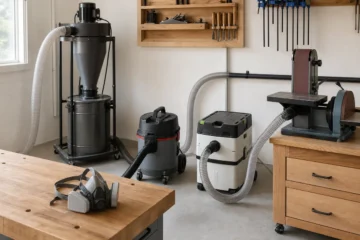
0 Comments