RP Woodworks

  • Home
  • Reviews
  • Projects
  • Tools
  • Woodworking Techniques
  • About

Wood Finishing

Staining, sealing, oiling and clear-coating wood: product choice, application and fixes for common finish problems.

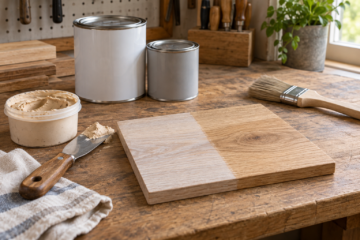
AI-generated editorial illustration of wood paint
Painting & Priming

How to Prime Bare Wood for a Smooth Paint Finish

Bare wood looks ready to paint, but it isn’t. It’s porous, uneven, and full of tannins and resins that will bleed through a topcoat. Primer does three jobs at once: it seals the grain so paint doesn’t soak in unevenly, it gives the topcoat something to grip, and it blocks Read more

By , 1 weekSeptember 25, 2026 ago
AI-generated editorial illustration of wood paint
Painting & Priming

How to Prepare Resinous Knots Before Painting

Resinous knots will bleed through almost any paint if you don’t seal them first. That yellow-brown stain that appears weeks or months after painting is sap and tannins migrating to the surface, and a second topcoat won’t stop it. On pine, spruce, and fir softwoods, the only reliable fix is Read more

By , 1 weekSeptember 25, 2026 ago
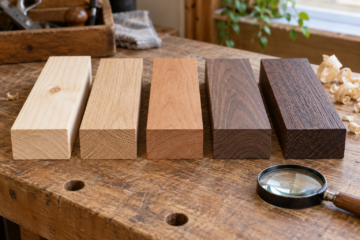
AI-generated editorial illustration: five wooden board samples showing different grain textures and colors.
Oils & Waxes

How to Degrease Oily Wood Before Gluing or Finishing

Why Oily Wood Causes Glue and Finish Failures Oily and resinous woods don’t just feel greasy. That surface oil actively blocks adhesion. The natural resins and extractives in species like teak, rosewood, and ipe migrate to the surface continuously, even after sanding. When you spread glue, the oil prevents the Read more

By , 1 weekSeptember 25, 2026 ago
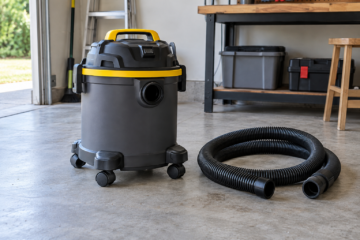
Editorial illustration: wet-dry shop vacuum with a wide flexible hose.
Clear Coats & Topcoats

How to Clean Wood Dust Before Applying Finish

Any finish — oil, varnish, lacquer, or water-based poly — will magnify whatever is left on the surface. Wood dust trapped under finish shows up as bumps, cloudy spots, and weak adhesion that can flake months later. Sanding dust is especially fine, often under 10 microns, so wiping once with Read more

By , 1 weekSeptember 25, 2026 ago
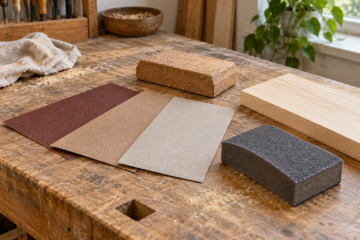
AI-generated editorial illustration of sandpaper
Staining & Dyes

How to Raise and Sand Wood Grain Before Staining

Raising the grain before staining is the extra step that separates a blotchy, rough finish from a smooth, even one. When water-based stain, dye, or topcoat hits raw wood, it swells loose wood fibers that were crushed flat during sanding. Those fibers stand up, dry hard, and leave the surface Read more

By , 1 weekSeptember 25, 2026 ago
AI-generated editorial illustration of wood fillers and finishing prep
Grain Filling & Sealing

How to Match Wood Filler Color to a Finished Board

Why Color Matching Fails Most wood filler looks right in the can and wrong on the board. Two reasons for that. First, filler never stains like real wood. The binder — whether it’s calcium carbonate, nitrocellulose, or epoxy — absorbs stain differently than wood fibers, so even a product labeled Read more

By , 1 weekSeptember 25, 2026 ago
AI-generated editorial illustration: wooden mortise and tenon, dovetail corner and rebated edge samples.
Clear Coats & Topcoats

How to Repair Loose Wood Joints Before Refinishing

Why Loose Joints Must Be Fixed Before Refinishing A new stain or clear coat will not save a wobbly chair or a dresser with racked drawers. Finish locks in the geometry you have at the time of application. If a mortise and tenon, dowel, or dovetail can move, that movement Read more

By , 1 weekSeptember 25, 2026 ago
AI-generated editorial illustration of wood epoxy
Oils & Waxes

How to Choose Glue for Oily Exotic Wood Species

Oily exotic woods like teak, cocobolo, rosewood, ipe, and wenge look great but are notorious for glue failures. The problem is not your clamping technique. These species are loaded with natural oils, waxes, and extractives that physically block glue from penetrating the wood fibers. Standard yellow wood glue (PVA) that Read more

By , 1 weekSeptember 25, 2026 ago
AI-generated editorial illustration: wood glue bottle beside an edge-glued board assembly and spreader.
Finish Problems & Fixes

How to Remove Dried Wood Glue Before Finishing

Why Dried Glue Ruins a Finish Dried wood glue doesn’t absorb stain or finish the way wood does. Even a thin, nearly invisible smear of PVA will block penetration and show up as a pale blotch under stain, or as a fisheye or dull spot under clear oil or lacquer. Read more

By , 1 weekSeptember 25, 2026 ago
AI-generated editorial illustration: wood glue bottle beside an edge-glued board assembly and spreader.
Finish Problems & Fixes

How to Prevent Glue Squeeze-Out from Staining Bare Wood

Why Squeeze-Out Ruins Your Finish Glue squeeze-out itself doesn’t stain wood. It seals it. Most wood glues, especially yellow PVA like Titebond I, II, and III, soak into end grain and surface pores and dry as a clear plastic film. That film blocks stain, dye, and oil finish from penetrating. Read more

By , 1 weekSeptember 25, 2026 ago

Posts pagination

Previous 1 2 3 … 63 Next
Recent Posts
  • Best Woodworking Clamps: Which Types to Buy and How Many You Need
  • Best Pocket Hole Jigs in 2026: Kreg, Massca and Milescraft Compared
  • Best Dovetail Jigs: Fixed, Multi-Template and Variable-Spacing Options Explained
  • Best Compact Wood Routers: Corded vs Cordless Picks for Edge Work and Trimming
  • How to Repair a Wood Split Caused by a Screw (Even in Thin Teak)
Recent Comments
No comments to show.
Archives
  • October 2026
  • September 2026
Categories
  • Clear Coats & Topcoats
  • Finish Problems & Fixes
  • Gift Guides
  • Grain Filling & Sealing
  • Guides
  • Oils & Waxes
  • Painting & Priming
  • Sanding & Surface Prep
  • Shop Setup & Safety
  • Staining & Dyes
  • Tool Troubleshooting
  • Tools
  • Wood Finishing
  • Wood Species & Lumber
  • Woodworking Techniques
Hestia | Developed by ThemeIsle