RP Woodworks

  • Home
  • Reviews
  • Projects
  • Tools
  • Woodworking Techniques
  • About

Finish Problems & Fixes

Diagnosing and fixing blotchy stain, cloudy or sticky finishes, bleed-through, lap marks and peeling.

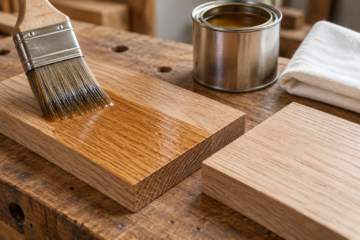
AI-generated editorial illustration: brush applying a clear wood finish to a board beside an unfinished offcut.
Finish Problems & Fixes

How to Strip a Clear Finish from Wood Without Gouging It

Removing a clear finish from wood is mostly a control problem. The finish may be thick, brittle, or gummy, but the wood underneath is usually easier to damage than the coating is to remove. A sharp scraper can leave a long trough in soft pine. Coarse sandpaper can flatten an Read more
By , 2 weeksSeptember 25, 2026 ago
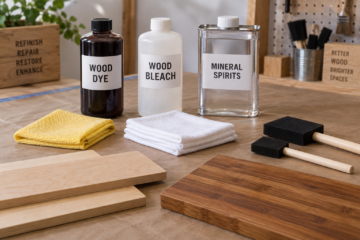
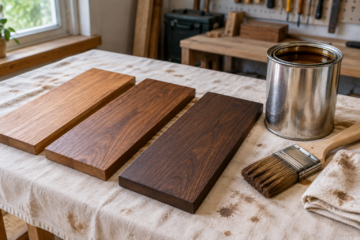
AI-generated editorial illustration of wood refinishing dyes bleach and tack cloth
Finish Problems & Fixes

How to Remove Wax from Wood Before Refinishing

Why Wax Must Be Removed Before Refinishing Paste wax, furniture polish, and some spray cleaners can leave a thin, water-repellent film on wood. That film may look harmless, but it can prevent stain, paint, shellac, lacquer, and water-based finishes from bonding properly. Common failure signs include fisheyes, crawling, uneven color, Read more

By , 2 weeksSeptember 25, 2026 ago
AI-generated editorial illustration of wood stain
Finish Problems & Fixes

How to Fill Nail Holes in Stained Wood Without Visible Patches

Stained wood makes nail holes harder to hide than painted trim. Paint forms an opaque film, so filler color matters less. Stain soaks into the surrounding wood, while most fillers absorb it differently—or not at all. The result is often a pale, dark, or shiny dot that remains visible from Read more

By , 2 weeksSeptember 25, 2026 ago
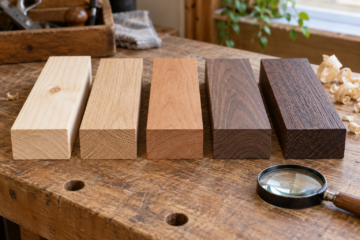
AI-generated editorial illustration: five wooden board samples showing different grain textures and colors.
Finish Problems & Fixes

Best Wood for a Stained Wooden Chest with Minimal Blotch

Best Overall: White Oak For a stained wooden chest with minimal blotching, white oak is the safest practical choice. It absorbs stain relatively evenly, has a strong, attractive grain, and is available as solid boards and plywood. Its open pores accept stain better than the tight, uneven grain of maple Read more

By , 2 weeksSeptember 25, 2026 ago
AI-generated editorial illustration: five wooden board samples showing different grain textures and colors.
Finish Problems & Fixes

Best Wood for Painting a Wooden Picture Frame Without Visible Grain

For a wooden picture frame with a smooth, painted finish, the best choices are poplar, MDF, and clear, straight-grained hardwoods such as maple. Poplar is usually the best solid wood for the money: it is affordable, machines easily, and has a subtle grain that disappears under primer and paint. MDF Read more

By , 2 weeksSeptember 25, 2026 ago
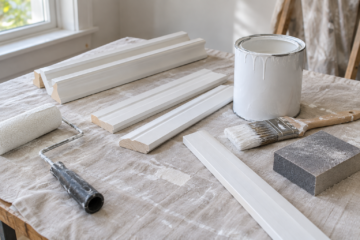
AI-generated editorial illustration of wood paint
Finish Problems & Fixes

How to Make a Painted Wood Surface Smooth Without Brush Strokes

Brush marks usually come from paint that is too thick, a brush that is dragging, or paint that starts to set before you finish a section. The fix is not simply to sand harder. Prepare the wood, use a finish suited to the surface, apply thin coats, and let each Read more

By , 2 weeksSeptember 25, 2026 ago
AI-generated editorial illustration: five wooden board samples showing different grain textures and colors.
Finish Problems & Fixes

Best Wood for Stained Interior Doors with Minimal Blotch

Best choices for a low-blotch finish For stained interior doors, cherry and walnut are among the easiest attractive hardwoods to finish without blotch. Their color and grain usually take stain more evenly than maple, pine, birch, or alder. If you want a lighter, more uniform door, consider paint-grade poplar instead Read more

By , 2 weeksSeptember 25, 2026 ago
AI-generated editorial illustration of wood paint
Finish Problems & Fixes

How to Remove Water-Based Paint from Wood Without Deep Gouges

Water-based paint is easier to remove from wood than oil paint, but “easy” does not mean you should attack it with a sharp scraper. Soft pine, cedar, and fir can show deep gouges after one careless pass, while hardwoods can develop shiny scrape marks that remain visible under stain. The Read more

By , 2 weeksSeptember 25, 2026 ago
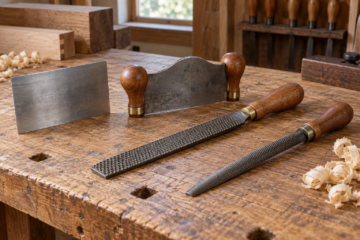
AI-generated editorial illustration of scrapers rasps files
Finish Problems & Fixes

How to Strip Paint from Wood Without Damaging the Grain

Paint removal is hardest on the wood you want to keep: a scraper can gouge soft earlywood, and aggressive sanding can flatten detail or leave cross-grain scratches. The safer approach is to soften the coating first, lift it with a blunt tool, and use abrasives only for residue and final Read more

By , 2 weeksSeptember 24, 2026 ago
AI-generated editorial illustration of wood stain
Finish Problems & Fixes

How to Fix Uneven Color in a Stained Wood Panel

Uneven color in a stained wood panel usually comes from uneven absorption, uneven stain application, or a surface that was not prepared consistently. The right fix depends on how deep the color variation goes. A light lap mark may respond to another thin coat; a blotchy panel may need its Read more

By , 2 weeksSeptember 24, 2026 ago

Posts pagination

Previous 1 … 6 7 8 9 Next
Recent Posts
  • Best Woodworking Clamps: Which Types to Buy and How Many You Need
  • Best Pocket Hole Jigs in 2026: Kreg, Massca and Milescraft Compared
  • Best Dovetail Jigs: Fixed, Multi-Template and Variable-Spacing Options Explained
  • Best Compact Wood Routers: Corded vs Cordless Picks for Edge Work and Trimming
  • How to Repair a Wood Split Caused by a Screw (Even in Thin Teak)
Recent Comments
No comments to show.
Archives
  • October 2026
  • September 2026
Categories
  • Clear Coats & Topcoats
  • Finish Problems & Fixes
  • Gift Guides
  • Grain Filling & Sealing
  • Guides
  • Oils & Waxes
  • Painting & Priming
  • Sanding & Surface Prep
  • Shop Setup & Safety
  • Staining & Dyes
  • Tool Troubleshooting
  • Tools
  • Wood Finishing
  • Wood Species & Lumber
  • Woodworking Techniques
Hestia | Developed by ThemeIsle