Garage Dust Collection System
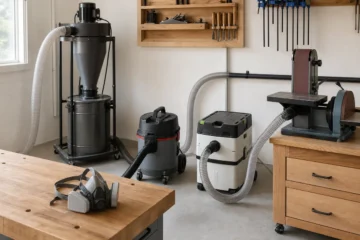
Chips on the floor were never the danger; here is how airflow, duct size, and filtration really work so your garage dust collection system captures the fine dust you cannot see.
Setting up a woodworking shop: dust collection, power, storage, layout and safety gear.
Chips on the floor were never the danger; here is how airflow, duct size, and filtration really work so your garage dust collection system captures the fine dust you cannot see.
A plain-language breakdown of CFM, static pressure, filter ratings and ducting so you can pick a dust collector that catches the dust you cannot see.
A plain-language guide to using a shop vac for sawdust collection, including what it does well, where it fails, and how to fix the airflow problems most shops never diagnose.
Peak horsepower is a marketing number: what really decides whether a compact vac keeps pulling on a sander is sealed suction, filter area, hose size and a switched outlet.
A mechanism-first look at cordless shop vacs: why CFM beats water lift for cleanup, how filters throttle suction, and which battery platform choices actually pay off.
Suction is atmospheric pressure doing the work, not horsepower stickers. Here is how garage vacuums really move debris and how to choose one that lasts.
The best shop vac for woodworking is decided by hose diameter and filter staging, not by the peak horsepower sticker on the drum.
Heat and a full charge do more quiet damage to power tool batteries than most people realize, and both play a role in the rare cases where a pack vents and burns.
A plain-language guide to workshop electrical basics, covering circuits, breaker sizing, extension cord gauge and why voltage drop quietly kills tool performance.
Airflow and sealed suction are the two specs that decide whether a shop vac works with your tools, and neither one is printed as peak horsepower on the box.