What's inside
As an Amazon Associate I earn from qualifying purchases. This post may contain affiliate links at no extra cost to you.
The best chest rigs depend on what you carry: choose the Spiritus Systems Micro Fight for a modular, low-profile setup, the Haley Strategic D3CR Heavy for a ready-to-use range rig, and the Velocity Systems UW Gen VI for heavier loads and extended wear.
A chest rig sits between a belt and a plate carrier. It can keep magazines, navigation tools, first-aid supplies, a radio, or small field equipment accessible without the bulk of armor. The important comparison is not the number of pouches alone. Harness adjustment, load distribution, ventilation, layer compatibility, and the way the rig accepts different magazines will determine whether it remains comfortable after an hour or becomes equipment you stop wearing.
As an Amazon Associate we earn from qualifying purchases at no extra cost to you.

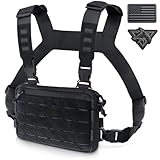


Quick comparison of the leading chest rigs
| Chest rig | Best suited to | Approx. capacity | Approx. weight | Construction and layout | Typical market range |
|---|---|---|---|---|---|
| Spiritus Systems Micro Fight Chassis Mk V | Modular range use and low-profile carry | Front chassis accepts modular inserts; commonly 3 rifle magazines with a suitable insert | About 0.5–0.8 lb before inserts and harness | Laser-cut laminate chassis with hook-and-loop and modular front/back attachment points | $150–$300 configured |
| Haley Strategic D3CR Heavy | Ready-made range setup with mixed magazine storage | 4 rifle-magazine cells plus pistol-magazine and utility storage, depending on configuration | About 1.5–2 lb | Heavy-duty nylon with fixed elastic magazine cells and integrated utility compartments | $170–$250 |
| Velocity Systems UW Gen VI | Higher-load field use and longer wear | Usually 4 rifle magazines, plus front and side utility space | About 1.5–2.5 lb, depending on harness and inserts | 500D-class nylon construction with adjustable H-harness and modular webbing | $180–$300 |
| Helikon-Tex Training Mini Rig | Budget-conscious range work, hiking, and general utility | Four magazine-sized front compartments plus organizer space | About 1.3 lb | Nylon body, fixed front pouches, hook-and-loop field, and adjustable harness | $70–$120 |
Capacities are practical estimates rather than universal limits: magazine dimensions, inserts, radio size, and the chosen harness can change the final load. Prices are broad 2026 market ranges and vary by color, materials, and configuration.
Best chest rigs by situation
Best modular rig: Spiritus Systems Micro Fight
The Micro Fight is the strongest choice when one chest rig must support several roles. Its chassis is relatively compact, and the front accepts interchangeable magazine and utility inserts. That lets you configure it for rifle magazines, pistol magazines, medical supplies, or general-purpose items without replacing the entire harness.
Its main advantage is adaptability rather than maximum storage. A low-profile configuration works well over a shirt or light jacket, while adding a larger back panel and side wings increases capacity. The trade-off is cost and setup complexity: the chassis, inserts, harness, and back panel may be separate purchases. It is also possible to build a configuration that is technically capable but uncomfortable because too much weight hangs from the front.
Best ready-to-use range rig: Haley Strategic D3CR Heavy
The D3CR Heavy is a practical pick for users who want a complete front-loaded layout without designing a system from individual components. Its fixed elastic magazine cells make the primary setup quick to understand, and the utility pockets provide room for a small medical kit, gloves, tools, or a compact radio.
The elastic cells are fast to access and keep the rig slim, but they are less flexible than adjustable inserts. Extra-wide magazines, unusual equipment, or bulky tools may not fit as neatly as standard rifle and pistol magazines. The rig is best when your loadout is stable and you value a predictable arrangement over maximum customization.
Best for heavier loads: Velocity Systems UW Gen VI
The UW Gen VI is better suited to carrying more equipment for longer periods. Its H-harness spreads weight across the shoulders and upper torso more effectively than a narrow strap system, and its webbing supports additional pouches. That makes it a sensible option for field training, observation, navigation, or carrying equipment beyond ammunition.
The cost of that capacity is bulk. A larger rig can interfere with a backpack hip belt, sit less comfortably under a rain shell, and trap more heat. It is a better match for users who know they need the space rather than people who want the smallest possible chest-mounted load.
Best value: Helikon-Tex Training Mini Rig
The Training Mini Rig offers a useful entry point for range practice, day hikes, and general utility carry. Its fixed front compartments reduce configuration decisions, while the organizer pockets make it suitable for items that are not magazine-shaped. The adjustable shoulder and waist straps also make it easier to share between users than a highly specialized rig.
It is not as refined or modular as the more expensive options. Fixed compartments can limit unusual equipment, and heavy loading may feel less stable than an H-harness design. For occasional use, however, it can provide most of the practical benefit without the cost of a premium modular system.
What to compare before buying
Harness adjustment and fit
Look for adjustable shoulder straps, a sternum connection, and a rear or waist strap that prevents the rig from swinging. A simple X-harness is compact and comfortable for light loads. An H-harness generally distributes weight more evenly and is preferable when the rig will carry several magazines, a radio, tools, or a water pouch.
Test the rig with your arms raised and rotated. The shoulder straps should not cut into your neck, and the lower edge should not press into your ribs when you bend forward. The waist strap should stabilize the rig without becoming the main support point.
Fit over different layers
A rig sized over a T-shirt may become restrictive over a fleece and rain jacket. Measure the torso with the thickest clothing you expect to wear, then confirm that the straps still have adjustment remaining. For a chest circumference of 38 inches in a shirt and a 42-inch winter layer, select a rig whose usable adjustment covers at least 42 inches; a small amount of extra range is preferable for gloves, movement, and clothing compression.
Low-profile rigs work best over one or two thin layers. Larger harnesses and longer waist straps are more forgiving over insulated clothing, but they may shift when worn over smooth outer shells. If you hike with a backpack, check that the shoulder straps and hip belt do not occupy the same space as the chest-rig harness.
Plate and magazine compatibility
A chest rig is not automatically compatible with armor. Some models attach to a plate carrier through buckles or a hook-and-loop panel; others are designed only as standalone rigs. Confirm the carrier interface before buying, especially if you want to move the rig between standalone and armor-supported use.
Magazine cells should match the equipment you actually carry. Cells sized for standard 5.56 magazines may hold some 5.45 or 7.62 magazines poorly, while elastic cells may accept multiple shapes but provide less retention when nearly empty. Pistol-magazine cells are often too narrow for multitools, flashlights, or thick medical shears, so do not count every compartment as general-purpose storage.
Pouch layout and access
Place the most frequently used items in the center and upper front area, where they can be reached with either hand. Keep bulky items low or toward the sides. A tall radio, bottle, or first-aid pouch mounted directly under the chest can restrict bending and make prone positions uncomfortable.
For woodworking or outdoor utility use, a useful layout may be two tool pouches, a compact first-aid pouch, a phone or navigation pocket, and one general-purpose pouch rather than a magazine-focused arrangement. Modular rigs are helpful here because they can be configured around the tools you carry instead of forcing tools into narrow cells.
Ventilation and load distribution
Mesh-backed harnesses and separated shoulder straps allow more airflow than broad padded panels. They do not eliminate heat, particularly when a backpack is worn over the same area. A rig with several small pouches often ventilates better than one large, solid front pocket.
As a practical target, keep the chest-mounted load below about 10–15% of your body weight unless the harness is specifically designed for heavier carriage. For a 180-pound wearer, that is roughly 18–27 pounds, although a lighter load is usually more comfortable. Heavier equipment should be moved to a backpack, belt, or other support point.
A simple setup method that prevents common problems
-
Lay out every item you intend to carry and remove duplicates. Start with the smallest realistic load rather than filling every pouch.
-
Put frequently accessed items in the center, heavier items close to the torso, and rarely used items on the sides.
-
Adjust the shoulder straps while wearing your normal base layer, then add the outer layer and readjust.
-
Walk, bend, raise both arms, and sit with a backpack. Move any item that catches on the pack or presses into your ribs.
-
Check retention by gently jogging and leaning forward. Loose contents usually indicate poor pouch choice or overloading, not a strap that needs to be tightened further.
Durability, cleaning, and ownership costs
The first parts to wear are usually elastic magazine cells, hook-and-loop surfaces, plastic hardware, and stitching at high-tension points. Elastic loses tension faster when it is repeatedly overstuffed. Hook-and-loop collects lint and sawdust, which is especially relevant for workshop use. Brush it clean periodically and avoid dragging the hook side across exposed clothing.
For routine maintenance, empty the rig, shake out debris, and use a soft brush or low-pressure water. Mild soap and air drying are safer than bleach, solvents, high heat, or machine drying. Inspect the shoulder-strap adjustment points and bar-tack stitching before carrying a heavy load. Replacement inserts and pouches can extend the life of a modular rig, but a complete premium configuration may ultimately cost twice as much as the base chassis.
Final recommendation
Choose the Spiritus Systems Micro Fight if you want the most adaptable system and are willing to configure it carefully. Choose the Haley Strategic D3CR Heavy for a compact, ready-made range layout. Choose the Velocity Systems UW Gen VI when load distribution and additional capacity matter more than low bulk. Choose the Helikon-Tex Training Mini Rig when the priority is useful storage at a lower price.
Whichever model you select, prioritize a stable harness, compatibility with your actual equipment, and enough adjustment for your thickest clothing. The best chest rig is the one that keeps essential items accessible without becoming the heaviest or hottest layer you wear.
0 Comments