What's inside
As an Amazon Associate I earn from qualifying purchases. This post may contain affiliate links at no extra cost to you.
New parents wash more laundry than they expect. Baby clothes go through the machine multiple times a day—spit-up rompers, blowout onesies, cloth diaper inserts that need sanitizing between diaper changes. A full-size washer runs a forty-minute cycle for a load that fits in a pillowcase, wastes a gallon of water for every rinse, and heats the nursery during summer months. A dedicated compact machine solves all three problems at once.
But “compact” means wildly different things across this market. Some twin-tub units weigh under twenty pounds and need a sink for drainage, while others are near full-size in capacity yet still small enough to slide under a changing table. The best baby washing machines for your home depend on how many loads you run weekly, whether you need a spin cycle that actually extracts water from thick cotton, and how much floor space the nursery allows. We compared published specs, current prices, and long-term owner feedback across eight models to sort the genuinely useful from the merely cheap.
As an Amazon Associate we earn from qualifying purchases at no extra cost to you.


Our Top Picks
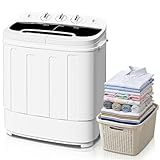
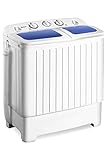
 SUPER DEAL Compact Mini Twin Tub Washing Machine13.5"D x 23"W x 26"H13.5 x 23 x 26 Inches26.5 PoundsCheck on Amazon
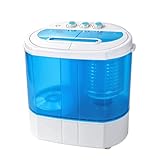
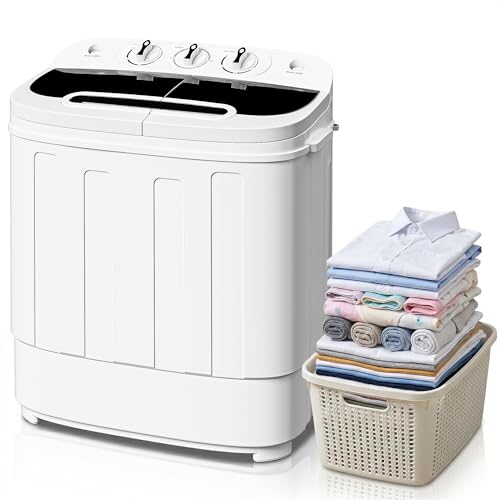
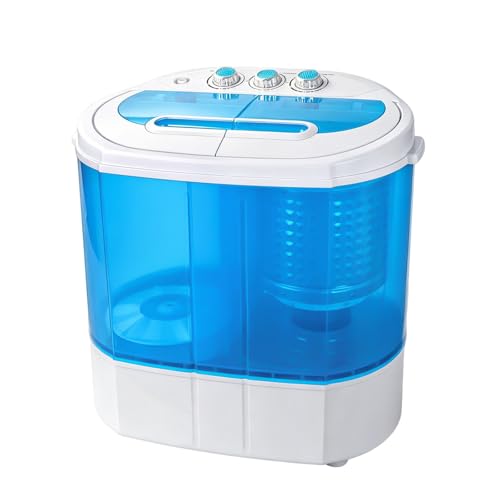 SUPER DEAL Small Portable Washing Machine 9.9lb Mini10lbs14.6 x 22 x 22.6 Inches22 poundsCheck on Amazon
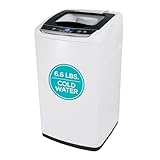
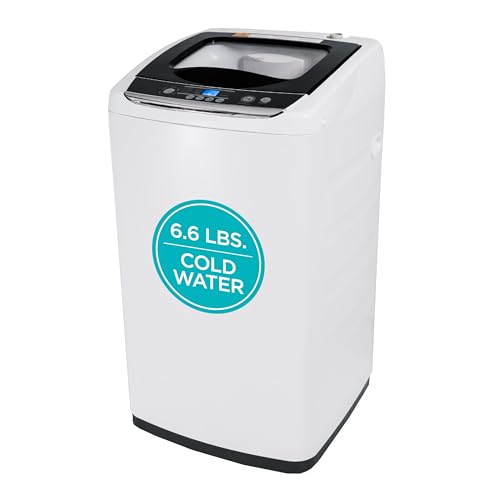 BLACK+DECKER 0.9 Cu. Ft. Portable Washer0.9 Cu. Ft.17.7 x 17.3 x 31.1 Inches48.4 PoundsCheck on Amazon


Quick Picks
| Product | Best for | Price |
|---|---|---|
| SUPER DEAL Compact Mini Twin Tub 13lbs | Small-space value | $85.99 |
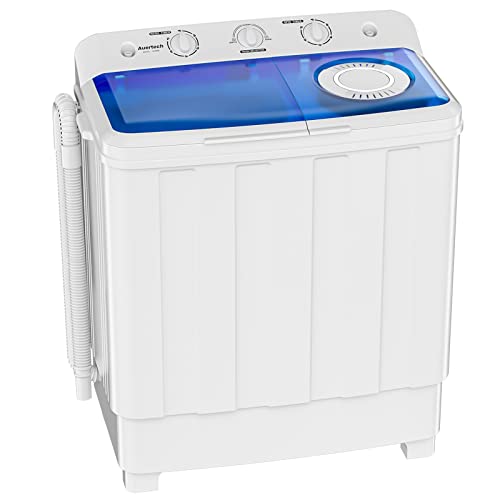
| Auertech Portable Twin Tub 28lbs | Higher volume loads | $179.99 |
| SUPER DEAL Small Portable 9.9lb | Under-$70 budget pick | $69.99 |
| BLACK+DECKER BPWM09W 6.6lb | One-tub simplicity | $276.99 |
| Superday Portable Twin Tub 25.3lbs | Under-$100 capacity | $88.99 |
| Mini Washer 20L with Spin Basket | Delicates and underwear | $65.99 |
| COSTWAY Portable 12lbs/8lbs | Balanced wash-spin split | $134.99 |
| Giantex Twin Tub 20lbs | Mid-range workhorse | $149.99 |
How We Picked
Three criteria separated contenders from also-rans. First, spin effectiveness: baby clothes absorb heavily, and a weak spinner leaves items dripping for hours on a rack. Second, tub capacity relative to footprint—parents need volume without dominating the floor. Third, drainage method matters more than buyers realize; gravity-drain models work near a sink or floor drain but frustrate anyone without convenient plumbing access, while pump-equipped units offer placement freedom at a higher price. We weighed each model against these priorities and flagged the tradeoffs owners reported after ninety days or more of use.
The 8 Best Baby Washing Machines in 2026
SUPER DEAL Compact Mini Twin Tub 13lbs
This twin-tub combo is the logical starting point for a parent who needs a second washer without committing significant floor space or budget. The 13-pound wash tub handles a day’s worth of infant clothing in one cycle, and the integrated gravity drain eliminates the hassle of lifting and pouring water. Owners frequently note the spin cycle extracts enough moisture to dry light cottons within a few hours on a rack.
- Pro: Gravity drain simplifies setup in apartments and RVs without plumbing modifications.
- Pro: Sub-$90 price makes it low-risk for testing whether a dedicated baby washer fits your routine.
- Con: Semi-automatic design requires manually transferring soaked loads from wash tub to spinner mid-cycle.
Skip this if you wash cloth diapers or heavy fleece sleepers regularly; the 13-pound cap fills fast with bulky items.
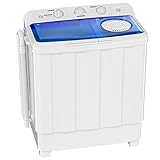
Auertech Portable Twin Tub 28lbs
At 28 pounds total capacity—18 pounds washer, 10 pounds spinner—this Auertech is the highest-volume portable unit on our list and the only one with a built-in drain pump. That pump matters for placement flexibility: you can run the discharge hose uphill to a utility sink several feet away. Parents managing multiple small children or washing cloth diapers in batches will appreciate the headroom without scaling up to a full-size machine.
- Pro: Drain pump offers real installation flexibility compared to gravity-only models.
- Pro: The 10-pound spinner handles dense cotton loads that overwhelm smaller spin baskets.
- Con: At $179.99, it costs more than double the SUPER DEAL twin-tub entry point.
If your laundry volume stays under one small load daily, this capacity headroom is money spent on potential you won’t use.
SUPER DEAL Small Portable 9.9lb
The cheapest twin-tub on this list earns its spot by proving that a 9.9-pound wash cycle plus a dedicated spinner can still serve a single-baby household. The 6.57-foot inlet hose and gravity drain hose mean it connects to a standard faucet and empties into a floor drain or sink without adapters. Owner feedback highlights the compact footprint—small enough to tuck beside a crib or under a dresser in most configurations.
- Pro: Lowest entry cost among twin-tub models with a dedicated spin basket.
- Pro: Included inlet and drain hoses reduce the need for separate plumbing purchases.
- Con: The 9.9-pound wash tub overflows quickly with diaper inserts or layered outfits.
Avoid if you cloth-diaper or wash for siblings in close age gaps; you’ll run two cycles for what the larger twin-tubs handle in one.
BLACK+DECKER BPWM09W 6.6lb
This is the only fully automatic single-tub model here, and it carries the brand’s name recognition for a reason. Six wash programs, a transparent lid, and a compact 0.9 cubic-foot drum make it feel closer to a miniature standard washer than the twin-tub alternatives. You load, select, and walk away—no mid-cycle transferring. The tradeoff is a 6.6-pound capacity that suits delicates, single onesies, and small accessory loads rather than full daily wardrobes.
- Pro: Fully automatic operation eliminates the manual transfer step that owners criticize on twin-tubs.
- Pro: BLACK+DECKER’s warranty support network is more accessible than that of lesser-known brands.
- Con: At $276.99, it costs three times the SUPER DEAL 9.9lb while offering less total capacity.
Not worth the premium unless you strongly value one-touch automation and keep loads under six pounds.
Superday Portable Twin Tub 25.3lbs
Under $90 for 25.3 pounds of combined wash-and-spin capacity is an aggressive value proposition, and the Superday delivers it in a grey finish that blends into modern nursery décor better than the blue-and-white alternatives. The twin-tub design means manual transfer, but the spinner basket handles a substantial volume once loaded. Owners running this for toddler laundry alongside infant loads report the capacity absorbs multiple outfits without overflow.
- Pro: Highest capacity-per-dollar on the list at just under $100.
- Pro: Neutral grey colorway suits nursery and bathroom aesthetics without visual clutter.
- Con: Gravity drain limits placement to areas near a floor drain or low sink.
Pass if you need pump-based drainage or plan to park the machine in a closet without direct water access.
Mini Washer 20L with Spin Basket
At $65.99, this is the absolute lowest-cost entry point on the list and the most minimalist. The 20-liter wash tub with an upgraded spin basket is explicitly sized for underwear, baby clothes, and small delicates—the product name leaves no ambiguity. It is not a substitute for daily laundry on a household of four; it is a dedicated small-load machine for the items you prefer not to mix with adult laundry. The beige housing and folding design allow compact storage when not in use.
- Pro: Smallest footprint and lowest price for parents wanting a dedicated delicates-only unit.
- Pro: Folding design enables flat storage in a closet or under a bed.
- Con: Capacity and build quality suit only the lightest loads; thick cotton or diaper inserts strain the motor.
Do not buy this as your primary baby washer unless your load volume stays under four or five small items per cycle.
COSTWAY Portable 12lbs Washer / 8lbs Spinner
COSTWAY positions this unit in the middle of the capacity and price spectrum: 12 pounds of wash capacity, 8 pounds of spin, grey-and-white housing, and a $134.99 tag. Owners report it as a solid no-frills twin-tub that handles daily infant loads without strain. The separate spin cycle extracts well from lightweight cottons, and the semi-automatic timer dials are simple enough to operate without reading instructions twice.
- Pro: Balanced 12/8 split covers most single-baby daily laundry without overfilling the spinner.
- Pro: Mid-range price leaves room in the budget for accessories like a utility sink adapter or water filter.
- Con: Gravity drain means the unit sits where your plumbing is, not where your convenience wants it.
Consider a pump-equipped model instead if you want to locate the washer away from a direct drain point.
Giantex Portable Twin Tub 20lbs
Giantex’s 20-pound twin-tub occupies a comfortable middle ground between the budget SUPER DEAL units and the high-capacity Auertech. The blue-and-white color scheme reads clean in a utility area, and owners praise the spin basket’s ability to handle dense cotton without the motor bogging. At $149.99, it splits the difference between under-$100 value models and the $180 Auertech—paying for a modest capacity bump and the Giantex build reputation.
- Pro: 20-pound combined capacity handles a full day of infant clothing plus a small diaper batch.
- Pro: Consistent owner satisfaction across multiple Amazon and retail reviews suggests reliable long-term operation.
- Con: Gravity drainage and semi-automatic transfer add friction compared to the BLACK+DECKER’s one-touch flow.
If automation matters more to you than capacity, the BLACK+DECKER’s single-tub design wins despite the price jump.
Buying Guide
Wash-and-Spin Capacity Split
Every twin-tub model on this list allocates its total pounds differently between the wash tub and the spinner. A 12/8 split (COSTWAY) gives you more room to soak heavily soiled items before transferring, while an 18/10 split (Auertech) prioritizes spinner volume for dense cotton loads. For baby laundry specifically, where spit-up and blowout saturate fabric, a wash tub that accommodates one full load without overfilling prevents you from splitting the load across cycles—which doubles your total time.
Drain Method: Gravity vs. Pump
This is the single most under-discussed spec. Gravity-drain models (SUPER DEAL units, Superday, COSTWAY, Giantex, the 20L mini) rely on the discharge hose pointing downhill to a drain or sink. If you plan to park the washer in a bathroom, closet, or any room without a floor drain, you will need a pump model like the Auertech or an aftermarket drain pump accessory. Factor placement before selecting the model, not after it arrives.
Fully Automatic vs. Semi-Automatic Twin-Tub
Semi-automatic twin-tubs require you to run the wash cycle, open the lid, transfer the wet load to the spinner basket, and run the spin cycle separately. Fully automatic single-tubs (BLACK+DECKER BPWM09W) do both phases without intervention. The time cost of transferring a load is small, but with a baby in arms or a toddler climbing the machine, uninterrupted cycles become a genuine convenience. The tradeoff is always price per pound of capacity.
Our Verdict
The top pick for most baby-focused buyers is the SUPER DEAL Compact Mini Twin Tub 13lbs. At $85.99 it covers a full day of infant laundry, includes gravity drainage for apartment-friendly setup, and carries enough capacity to avoid splitting loads. It is the best balance of cost, size, and functionality for a newborn household.
The budget pick is the SUPER DEAL Small Portable 9.9lb at $69.99. If you wash a single batch of light cotton daily and your space is tight, it handles the job without compromise at the lowest twin-tub price on the list.
The condition under which another model wins: if you need the washer placed away from a floor drain—say in a second-floor bedroom or a laundry closet—only the Auertech’s built-in pump solves that without extra accessories, and its 28-pound capacity justifies the $180 investment for multi-child households.
FAQ
Can a portable washing machine clean cloth diapers effectively?
Yes, but you need adequate capacity. A 9.9-pound wash tub fills with roughly six to eight inserts before the agitation becomes ineffective. Models with 13 or more pounds of wash capacity handle a full diaper load without overstuffing. Use a longer wash cycle with a sanitizer rinse to eliminate odor and bacteria.
Do twin-tub washers require hot water connections?
No. They connect to a cold water faucet via the inlet hose, and some models include a small heating element on the wash cycle. If you need hot water for sanitizing baby clothes, fill the wash tub manually with a kettle or connect to a hot tap using a Y-adapter.
How much water do these machines use per load?
Compact twin-tubs typically consume under five gallons per wash cycle, compared to fifteen or more for a full-size front-loader. The exact volume depends on how much you fill the tub and the water-level setting. For baby laundry where you run small loads frequently, this translates to meaningful savings on your utility bill.
Can I leave wet clothes in the spin basket overnight?
You can, but it is not advisable. Residual moisture in a closed basket breeds mildew and odor, particularly with thick cotton. The better habit is to run the spin cycle immediately after washing and hang items to dry before bed, or set a timer alarm to transfer them at cycle end.




0 Comments