Our Top Picks
What's inside
As an Amazon Associate I earn from qualifying purchases. This post may contain affiliate links at no extra cost to you.
A touring kayak is built to go somewhere. Compared with a recreational boat, it is longer and narrower, tracks straighter, and usually carries a skeg or rudder and enough hatch storage for an overnight trip. The decision behind “best touring kayak” is how long a boat you can store and carry, and how much speed and gear room you want in return. A 17-foot expedition hull and a 10-foot lightweight touring boat both claim the label, but they serve very different paddlers.
This guide is for paddlers moving up from a rec kayak, and for those choosing between lengths in one family of boats. We compared seven sit-inside models using only what their titles state: length, seating system, storage, and whether a skeg is listed. Three listings in the source set were left out because their titles describe recreational use or do not describe a touring design. Nothing here is a paddling impression, and with the 2026 season ahead, your own storage space and paddling water should drive the choice.
Quick Picks
As an Amazon Associate we earn from qualifying purchases at no extra cost to you.


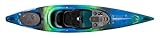


| Product | Best for | Key spec from the title |
|---|---|---|
| Wilderness Systems Tsunami 125 | Day tours, easy storage | 12.6 ft, multiple storage options |
| Wilderness Systems Tsunami 145 | Longer day trips | 14 ft 6 in, Air Pro seating |
| Wilderness Systems Tsunami 140 | Mid-length touring | 14 ft, Air Pro seating |
| Perception Expression 11.5 | Light touring | 11.6 ft, adjustable Zone seating |
| Wilderness Systems Tempest 170 | Expedition-style trips | 17 ft, adjustable skeg |
| Pelican Sprint 100XR | Compact, easy carry | 10 ft, Ram-X, touring sit-in |
| Wilderness Systems Tempest 165 | Multi-day touring | 16 ft 6 in, adjustable skeg |
How to Choose
Length and tracking
Length is the main trade-off. Boats near 10 to 12 feet turn easily and fit most garages, but wander in wind. At 14 to 15 feet, a kayak tracks straighter and glides farther per stroke, which suits open lakes and calm coasts. At 16 to 17 feet, speed and storage peak, but the hull needs a long rack and more skill in a crosswind.
Skeg, rudder, and storage
A skeg is a retractable fin that helps the boat hold a line in crosswinds, and it is listed on both Tempest models. Tours that last more than a day need hatches or bulkheads that keep gear dry and provide flotation. Check the titles and listings for the number and size of hatches, not just the word storage.
Seating and fit
Comfort over several hours depends on the seat, thigh braces, and foot pegs. The Wilderness Systems titles name Phase 3 Air Pro seating, and the Perception title names adjustable Zone seating. Try to sit in a boat before you buy, or choose a retailer with easy returns. A boat that fits your hips and legs controls better and tires you less.
Weight, material, and what to ignore
Longer boats weigh more, and weights are not given in these titles. Lift capacity matters: can you load a 17-foot boat alone? Ignore flashy graphics, and expect budget plastic hulls to flex more than composite ones. Cut-rate models often skimp on hatch seals and seat adjustment, so inspect those first. Also plan for the extras that no kayak title includes: a paddle sized to your height and the boat’s width, a personal flotation device, a spray skirt for sit-inside boats, and a bilge pump. Those items add up, so set aside part of your budget for them before you pick a hull.
The 7 Best Options
Wilderness Systems Tsunami 125
The Tsunami 125 is a 12.6-foot sit-inside touring kayak with multiple storage options. It is the shortest of the Tsunami family, so it is easier to carry and store. It suits paddlers stepping up from a rec boat who want day-trip range without a long hull, and those with limited garage space. A boat in this range turns quickly enough for winding rivers and sheltered bays, which makes it forgiving while you build skills. The title does not list a skeg, so treat it as a sheltered-water boat and keep to protected shorelines when the wind picks up.
- Strength: 12.6-foot length is manageable for storage and transport.
- Strength: multiple storage options for day gear.
- Trade-off: shorter hulls track less straight and glide less than longer ones.
Skip it if you plan multi-day trips, want a skeg, or paddle in open, windy water where a longer hull would hold its line more easily and carry more gear.
Wilderness Systems Tsunami 145
The Tsunami 145 stretches to 14 feet 6 inches and lists Phase 3 Air Pro seating and multiple storage options. The added length gives better tracking and glide than the 125, and the seating system is named for comfort on longer sessions. It suits paddlers planning long day trips or overnighters on lakes and sheltered coasts. Extra length also means more room for legs and gear, which helps taller paddlers who feel cramped in shorter boats. Its listing keeps the focus on comfort and storage rather than rough-water features, so plan routes accordingly and carry the usual safety gear.
- Strength: 14 ft 6 in length improves tracking and glide.
- Strength: Phase 3 Air Pro seating for comfort.
- Trade-off: the title does not mention a skeg or rudder.
Skip it if you need a skeg for crosswinds or want a compact boat.
Wilderness Systems Tsunami 140
The Tsunami 140 sits between the other two at 14 feet, with the same Phase 3 Air Pro seating and storage options. It is a compromise: a little easier to handle than the 145, with most of the tracking benefit of a longer hull. It suits paddlers who want touring ability but need to manage a rack and a garage. Because it shares seating and storage language with the 145, the main choice comes down to length: the shorter hull is a touch more nimble, the longer one a touch faster. Test-fit both on your car roof before deciding, since an extra few inches can change how you load.
- Strength: 14-foot length balances tracking and handling.
- Strength: named Air Pro seating and storage options.
- Trade-off: only six inches shorter than the 145, so the difference is small.
Skip it if you want to pick the longest hull in the family.
Perception Expression 11.5
The Expression 11.5 is described as a light touring kayak at 11.6 feet, with adjustable Zone seating. It sits at the gentle end of touring, with a size friendly to storage and transport. It suits newer paddlers who want a boat that feels like a rec kayak but with more focus on distance. Adjustable seating helps paddlers of different heights find a comfortable position, and the shorter length keeps rack and storage demands modest. Treat it as a light-touring boat for lakes and slow rivers, and look elsewhere if you need a skeg or generous hatch space for camping.
- Strength: 11.6-foot hull is easy to carry and store.
- Strength: adjustable Zone seating helps with fit.
- Trade-off: shorter than most touring boats here, so less tracking.
Skip it if you need hatch storage for multi-day camping gear.
Wilderness Systems Tempest 170
The Tempest 170 is a 17-foot sit-inside touring kayak with an adjustable skeg and Phase 3 Air Pro seating. It is the longest boat in this group and suits experienced paddlers heading out for multi-day trips on open water. The skeg helps hold a line in crosswinds without constant correction. Seventeen feet of waterline gives a long, efficient glide, so it covers distance with less effort per stroke once you are comfortable with the boat. Expect a learning curve for loading and launching it, and plan on a long roof rack or a trailer, plus a partner for carrying.
- Strength: 17-foot length for speed and storage capacity.
- Strength: adjustable skeg for wind control.
- Trade-off: the long hull is harder to store, carry, and launch.
Skip it if you have a small garage or paddle in tight, twisty waterways.
Pelican Sprint 100XR
The Sprint 100XR is listed as a touring sit-in kayak at 10 feet, built from lightweight Ram-X material with Ergobreeze and Ergoform seating. It is the shortest and likely the easiest to carry here. It suits paddlers who want a light, compact boat for calm lakes and short outings, and who prefer a small footprint. Lightweight plastic is easier to load alone, which is a real advantage if you paddle solo and lift the boat onto a car without help. The title mentions no skeg or hatch details, so check the full listing before assuming it can carry camping gear.
- Strength: 10-foot length and lightweight material.
- Strength: named Ergobreeze and Ergoform seating.
- Trade-off: a 10-foot hull is short for true touring.
Skip it if you plan long distances or overnight trips.
Wilderness Systems Tempest 165
The Tempest 165 is 16 feet 6 inches, with an adjustable skeg and Phase 3 Air Pro seating. It is a half-foot shorter than the 170 and slightly easier to handle, yet it keeps the same touring pedigree. It suits paddlers who want an expedition-style hull and a skeg but are sensitive to boat length. Six inches may sound trivial, yet at this size it shifts how the boat sits on a roof rack and how it fits in a garage bay. Paddlers who plan multi-day coastal trips will value the skeg and the room, while day-trippers may find the shorter Tsunami models easier to live with.
- Strength: adjustable skeg and 16 ft 6 in length.
- Strength: Phase 3 Air Pro seating for long days.
- Trade-off: still a long boat to transport and store.
Skip it if you want a short, easy-carry boat.
Which One Fits Your Situation
You are moving up from a recreational kayak
The Perception Expression 11.5 is a gentle step, and the Tsunami 125 adds more storage options.
You paddle open water in wind
The Tempest 165 or 170 offers an adjustable skeg for holding a line.
You have limited storage
The Pelican Sprint 100XR at 10 feet is the compact choice.
You want day trips and occasional overnighters
The Tsunami 140 or 145 balances length and handling.
Common Mistakes
- Buying length without checking your rack and garage.
- Ignoring seat fit and thigh braces.
- Assuming every touring boat has a skeg.
- Skipping a check of hatch sizes.
- Forgetting paddle length and safety gear.
Related guides
- How To Strip Old Varnish From Furniture Without Sanding
- Random Orbital Sanders For Furniture Refinishing
- How Long To Wait Between Coats Of Polycrylic
Frequently Asked Questions
What length is best for touring?
Between 14 and 17 feet suits most long trips, because the extra waterline length improves tracking and glide. Shorter boats in the 10 to 12 foot range work for day tours and are easier to store.
Do I need a skeg?
It helps in crosswinds on open water. Calm lakes may not need one.
Sit-inside or sit-on-top?
Sit-inside boats give better control, protection, and storage for touring.
Can I tour in a 10-foot kayak?
For short, calm outings, yes. A 10-foot boat turns easily and carries little gear, so longer trips, wind, and open water are better handled by a longer hull with hatches and a skeg.
Related guides
- Baffin Titan Polar Rated Winter Boots Review: Features, Pros, Cons and Alternatives
- Baffin Snow Monster Arctic Rated Winter Boots Review: Features, Pros, Cons and Alternatives
- Baffin Impact Mens Extreme Cold Boots Review: Features, Pros, Cons and Alternatives
- Avoforest Small Hot Tent Wood Stove Review: Features, Pros, Cons and Alternatives

0 Comments