Our Top Picks

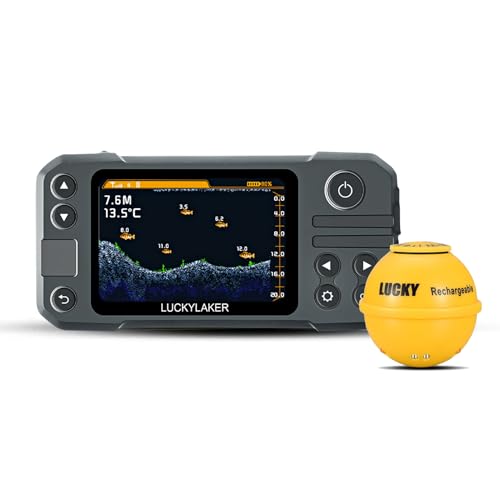
What's inside
As an Amazon Associate I earn from qualifying purchases. This post may contain affiliate links at no extra cost to you.
A fish finder is really a sonar screen with a transducer on a cable, and the whole category splits on one question: do you want a display mounted on a boat, or a small sensor you cast from the bank or a kayak and read on your phone or a handheld screen? Everything else, from sonar type to screen size, follows from that choice and from the water you fish.
This roundup is for anglers choosing a first unit or replacing an old one for the 2026 season. The ten listings run from castable sensors to fixed-screen models from Humminbird, Lowrance and Garmin. All commentary comes from the specs in each listing, so treat it as a way to narrow the field, then confirm mounting and cable details for your own boat.
Quick Picks
As an Amazon Associate we earn from qualifying purchases at no extra cost to you.





| Product | Best for | Key spec from the title |
|---|---|---|
| Venterior Wireless Fish Finder | Bank and dock fishing | Rechargeable, color display, bottom contour |
| Large HD Display Wireless Finder | Casting from boats | 147 feet depth detection, castable |
| Humminbird PiranhaMAX 4 | Small boats, simple use | Dual beam sonar, carrying case |
| Lowrance Eagle 4X | Entry fixed-mount | 4-inch IPS display, autotuning sonar |
| Humminbird Helix 5 G3 | Mapping and GPS | GPS, dual spectrum CHIRP |
| LUCKY Kayak FFC1108 | Kayak and shore | Handheld, castable |
| LUCKY Kayak MT-202 | Wireless kayak use | Rechargeable, wireless sonar |
| Deeper PRO+ 2 | Ice, kayak and boat | GPS enabled, castable |
| Handheld Kayak Fishfinder | Tight budgets | LCD display, handheld |
| Garmin Striker Vivid 7cv | Bigger screen, clear colors | 7-inch color, GT20-TM transducer |
How to Choose
Pick portable or mounted first
Castable and wireless sensors suit kayaks, docks, shore and ice, because there is nothing to drill or wire. Mounted units with a transducer on the boat suit anglers who fish from the same boat every outing. If you launch a different boat each trip, a portable sensor is the easier fit and is simpler to share between boats.
Understand sonar types
The sonar label on the box tells you more than the brand. Dual beam sonar shows a narrow beam for depth detail and a wider beam for coverage. CHIRP sonar sweeps a range of frequencies and generally separates fish from bottom structure more cleanly. Autotuning sonar adjusts settings for you, which helps beginners. Wide-angle coverage finds more fish but spreads detail thinner.
Size the screen to the boat
Four-inch screens work on kayaks and small jon boats where space is tight. Five to seven inches is easier to read in bright sun and while standing. A bigger screen needs a stable mount and more battery, so match it to your craft. Phone-based sensors depend on your phone screen, which can wash out in glare.
Consider GPS and power
GPS lets you mark spots and return to them. Fixed units need a 12-volt battery, so plan for a small marine battery on a kayak or canoe. Rechargeable castable sensors run on built-in batteries, but battery life is limited, so check the listing. Budget models often cut corners on depth range accuracy and on screen brightness, and cheap cables are a frequent failure point, so look for twist-lock or sealed connectors.
The 10 Best Options
Venterior Portable Wireless Fish Finder
The Venterior is a rechargeable wireless sonar sensor that pairs with a color display. The title lists fish size, temperature and bottom contour readouts, which makes it a sensible first sonar for bank anglers, dock fishers and anyone trying to learn how depth changes along a shoreline.
- Strength: wireless design means no cable to rig or tangle.
- Strength: temperature and bottom contour readouts help find structure.
- Trade-off: wireless signals and small batteries limit long sessions.
Skip it if you need GPS mapping or a fixed mount on a larger boat.
Large HD Display Portable Wireless Fish Finder
This listing stresses a large HD display and a sensor with 147 feet of depth detection, in a rechargeable castable package. It aims at anglers who want a bigger readout than a phone while keeping the casting convenience of a portable sensor.
- Strength: a stated 147 feet of detection depth covers most inland lakes.
- Strength: castable and rechargeable setup is easy to carry.
- Trade-off: details on sonar type and GPS are thin in the title.
Skip it if you fish very deep water or want chart mapping.
Humminbird PiranhaMAX 4
The PiranhaMAX 4 pairs a fish finder with a transducer, dual beam sonar and a portable carrying case. It targets small-boat anglers who want a simple, proven fixed display rather than a phone app, and it works well on canoes and kayaks with a portable battery.
- Strength: dual beam sonar gives both narrow detail and wider coverage.
- Strength: the carrying case suits portable and shared use.
- Trade-off: no GPS is mentioned, so you cannot mark waypoints.
Skip it if you want mapping or a large screen.
Lowrance Eagle 4X With Bullet Transducer
The Eagle 4X offers a 4-inch IPS display, wide-angle sonar coverage, autotuning sonar and an easy twist-lock connector with the bullet transducer. It is a tidy entry point into Lowrance, suited to anglers who want a screen that works without tinkering.
- Strength: autotuning sonar reduces setup for beginners.
- Strength: an IPS display usually keeps its viewing angle in sunlight.
- Trade-off: the 4-inch screen is small if you want detailed split views.
Skip it if you want a large display or advanced charting.
Humminbird Helix 5 G3 GPS Fish Finder
The Helix 5 G3 combines GPS with dual spectrum CHIRP sonar and a transducer. It is aimed at anglers who want to mark spots and read cleaner returns on a mid-size display for bass boats, jon boats and larger kayaks.
- Strength: built-in GPS lets you save waypoints and routes.
- Strength: dual spectrum CHIRP offers finer target separation.
- Trade-off: it needs a fixed mount and a 12-volt power supply.
Skip it if you only fish from shore or want a pocket-size sensor.
LUCKY Kayak Portable Fish Depth Finder FFC1108
This LUCKY model is a handheld unit with a castable transducer and LCD display, intended for kayak, boat and shore fishing. The listing calls it a water-ready finder for depth and fish, suiting anglers who want a basic sonar with a physical screen.
- Strength: handheld LCD means you do not need a phone.
- Strength: the castable transducer works from shore or a kayak.
- Trade-off: the title lists no GPS, battery life or depth range.
Skip it if you need wide-angle coverage or mapping.
LUCKY Kayak Portable Fish Finder MT-202
The MT-202 is a wireless, rechargeable sonar transducer paired with a handheld fish depth finder. It targets kayak and small-boat anglers who want a cable-free sensor and a dedicated display for short outings on lakes and ponds.
- Strength: rechargeable and wireless means easy launch and retrieval.
- Strength: it is designed for kayaks and boats alike.
- Trade-off: wireless connection range and battery runtime are not specified.
Skip it if you want a bigger screen or a fixed mount.
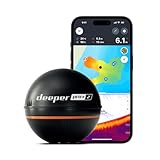
Deeper PRO+ 2 Sonar Fish Finder
The Deeper PRO+ 2 is a castable sonar with GPS that works on kayaks, boats and ice. It is the most versatile portable listing here for anglers who want mapping and phone-based readouts, and who fish different water types across the year.
- Strength: GPS-enabled mapping is rare in castable sensors.
- Strength: the listing covers ice, kayak and boat use.
- Trade-off: it relies on your phone as the display.
Skip it if you want a built-in screen or lower upfront cost.
Handheld Portable Kayak Fishfinder With LCD Display
This simple handheld unit offers sonar depth readings on an LCD display and positions itself as great value for kayak and boat fishing. It suits beginners who want to learn depth and bottom changes without a big investment.
- Strength: handheld design is easy to carry and use.
- Strength: the listing promises depth and fish readings with minimal setup.
- Trade-off: the title gives no specifics on sonar type or range.
Skip it if you need GPS, CHIRP or reliable detail at depth.
Garmin Striker Vivid 7cv With GT20-TM Transducer
The Striker Vivid 7cv pairs a 7-inch color screen with the GT20-TM transducer and Vivid scanning sonar color palettes. It is meant for anglers who want a larger, easier-to-read display on a boat with a proper mount.
- Strength: the 7-inch screen gives more room for details.
- Strength: Vivid color palettes aim to make returns easier to read.
- Trade-off: it needs a fixed mount and power, so it is less portable.
Skip it if you fish from shore or a tight kayak cockpit.
Which One Fits Your Situation
Kayak anglers with limited space
The Deeper PRO+ 2 or the LUCKY MT-202 saves cockpit room, with the Deeper adding GPS and the LUCKY keeping a dedicated screen. Either way, secure the sensor with a leash and mount the display where a wave cannot reach it.
Fishing from the bank or a dock
The Venterior Wireless Fish Finder is a straightforward way to read depth and bottom contour without any rigging. Its rechargeable battery suits short evening sessions, so bring a charged spare power source if you plan a full day.
A small boat with a battery
The Humminbird PiranhaMAX 4 or Lowrance Eagle 4X give a fixed screen and a transducer with minimal fuss. Both are easier to learn than a GPS chartplotter, and a carrying case or quick-release bracket makes switching boats painless.
Serious boat anglers who want to mark spots
The Humminbird Helix 5 G3 adds GPS and CHIRP, while the Garmin Striker Vivid 7cv offers the largest screen on this list. Pair either with a quality 12-volt battery and a tidy cable route to the transducer.
Common Mistakes
- Choosing a fixed unit without planning for a 12-volt battery on a kayak.
- Trusting depth range claims without checking the water you actually fish.
- Buying a huge screen for a small cockpit where it will not mount.
- Ignoring transducer mounting method, such as transom, trolling motor or cast, since the wrong style gives noisy readings.
- Expecting a phone display to stay readable in bright sun without a shade.
Related guides
- How To Strip Old Varnish From Furniture Without Sanding
- Random Orbital Sanders For Furniture Refinishing
- How Long To Wait Between Coats Of Polycrylic
Frequently Asked Questions
Do I need GPS on a fish finder?
It is not required, but GPS lets you save productive spots and mark hazards. Anglers who return to the same lakes get the most from it, and trolling or drifting becomes easier when you can follow a saved route.
What does CHIRP sonar do?
CHIRP sends a sweep of frequencies rather than one pulse. This usually separates fish from structure more clearly than traditional sonar.
Can I use these for ice fishing?
Some castable sensors, including the Deeper listing, mention ice use. Fixed units usually need a portable battery and a puck transducer for the ice, plus a way to shade the screen from glare off the snow.
How deep will a fish finder read?
Depth varies by model, transducer and water clarity. Check the listing for a stated range, such as the 147 feet mentioned on one portable model.

0 Comments