Key takeaways
- Fat bikes exist for surfaces that make a normal mountain bike feel twitchy: loose sand, soft snow, wet gravel, and washed-out trail.
What's inside
As an Amazon Associate I earn from qualifying purchases. This post may contain affiliate links at no extra cost to you.
Fat bikes exist for surfaces that make a normal mountain bike feel twitchy: loose sand, soft snow, wet gravel, and washed-out trail. Their wide tires run at low pressure and spread the rider’s weight over more ground, which is why you see them on beach boardwalks and winter paths alike. Shopping for one means deciding how much of that capability you really need, because the cheaper end of the market borrows the look more often than the engineering.
This guide covers seven options aimed at adults and teens, including budget steel-frame bikes with 21 gears, a simple 7-speed cruiser-style model, and one electric fat bike for riders who want motor help on soft terrain. It is meant for people picking a first fat bike for casual trails, sand, or snow, and it explains what to check on the spec sheet before you choose. By the 2026 riding season, most of these designs are familiar formats, so the details below matter more than the badge.
Quick Picks
As an Amazon Associate we earn from qualifying purchases at no extra cost to you.
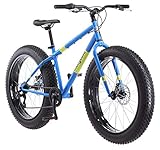
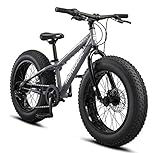


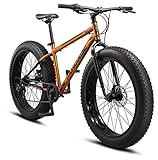


| Product | Best for | Key spec from the title |
|---|---|---|
| Mongoose Dolomite | Simple, low-fuss casual riding | 26-inch wheels, 4-inch tires, 7-speed |
| Outroad 26-inch (4-inch tire) | Trail riders who want more gears | 21-speed, double disc brake, front suspension |
| Max4out 26-inch | Heavier riders | 21-speed, dual disc brakes, 400 lb rating |
| Mongoose Argus ST Adult | Riders who want a stated frame size | 17-inch steel hardtail, mechanical disc brakes |
| TST Electric Fat Bike | Long rides on soft ground | 48V battery, 20×4 fat tires, dual suspension |
| StarterRide 24-inch | Teens and shorter adults | 24-inch wheels, 3.0 tires, rider 5’1″ to 6’5″ |
| Outroad 26-inch 21-speed | Budget buyers wanting suspension | High carbon steel frame, front suspension |
How to Choose
Tire Width and Wheel Size
True fat tires start around 3.8 to 4 inches wide, and many listings in this category use 26-inch wheels. Tires near 3 inches are better described as plus-size, which float less on snow and soft sand. If your main goal is floatation, look for a stated 4-inch width. Smaller 20-inch and 24-inch wheels suit shorter riders and some electric builds. Remember that wide tires need wide rims, so a bike that lists a 4-inch tire is usually paired with a matching rim, while spare tubes and tires must match the stated size exactly, such as 20×4.0 on the electric model. Knobby tread grips loose dirt, but a smoother center ridge rolls more easily on paths.
Frame Size and Rider Height
Fit decides comfort more than any component. A 17-inch frame generally suits riders in the mid-5-foot to mid-6-foot range, while the StarterRide lists a rider height of 5’1″ to 6’5″ for its 24-inch format. If a listing never states frame size or rider height, you are guessing, so look for one that does. Try to leave an inch or two of clearance when standing over the top tube.
Gears, Brakes, and Suspension
A 7-speed drivetrain is fine for flat beaches and paths, while 21 speeds help with hills. Disc brakes, mechanical or hydraulic, stop better in wet conditions than rim brakes. Front suspension forks take the edge off roots and washboard, but cheap forks add weight without much damping. Do not pay extra for suspension if you ride mostly on sand or snow, where the tire does the cushioning. Budget bikes in this class usually cut corners on the quality of the derailleur, the crank, and the hubs, so expect to adjust or replace parts if you ride often. A basic tune-up after the first few rides keeps cables from stretching out of adjustment.
Motor Assist and Weight Rating
An electric fat bike makes sense if you want range and hill help, but battery capacity and weight rating matter. A 48V pack with a 15 or 25 amp-hour option shows how the maker scales range. For a standard bike, a stated load rating, such as the 400 pounds on one listing, tells you how heavy a rider the frame is intended for. Ignore marketing like “heavy-duty” without a number attached.
The 7 Best Options
Mongoose Dolomite Fat Tire Mountain Bike
The Dolomite uses 26-inch wheels with 4-inch knobby tires, a 7-speed drivetrain, and a steel frame sold for both men and women. It is the plain, low-complexity choice for casual trail rides, beach paths, and neighborhood loops. Fewer gears mean fewer things to adjust.
- Strength: True 4-inch tires give real floatation on soft ground.
- Strength: A 7-speed setup is easy to maintain.
- Trade-off: Fewer gears limit how comfortably you climb steep hills.
It is also a reasonable bike to learn on, because a basic drivetrain forgives sloppy shifting and costs little to keep tuned. Lower the tire pressure on sand to take advantage of the width. Skip it if you want a wide gear range or front suspension.
Outroad 26-Inch Fat Tire Mountain Bike (4-Inch Tire)
This Outroad lists 26-inch wheels, 4-inch tires, 21 speeds, a high-carbon steel frame, double disc brakes, and front suspension. It packs a long feature list for a budget bike. It suits riders who want to try mixed terrain without paying for a premium frame.
- Strength: A 21-speed drivetrain covers flats and moderate hills.
- Strength: Dual disc brakes and a suspension fork add control on uneven ground.
- Trade-off: Steel frames are heavier than aluminum ones.
The spec list reads like something found on far costlier bikes, so treat the components as entry level and plan on adjusting brakes and gears after assembly. A short test ride around the block before heading out saves trouble on the trail. Skip it if low weight matters for long climbs.
Max4out 26-Inch Fat Tire Mountain Bike
Max4out pairs 4-inch tires with 21 speeds, dual disc brakes, a suspension fork, and a stated 400-pound capacity. That number is the main differentiator, since many bikes never state a load limit. It is aimed at heavier riders who want a clear figure to shop against.
- Strength: A published weight rating sets expectations up front.
- Strength: Dual disc brakes and a suspension fork round out the package.
- Trade-off: A heavy-duty build tends to mean a heavier bike overall.
Even with a rating that high, keep tire pressure and brake adjustment in mind, since a loaded bike asks more of both. Riders carrying gear or a pack benefit from the extra margin. Skip it if you want a lightweight trail bike.
Mongoose Argus ST Adult Fat Tire Bike
The adult Argus ST lists 26-inch wheels, mechanical disc brakes, a 17-inch steel hardtail frame, and 7 speeds. Having an explicit frame size is useful, because it lets you match the bike to your height before ordering. It suits adults who prefer a familiar hardtail layout.
- Strength: A stated 17-inch frame makes fit easier to judge.
- Strength: Mechanical disc brakes handle wet conditions better than rim brakes.
- Trade-off: Only 7 speeds and a rigid fork limit rough-trail comfort.
A hardtail is easy to maintain because there is no rear shock to service, and that suits riders who prefer minimal upkeep. Check the standover clearance against your inseam when it arrives. Skip it if you are tall and need a larger frame.
TST Electric Fat Bike
This electric model has a 48V battery in 15 or 25 amp-hour options, 20×4 fat tires, dual suspension, 7 speeds, and an LCD display. Range claims of 60 or 100 miles appear in the title, though real range depends on rider weight, terrain, and assist level. It is for riders who want to cover distance on sand or trail without tiring.
- Strength: Motor assist helps on soft surfaces and hills.
- Strength: Dual suspension softens rough ground.
- Trade-off: Battery weight makes the bike harder to lift and transport.
Check local rules for where e-bikes are allowed, since some trails and beaches restrict motors. Charge the battery fully before a long outing and plan your route around its stated range. Skip it if you want a simple, low-maintenance pedal bike.
StarterRide 24-Inch Fat Tire Mountain Bike
Sized with 24-inch wheels, 3.0-inch tires, 7 speeds, and dual disc brakes, this bike lists a rider height of 5’1″ to 6’5″. It works for teens moving up from a kid’s bike and for shorter adults. The 3.0-inch tire is a bit narrower than a classic fat tire.
- Strength: A stated rider height range helps with sizing.
- Strength: Dual disc brakes provide solid stopping.
- Trade-off: 3.0-inch tires float less on deep snow than 4-inch ones.
The wide rider-height window makes it a practical household bike when a teen and an adult might take turns. Raise the seat post as the rider grows rather than buying again. Skip it if snow riding is your main goal.
Outroad 26-Inch 21-Speed Fat Tire Bike
This second Outroad shares the 26-inch wheels, 21 speeds, high-carbon steel frame, double disc brakes, and front suspension of its sibling, though its title does not state the tire width. It is a value-minded option for casual riders who want gears and a fork.
- Strength: Wide gear range suits mixed terrain.
- Strength: Front suspension adds comfort over bumps.
- Trade-off: The title omits tire width, so floatation is unclear.
If tire width matters to you, confirm it with the seller before buying, because the listing leaves it out. Otherwise the gearing, brakes, and fork put it in the same budget class as the other Outroad. Skip it if you need a confirmed 4-inch tire for snow.
Which One Fits Your Situation
Beach and Boardwalk Cruiser
The Mongoose Dolomite keeps things simple, with 4-inch tires and only 7 gears to manage. Flat sand does not need a wide drivetrain.
Hilly Mixed Trails on a Budget
Go with the Outroad 26-inch with the stated 4-inch tire, since 21 speeds and a suspension fork help on varied ground.
Heavier Rider
The Max4out lists a 400-pound rating, which is more reassuring than an unstated limit. Pair it with a sturdy rack only if the manufacturer confirms mounting points, and keep tire pressure on the firmer side when carrying extra weight.
Long Rides With Less Effort
The TST Electric Fat Bike is the choice for covering distance on soft surfaces, as long as you can handle the weight when loading it.
Common Mistakes
- Buying on looks and ignoring whether the tire is actually 4 inches wide.
- Skipping frame size or rider height and ending up with a bike that does not fit.
- Paying for suspension that will hardly matter on sand or snow.
- Trusting electric range claims without considering rider weight and terrain.
- Running tires at normal mountain bike pressure, which wastes the fat tire’s advantage.
Related guides
- How To Strip Old Varnish From Furniture Without Sanding
- Random Orbital Sanders For Furniture Refinishing
- How Long To Wait Between Coats Of Polycrylic
Frequently Asked Questions
Are fat bikes good on pavement?
They work, but wide tires add rolling resistance and weight. Riders who mostly use pavement are usually better served by a standard hybrid.
How wide should the tires be for snow?
Four inches is the common baseline for snow and soft sand. Narrower tires near 3 inches float less, though they roll more easily.
Is 7-speed enough?
For flat beach paths, yes. If you expect hills, a 21-speed drivetrain gives easier climbing gears.
Is an electric fat bike worth it?
If you ride long distances on soft ground or face hills, motor assist makes a big difference. It costs more and weighs more, so casual riders may prefer a standard bike.

0 Comments