What's inside
- Top 3 Picks
- Quick Comparison
- How We Chose
- 1. Safety 1st Grow and Go All-in-One – Best for One-and-Done Coverage on a Budget
- 2. Graco TriRide 3-in-1 Convertible Car Seat, Kipling – Best for Everyday Convertible Value
- 3. Safety 1st Ellaris 3-in-1 Convertible Car Seat, Slim Fit – Best for Three-Across and Narrow Back Seats
- 4. Graco SnugRide Lite LX Infant Car Seat, Studio – Best for Newborns and Travel Systems
- 5. Baby Trend Trooper Slim 3-in-1 Convertible Car Seat, Dash Black – Best Budget Slim Convertible
- 6. Graco Turn2Me 3-in-1 Rotating Convertible Car Seat, Cambridge – Best for Easy Loading and Back-Friendly Use
- 7. Diono Radian 3R 3-in-1 Convertible Car Seat – Best for Long-Term Ownership and Air Travel
- 8. Graco 4Ever DLX 4-in-1 Convertible Car Seat, Maven – Best Overall for the Longest Single-Seat Lifespan
- 9. Safety 1st Grand 2-in-1 Booster Car Seat – Best Budget High-Back-to-Backless Booster
- 10. Graco TurboBooster 2.0 Backless Booster Car Seat, Denton – Best for Older Kids and Carpool Duty
- Related Guides
- Top 3 Picks
- Quick Comparison
- How We Chose
- 1. Safety 1st Grow and Go All-in-One – Best for One-and-Done Coverage on a Budget
- 2. Graco TriRide 3-in-1 Convertible Car Seat, Kipling – Best for Everyday Convertible Value
- 3. Safety 1st Ellaris 3-in-1 Convertible Car Seat, Slim Fit – Best for Three-Across and Narrow Back Seats
- 4. Graco SnugRide Lite LX Infant Car Seat, Studio – Best for Newborns and Travel Systems
- 5. Baby Trend Trooper Slim 3-in-1 Convertible Car Seat, Dash Black – Best Budget Slim Convertible
- 6. Graco Turn2Me 3-in-1 Rotating Convertible Car Seat, Cambridge – Best for Easy Loading and Back-Friendly Use
- 7. Diono Radian 3R 3-in-1 Convertible Car Seat – Best for Long-Term Ownership and Air Travel
- 8. Graco 4Ever DLX 4-in-1 Convertible Car Seat, Maven – Best Overall for the Longest Single-Seat Lifespan
- 9. Safety 1st Grand 2-in-1 Booster Car Seat – Best Budget High-Back-to-Backless Booster
- 10. Graco TurboBooster 2.0 Backless Booster Car Seat, Denton – Best for Older Kids and Carpool Duty
- Related Guides
As an Amazon Associate I earn from qualifying purchases. This post may contain affiliate links at no extra cost to you.
The best Black Friday car seat deal for most families is the Graco 4Ever DLX 4-in-1 Convertible Car Seat in Maven. It is the only seat in this roundup that covers all four stages — rear-facing, forward-facing with a harness, high-back belt-positioning booster, and backless booster — in a single purchase, and Graco builds it for a 10-year useful life, so one discounted seat can serve two children from the newborn stage to roughly 100 pounds. If your priority is easier daily loading rather than the longest lifespan, the Graco Turn2Me 3-in-1 Rotating is the pick, and if you are replacing an infant seat on a tight budget, the Baby Trend Trooper Slim 3-in-1 gives the most coverage per dollar. This guide covers twelve seats that see genuine Black Friday discounts, the safety and fit specs that actually decide whether a deal is worth taking, and which one matches your child’s height, weight, and your car’s back seat.
Top 3 Picks
Best Overall: Graco 4Ever DLX 4-in-1 Convertible Car Seat, Maven
The 4Ever DLX is the seat that ends the car seat shopping cycle. It runs rear-facing, then forward-facing with a five-point harness, then a high-back booster, then a backless booster, and Graco rates the shell for ten years of use — long enough that one Black Friday purchase can cover two siblings. It suits the family that wants to buy once, install once, and stop thinking about car seats until the child is out of boosters.
Best Budget: Baby Trend Trooper Slim 3-in-1 Convertible Car Seat, Dash Black
The Trooper Slim is the value pick because it delivers three modes — rear-facing, forward-facing harness, and booster — in a narrow, lightweight shell at the lowest price tier in this roundup. It suits second cars, grandparents’ vehicles, and tight back seats where a wide premium convertible simply will not fit next to another seat. You give up some padding and premium harness hardware, but the safety-relevant structure and the growth ranges are in the same class as seats that cost considerably more.
Best Premium: Graco Turn2Me 3-in-1 Rotating Convertible Car Seat, Cambridge
The Turn2Me rotates toward the door so you can buckle a child from a standing position instead of leaning across the seat, which matters most during the rear-facing years when a toddler is heaviest to lift and least cooperative. It still covers rear-facing, forward-facing harness, and booster modes, so the premium buys convenience rather than a shorter lifespan. It suits parents with back trouble, tall SUVs with high load floors, and anyone who loads a child several times a day.
Quick Comparison
| Product | Best for | Key specs (modes and typical limits) | Price tier |
|---|---|---|---|
| Safety 1st Grow and Go All-in-One | One-and-done coverage on a budget | 3-in-1: rear-facing ~5–40 lb, forward-facing harness ~22–65 lb, booster ~40–100 lb; multiple recline positions; machine-washable pad | Mid-range |
| Graco TriRide 3-in-1, Kipling | Everyday convertible value | 3-in-1: rear-facing ~5–40 lb, forward-facing harness ~22–65 lb, high-back booster ~40–100 lb; multi-position headrest | Mid-range |
| Safety 1st Ellaris 3-in-1 Slim Fit | Three-across and narrow back seats | 3-in-1: rear-facing ~5–40 lb, forward-facing ~22–65 lb, booster ~40–100 lb; slim shell; 5-position headrest | Mid-range |
| Graco SnugRide Lite LX Infant, Studio | Newborns and travel systems | Infant carrier: rear-facing only ~4–35 lb and up to ~32 in; lightweight carrier; base included; clicks into Graco strollers | Mid-range |
| Baby Trend Trooper Slim 3-in-1, Dash Black | Budget coverage and second cars | 3-in-1: rear-facing ~5–40 lb, forward-facing ~22–65 lb, booster ~40–100 lb; slim lightweight shell | Budget |
| Graco Turn2Me 3-in-1 Rotating, Cambridge | Easy loading and back-friendly use | 3-in-1 with 180° rotation: rear-facing ~4–40 lb, forward-facing ~22–65 lb, booster ~40–100 lb | Premium |
| Diono Radian 3R 3-in-1 | Long ownership and air travel | 3-in-1: rear-facing ~5–40 lb, forward-facing harness ~22–65 lb, booster ~40–120 lb; steel alloy frame; narrow shell; folds for transport | Premium |
| Graco 4Ever DLX 4-in-1, Maven | Longest single-seat lifespan | 4-in-1: rear-facing ~4–40 lb, forward-facing ~22–65 lb, high-back booster ~40–100 lb, backless booster to ~100 lb | Premium |
| Safety 1st Grand 2-in-1 Booster | Budget booster transition | Belt-positioning high-back that converts to backless; roughly the 40–100 lb / 43–57 in class | Budget |
| Graco TurboBooster 2.0 Backless, Denton | Older kids, quick trips, carpool | Backless belt-positioning booster; roughly the 40–100 lb / 40–57 in class; hideaway cup holders | Budget |
| Evenflo GoTime LX Booster, Astro Blue | Growing booster rider | High-back booster converting to backless; belt-positioning in roughly the 40–110 lb class | Budget |
| Graco Extend2Fit 2-in-1, Redmond | Extended rear-facing | 2-in-1 convertible: rear-facing ~4–50 lb with an extension panel adding legroom, forward-facing ~22–65 lb | Premium |
How We Chose
Every seat here was selected on published, checkable criteria rather than on popularity. First, category fit: each product had to belong to a clearly different stage of the child-passenger journey — infant carrier, convertible, all-in-one, or booster — so that the list works as a set of answers rather than twelve versions of the same answer. Second, growth ranges: we looked at the rear-facing weight and height ceiling, the forward-facing harness limits, and the booster limits, because those numbers decide how long the seat actually stays in service. Third, installation and fit: harness adjustment type, recline options, lower-anchor and top-tether provisions, and the shell’s width, which is what determines whether a seat works three-across. Fourth, upgrade path and ownership reality: useful life (most convertibles in this class are rated for 8–10 years from the manufacture date, infant seats typically shorter), the washability of the cover, and whether the seat folds or travels. Price appears only as a tier — budget, mid-range, or premium — because promotional pricing changes daily and a tier is the honest comparison. We did not test, handle, or benchmark any of these seats; the specs come from manufacturer documentation and established category standards, and the judgments come from matching those specs to real use cases.
1. Safety 1st Grow and Go All-in-One – Best for One-and-Done Coverage on a Budget
As an Amazon Associate we earn from qualifying purchases at no extra cost to you.

The Grow and Go is aimed at the family that wants to buy a single seat and stop shopping. It is a three-mode all-in-one: rear-facing for infants and young toddlers, forward-facing with the five-point harness for preschoolers, and a belt-positioning booster for school-age kids. In practice, that means a parent who buys it during a Black Friday sale does not need to budget for a booster later, which is the main reason this seat stays on deal lists year after year.
- Modes: rear-facing, forward-facing with harness, belt-positioning booster
- Rear-facing: roughly 5–40 lb
- Forward-facing harness: roughly 22–65 lb
- Booster: roughly 40–100 lb
- Height ranges: about 19–40 in rear-facing, 29–49 in forward-facing, 43–57 in in booster mode (always confirm on the seat label and in the manual)
- Comfort and care: multiple recline positions, side impact protection, harness holders, machine-washable seat pad, two built-in cup holders
- Installation: lower anchors or vehicle seat belt, with top tether required in forward-facing mode
The strengths are coverage and price tier. You get booster mode without paying for a second seat, the pad comes off for washing, and the harness holders keep the straps out of the way while you load a child — a small feature that saves a surprising amount of daily frustration. The seat’s limits are honest ones for the tier: it is not a narrow seat, so it is a poor choice if you routinely carry three passengers across the second row, and the booster mode depends on how the vehicle’s belt sits across your child’s shoulder and lap, which is a vehicle-by-vehicle question rather than a seat-by-seat one. Buyers should also check the manufacture date on the box before installing, since the useful life runs from that date, not from the purchase date.
Pros
- Covers three stages, so no separate booster purchase
- Mid-range tier with booster capability that budget convertibles usually lack
- Machine-washable pad and harness holders make daily use easier
- Two cup holders and side impact protection are included rather than optional
- Widely documented installation steps and a large support footprint from an established brand
Cons
- Wide shell makes three-across seating difficult
- Padding and fabric feel are a step below premium convertibles
- Booster belt fit varies by vehicle, so it is not guaranteed to work well in every back seat
- No rotating feature, so loading a rear-facing toddler means reaching across the seat
Compared with the Graco TriRide 3-in-1, the Grow and Go is the more budget-forward version of the same idea — both cover three stages, both land in the mid-range tier, and the TriRide generally has the edge in headrest adjustment and fabric finish. Compared with the Graco 4Ever DLX, the Grow and Go stops at the high-back booster, while the 4Ever DLX adds a backless booster mode and a longer rated life. If your budget is the deciding factor, the Grow and Go gets you to booster age; if you want one seat to cover the entire booster years too, step up.
2. Graco TriRide 3-in-1 Convertible Car Seat, Kipling – Best for Everyday Convertible Value

The TriRide is the middle of Graco’s convertible lineup and the seat most families end up with when they want a straightforward, well-supported convertible without paying for rotation or a four-mode shell. It suits parents who are moving a child out of an infant carrier and want a seat that will handle rear-facing, forward-facing, and booster stages with predictable, widely documented installation. Because Graco seats share harness and LATCH hardware across the range, the TriRide feels familiar to anyone who has installed a Graco infant seat.
- Modes: rear-facing, forward-facing with harness, high-back belt-positioning booster
- Rear-facing: roughly 5–40 lb
- Forward-facing harness: roughly 22–65 lb
- Booster: roughly 40–100 lb
- Adjustment: multi-position headrest that moves with the harness on current versions
- Comfort and care: multiple recline positions, machine-washable cover, cup holders
- Installation: lower anchors or seat belt, top tether for forward-facing
The case for the TriRide is that nothing about it is fussy. The harness adjusts with the headrest on the current build, which removes the re-threading chore that older convertibles required every time a child grew an inch. The seat’s recline options make it easier to hit the correct rear-facing angle in vehicles with sloped seats, and the cover comes off without tools. Against that, it is a fairly wide seat, it does not fold, and its rear-facing ceiling sits in the standard 40-pound class rather than the extended 50-pound class that the Extend2Fit occupies. For most children that ceiling is reached by height before weight anyway, but parents who specifically want to rear-face well past age three should compare the two.
Pros
- Three modes at a mid-range tier, with booster mode included
- Headrest-and-harness adjustment removes re-threading as the child grows
- Straightforward installation shared with other Graco seats
- Washable cover and cup holders make it a practical daily seat
- Graco’s 10-year rated life on convertible shells gives a long service window
Cons
- Wide footprint limits three-across configurations
- Rear-facing weight ceiling is standard rather than extended
- No rotation, so loading requires reaching across the seat
- Does not fold, which makes it awkward to move between cars or take on a plane
The nearest alternative in this list is the Safety 1st Grow and Go. Both are mid-range 3-in-1 seats with nearly identical growth ranges; the TriRide tends to win on adjustment hardware and finish, while the Grow and Go sometimes lands at a lower effective price during promotions. If you want the same brand ecosystem as a Graco infant seat and stroller, the TriRide is the smoother handoff; if you are buying purely on price, compare both on the day.
3. Safety 1st Ellaris 3-in-1 Convertible Car Seat, Slim Fit – Best for Three-Across and Narrow Back Seats

The Ellaris exists to solve one specific problem: fitting three seats or a seat plus two passengers across a second row that was not designed for it. Its slim shell, combined with a five-position headrest and the standard three modes, makes it the practical pick for a growing family in a sedan or a compact SUV, and for anyone whose vehicle manual warns about overlapping seat cushions. It suits parents who have already discovered that a wide convertible blocks the middle seat belt buckle.
- Modes: rear-facing, forward-facing with harness, belt-positioning booster
- Rear-facing: roughly 5–40 lb
- Forward-facing harness: roughly 22–65 lb
- Booster: roughly 40–100 lb
- Headrest: five-position adjustable, moving with the harness
- Design: slim-fit shell intended to leave room for adjacent seats and passengers
- Installation: lower anchors or seat belt, top tether for forward-facing
The slim shell is the whole argument. Narrowing the seat does not change the crash structure, but it changes whether the seat physically fits beside another seat without the two shells pressing against each other — and two seats pressing against each other is a real installation problem, not a cosmetic one, because it can prevent either seat from being tightened properly. The five-position headrest keeps the harness at the right height without re-threading, and the three modes mean it stays useful after the harness years. The trade-offs are the usual ones for narrow seats: less shoulder room for a broad-shouldered child, thinner padding than a premium convertible, and a booster mode that still depends on how the vehicle belt crosses your child.
Pros
- Slim shell is designed for three-across and narrow bench seats
- Five-position headrest adjusts with the harness as the child grows
- Three modes at a mid-range tier
- Leaves more usable space for adjacent passengers than a full-width convertible
- Straightforward lower-anchor and seat-belt installation paths
Cons
- Narrower interior means less shoulder room for larger children
- Padding is modest compared with premium seats
- Booster belt fit must be checked in your specific vehicle
- No rotation and no folding, so it stays where you install it
Against the Baby Trend Trooper Slim — the other narrow seat in this roundup — the Ellaris sits one tier higher and generally offers better fabric, padding, and headrest hardware for the extra cost. Against the Graco TriRide, the Ellaris trades a little comfort for a meaningfully smaller footprint. If three-across fit is the constraint that matters, choose between the Ellaris and the Trooper Slim; if it is not, a wider seat will be more comfortable for the child over six or seven years of use.
4. Graco SnugRide Lite LX Infant Car Seat, Studio – Best for Newborns and Travel Systems

The SnugRide Lite LX is the seat for the first year, and specifically for parents who want to carry a sleeping newborn from the car to the house or into a stroller without unbuckling anything. It is an infant carrier rather than a convertible: rear-facing only, with a lightweight shell and a base that stays installed in the vehicle. It suits families who already own or plan to buy a Graco stroller, since the carrier clicks directly into that ecosystem, and it suits anyone who wants the simplest possible install-and-go routine during the newborn months.
- Type: infant carrier, rear-facing only
- Rear-facing limits: roughly 4–35 lb and up to about 32 in tall
- Carrier: lightweight shell designed for one-hand carrying with the handle in the approved position
- Base: included; installs with lower anchors or the vehicle belt and stays in the car
- Compatibility: clicks into Graco strollers that accept the same attachment system
- Useful life: infant seats typically carry a shorter rated life than convertibles — check the label
The advantage of an infant carrier over starting with a convertible is the detachable carrier itself. Newborns fall asleep in the car constantly, and being able to lift the whole seat out — rather than unclipping a sleeping baby from a five-point harness in a cold driveway — is the feature parents actually value in the first six months. The base also makes daily installation consistent: you install once, then click the carrier in and out. The limits are equally clear. Most children outgrow an infant seat by height somewhere between nine and fifteen months, so it is a purchase with a defined end date, and a heavy toddler plus the carrier shell is an awkward lift. Parents with larger newborns or long torsos may find the height ceiling arrives sooner than expected.
Pros
- Detachable carrier lets you move a sleeping baby without unbuckling the harness
- Base stays installed, so daily use is a click rather than a full reinstall
- Lightweight shell is easier to carry than most carriers in its class
- Integrates with Graco strollers for a travel-system setup
- Mid-range tier makes it a reasonable second seat for a grandparent’s car
Cons
- Rear-facing only; it must be replaced by a convertible
- Outgrown by height well before a convertible would be
- Carrier plus growing baby becomes heavy to lift
- Shorter rated useful life than a convertible, so buying a used or old-stock unit is riskier
Compared with the convertibles in this list, the SnugRide Lite LX is not competing on lifespan — it is competing on the first twelve months. The closest comparison is the Graco Extend2Fit 2-in-1, which can be used from birth and rear-faces to a much higher weight, but which cannot be carried into the house. Many families end up buying both: an infant carrier for the newborn stage and a convertible for the toddler years. If you want to skip that duplication, start with a convertible like the Extend2Fit instead and accept that you will be unbuckling a sleeping baby in the car.
5. Baby Trend Trooper Slim 3-in-1 Convertible Car Seat, Dash Black – Best Budget Slim Convertible

The Trooper Slim is the value play in this roundup and the seat to consider when you need a second or third seat rather than a primary one. It covers three modes — rear-facing, forward-facing with harness, and booster — in a narrow, lightweight shell at the lowest price tier here. That combination makes it a natural fit for grandparents’ cars, a commuter vehicle, or a three-across row where a wide premium seat simply will not go in.
- Modes: rear-facing, forward-facing with harness, belt-positioning booster
- Rear-facing: roughly 5–40 lb
- Forward-facing harness: roughly 22–65 lb
- Booster: roughly 40–100 lb
- Design: slim-fit shell and lightweight construction for easy moving between vehicles
- Installation: lower anchors or seat belt, top tether for forward-facing
What you get at this tier is the safety-relevant architecture — a five-point harness, a top tether path, side structure, and a booster mode — without the padding, fabric quality, or adjustment hardware of a premium seat. That is a fair trade for a vehicle that gets used twice a week. The lightweight shell is genuinely useful: seats that weigh less are easier to install correctly, and installation quality matters more to real-world safety than any single comfort feature. What you give up is refinement. The cover is basic, the padding is thin, and the recline and headrest adjustments are less smooth than on mid-range seats. Buyers should also verify the manufacture date carefully at this price tier, because discounted stock can sit in a warehouse and the useful life runs from the build date.
Pros
- Lowest price tier while still covering three modes
- Slim, lightweight shell that fits narrow seats and moves easily between cars
- Booster mode included, so it is not a two-year purchase
- Simple harness and install hardware with few failure points
- Good candidate for a grandparent or occasional-use vehicle
Cons
- Thin padding and basic fabric compared with mid-range and premium seats
- Adjustment hardware is less refined than Graco or Diono equivalents
- Less shoulder room for larger children than a full-width seat
- Discounted stock can have an earlier manufacture date, shortening the usable window
Against the Safety 1st Ellaris, the Trooper Slim is the cheaper narrow seat: both solve three-across fit, but the Ellaris gives you better padding and a five-position headrest for the higher tier. Against the Graco TriRide, the Trooper Slim is narrower and cheaper but noticeably less comfortable for long rides. If this is the seat your child will ride in every day for six years, spend up; if it is the seat that lives in the second car, the Trooper Slim is the sensible answer.
6. Graco Turn2Me 3-in-1 Rotating Convertible Car Seat, Cambridge – Best for Easy Loading and Back-Friendly Use

The Turn2Me solves the single most common complaint about convertibles: you have to reach across the seat to buckle a rear-facing child. This seat rotates roughly 180 degrees toward the vehicle door so you can stand beside the car, bring the child up, and buckle from the side. It covers three modes — rear-facing, forward-facing with harness, and booster — so the premium price buys convenience, not a shorter service life. It suits parents who load a child several times a day, anyone with back or shoulder trouble, and owners of tall vehicles where reaching into a deep second row is genuinely awkward.
- Modes: rear-facing, forward-facing with harness, belt-positioning booster
- Rotation: approximately 180 degrees toward the door for loading and unloading
- Rear-facing: roughly 4–40 lb
- Forward-facing harness: roughly 22–65 lb
- Booster: roughly 40–100 lb
- Adjustment: no-rethread harness with the headrest on current builds
- Installation: lower anchors or seat belt, top tether for forward-facing; rotation mechanism must be locked into the travel position before driving
The rotation feature changes daily life more than any other upgrade on this list. Parents who have used both rotating and fixed seats consistently describe the difference in terms of how often they buckle a child — three to six times a day for a toddler — and each of those events becomes a two-second operation instead of a lean-and-reach. The seat still has to be installed correctly, and the rotating base adds a component that must be checked: the seat needs to click into its locked forward or rearward position, and the mechanism should be inspected for smooth operation as part of routine maintenance. Beyond that, the trade-offs are weight and bulk. Rotating seats are heavier than fixed convertibles, which makes moving one between cars a chore, and the base takes up more space than a standard convertible, which can matter in compact vehicles.
Pros
- Rotates toward the door, removing the reach-across buckle motion
- Three modes, so it remains useful through booster age
- No-rethread harness adjustment as the child grows
- Especially helpful for tall vehicles and for parents with back or shoulder limitations
- Graco’s convertible shells carry a long rated useful life
Cons
- Premium tier price, and the premium buys convenience rather than longer coverage
- Heavier than a fixed convertible, so it is not a seat you move often
- Larger base footprint reduces space for adjacent passengers
- An extra mechanism to keep clean and check for proper locking
Against the Graco 4Ever DLX, the Turn2Me wins on loading and loses on coverage — the 4Ever DLX adds a backless booster stage that the Turn2Me does not have. Against the Graco Extend2Fit, the Turn2Me gives up the extended 50-pound rear-facing ceiling in exchange for rotation. The decision is straightforward: if you will rear-face past age three, the Extend2Fit is the stronger choice; if your daily frustration is the buckle reach, the Turn2Me is the one you will be glad you bought.
7. Diono Radian 3R 3-in-1 Convertible Car Seat – Best for Long-Term Ownership and Air Travel
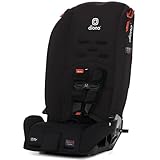
The Radian 3R is the seat for families who plan to own one seat for ten years and want it to fit in places other seats cannot go. It uses a steel alloy frame, a narrow shell that is one of the best-known three-across solutions on the market, and it folds flat for transport — a rare feature that makes it practical to carry through an airport or store in a trunk. It suits large families, anyone who regularly moves a seat between vehicles, and parents who value a long rated service life above soft padding.
- Modes: rear-facing, forward-facing with harness, belt-positioning booster
- Rear-facing: roughly 5–40 lb
- Forward-facing harness: roughly 22–65 lb
- Booster: roughly 40–120 lb, one of the higher booster ceilings in this roundup
- Construction: steel alloy frame with a narrow shell designed for three-across fit
- Transport: folds flat for travel and storage
- Service life: marketed around a 10-year usable window from the manufacture date
The Radian’s reputation rests on two things: width and longevity. Because the shell is narrow, three Radians can often fit across a bench where two conventional convertibles and a booster would not — and that is a configuration change, not a comfort preference, for families with three young children. The steel frame makes the seat feel substantial and it holds up over years of use, and the fold makes it the only seat here that is genuinely portable. The costs are real. The seat is heavy for its size, the padding is firm rather than plush, and the forward-facing harness ceiling sits in the standard 65-pound class rather than the extended class. Installation with the seat belt can take more effort than a lower-anchor install, and some vehicles have seat-belt geometry that makes the Radian fussier than a Graco to tighten.
Pros
- Narrow shell is a proven three-across solution
- Steel alloy frame and a long rated service life support ten years of ownership
- Booster mode extends to a higher weight than most seats here
- Folds flat for air travel, storage, and moving between vehicles
- Low profile sits well in vehicles with limited rear headroom
Cons
- Heavy relative to its footprint, so lifting it in and out is work
- Firm padding is less cushioned than premium Graco seats
- Seat-belt installation can be more finicky than lower-anchor installation in some vehicles
- Premium tier price with fewer comfort extras than similarly priced seats
Against the Graco 4Ever DLX, the Radian wins on width, travel, and booster weight ceiling, and loses on padding, cupholders, and everyday comfort. Against the Safety 1st Ellaris, the Radian is the more expensive but more capable narrow seat, with a longer service life and a fold. If three-across fit and ten-year ownership are the priorities, the Radian is the seat to beat; if your child will ride in it daily and you want soft padding and easy harness adjustment, the 4Ever DLX is the friendlier choice.
8. Graco 4Ever DLX 4-in-1 Convertible Car Seat, Maven – Best Overall for the Longest Single-Seat Lifespan

The 4Ever DLX is the seat that covers the most ground: rear-facing, forward-facing with a harness, high-back booster, and backless booster, all in one shell that Graco rates for ten years of use. It suits the family that wants to buy once and be done — including the family that plans to hand the seat down to a second child, since the rated life usually outlasts one child’s need for it. If you are choosing a single seat during a Black Friday sale and you do not want to shop again until your child is out of boosters, this is the one.
- Modes: rear-facing, forward-facing with harness, high-back belt-positioning booster, backless booster
- Rear-facing: roughly 4–40 lb
- Forward-facing harness: roughly 22–65 lb
- High-back booster: roughly 40–100 lb
- Backless booster: roughly 40–100 lb, up to about 57 in tall
- Service life: Graco rates its convertible shells for about 10 years from the manufacture date
- Comfort and care: no-rethread harness with adjustable headrest, multiple recline positions, machine-washable seat pad, cup holders
- Installation: lower anchors or seat belt, top tether for forward-facing
The fourth mode is the differentiator. Most seats in this list stop at the high-back booster, which means a parent eventually buys a backless booster for the last two or three years. The 4Ever DLX removes that purchase entirely, and because the backless stage is where the seat spends its final years, the seat’s cost is spread across the longest possible span. Add the no-rethread harness, the washable pad, and Graco’s long rated life, and the ownership math is unusually clean. The drawbacks are physical: this is a large, heavy seat that occupies a full seating position, and it is not a good candidate for three-across. It is also the kind of purchase where the sale price matters less than the manufacture date, since ten years of service only holds if the seat is fresh.
Pros
- Four modes including a backless booster, eliminating a later purchase
- Roughly 10-year rated useful life supports hand-me-down use
- No-rethread harness and adjustable headrest simplify growth adjustments
- Machine-washable pad and cup holders make it livable day to day
- Widely documented installation and strong parts availability
Cons
- Large and heavy; not a travel or three-across seat
- Premium tier price, and the discount rarely closes the gap to mid-range seats entirely
- Occupies a full seating position, reducing passenger room
- Value depends on using all four modes; a child who outgrows seats early gets less from it
Against the Graco Turn2Me, the 4Ever DLX trades rotation for a fourth mode and a longer, more complete service life. Against the Diono Radian 3R, it is wider and softer but less portable and lower on booster weight ceiling. Against the Safety 1st Grow and Go, it is the direct upgrade: same idea, one more mode, better hardware, higher price tier. For most families buying one seat this Black Friday, the 4Ever DLX is the safest all-round answer.
9. Safety 1st Grand 2-in-1 Booster Car Seat – Best Budget High-Back-to-Backless Booster

The Grand 2-in-1 is a belt-positioning booster that starts as a high-back and converts to a backless, which makes it the transition seat for a child who has outgrown a harness. It suits parents who want the head and torso support of a high-back for the early booster years and the simplicity of a backless later, without buying two products. It is also a sensible second seat for carpooling and grandparents’ vehicles, where a full convertible is overkill.
- Type: belt-positioning booster, high-back converting to backless
- Weight range: roughly the 40–100 lb class
- Height range: roughly the 43–57 in class
- Belt routing: shoulder-belt guide on the high-back; the backless mode relies on the vehicle’s belt geometry
- Care: removable, washable pad
- Installation: no anchors required — the booster is held in place by the child’s weight and the vehicle belt in most vehicles; check your vehicle and seat manual
The reason to buy a high-back booster rather than a backless one is head and neck support and shoulder-belt positioning. A high-back guides the belt across the middle of the shoulder, which is exactly the fit problem that makes boosters fail in practice: a belt that crosses the neck or slips off the shoulder is both uncomfortable and less effective. Converting to backless later removes the bulk once the child fits the vehicle’s belt geometry well without help. The compromises at this tier are padding depth and fabric durability — boosters get sat on, spilled on, and dragged in and out of cars, and budget covers wear faster than premium ones. There is also no harness, so this seat is not appropriate for a child who still needs a five-point harness.
Pros
- Two booster modes in one product, extending useful life
- High-back mode provides head support and shoulder-belt guidance
- Budget tier price makes it practical for a second or third vehicle
- Washable pad and light weight make it easy to move between cars
- Simple, low-mechanism design with little to break
Cons
- No five-point harness, so it is only for children ready for belt positioning
- Thinner padding than mid-range boosters
- Backless mode fit depends entirely on your vehicle’s belt geometry
- Not a seat for long-distance comfort
Against the Evenflo GoTime LX, the Grand 2-in-1 is the more basic version of the same concept: both convert from high-back to backless, both sit in the budget tier, and the GoTime generally offers a slightly higher weight ceiling and more generous padding. Against the Graco TurboBooster 2.0 Backless, the Grand 2-in-1 is the better first booster because it starts with a back. If your child is already comfortable with belt fit and you want the least bulky option, the backless TurboBooster is the more practical pick.
10. Graco TurboBooster 2.0 Backless Booster Car Seat, Denton – Best for Older Kids and Carpool Duty

The TurboBooster 2.0 Backless is the seat for the last stage: a child who has outgrown a high-back booster and just needs a lift so the vehicle’s lap and shoulder belt sit correctly. It suits school-age kids, carpool rotations, and travel, where a light seat that can be stowed or carried matters more than padding. Because it has no back, it is also the least intrusive option for a third passenger squeezed into a middle seat.
- Type: backless belt-positioning booster
- Weight range: roughly the 40–100 lb class
- Height range: roughly the 40–57 in class
- Features: hideaway cup holders, armrests that help route the lap belt low across the hips
- Care: wipeable or removable pad depending on the version
- Installation: none — the child sits on the booster and the vehicle belt does the work
The one job of a backless booster is to raise the child so the lap belt crosses the strong bones of the hips rather than the soft abdomen, and the shoulder belt crosses the middle of the shoulder rather than the neck. The TurboBooster’s armrests help with the lap-belt routing, and its low profile means it does not block the view or crowd the passenger next to it. There is nothing to install, nothing to adjust, and nothing to break, which is exactly why this class of seat survives carpool duty so well. The limitations follow from the design: with no back, there is no head or neck support beyond the vehicle’s own head restraint, and shoulder-belt fit is entirely a function of your vehicle. In a car with a poorly placed belt anchor, no backless booster can fix the problem — the child needs a high-back instead.
Pros
- Lightest and most portable seat in this roundup
- No installation required, so it moves between vehicles in seconds
- Armrests help position the lap belt correctly
- Low profile leaves room for a third passenger
- Budget tier price makes multiple units affordable
Cons
- No head or neck support beyond the vehicle seat
- Shoulder-belt fit depends entirely on the vehicle
- Not appropriate for a child who still needs a harness or a high-back
- Minimal padding for long trips
Against the Safety 1st Grand 2-in-1, the TurboBooster is the second stage rather than the first — many families buy the Grand or another high-back first and add a backless

0 Comments