What's inside
As an Amazon Associate I earn from qualifying purchases. This post may contain affiliate links at no extra cost to you.
The best bonsai concave cutters for most growers are the 210mm Kaneshin No. 11 for all-around use, the 180mm Kikuwa or Ryuga for shohin and indoor work, and the 270-280mm Masakuni or Kaneshin heavy-duty models for large branches, with your ideal choice depending on steel type, jaw curvature, and the branch diameter you cut most often.
As an Amazon Associate we earn from qualifying purchases at no extra cost to you.
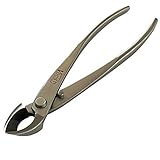

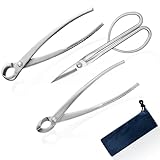
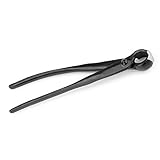
What Separates a Good Concave Cutter From a Mediocre One
Concave cutters are designed to remove branches flush to the trunk and leave a slightly hollow wound that heals flat over time. Flat or straight cuts leave a bulge; concave jaws create the indentation needed for clean callus formation. Performance comes down to six factors:
- Steel: High-carbon steel (Yasugi steel, Japanese white/yellow steel) holds a finer edge and is easier to resharpen, but requires oiling to prevent rust. Stainless steel resists corrosion better but is harder to sharpen to the same bite and can feel slightly less crisp on hardwoods like Japanese maple or juniper.
- Jaw Geometry: True concave cutters have aggressively curved inner blades that meet at a point. A deeper curve removes more wood and heals flatter but requires more force. A shallower curve is easier to close one-handed but may leave a flatter cut on larger branches. Look for jaws that meet evenly with no light gap when closed.
- Cutting Capacity: This is the maximum branch diameter the tool can bite cleanly in one cut. Most 210mm cutters handle 30-40% of their jaw opening as usable wood diameter due to the curved profile. Exceeding capacity crushes rather than cuts and damages the blades.
- Handle Comfort and Leverage: Longer handles increase leverage but reduce control for detail work. Butterfly or bow handles distribute pressure, while straight handles give better tactile feedback. Spring tension and handle weight affect fatigue during long pruning sessions.
- Finish Quality: A clean cut should not tear bark at the edges. Well-ground and polished inner faces, precise pivot alignment, and a sharp factory edge determine this. Black oxide or patinated finishes reduce glare and offer mild rust resistance; polished finishes show wear faster but make sharpening easier to see.
- Durability: The pivot bolt, cutting edge, and inner jaw face wear first. Loose pivots cause blade wobble and incomplete cuts. Lower-hardness steel dents on deadwood or wire contact.
Best Bonsai Concave Cutters Compared
The market is dominated by Japanese makers using Yasugi specialty steel, plus Chinese makers using comparable high-carbon formulations. Sizes are measured by total length, not jaw length.
| Model / Type | Total Length | Steel & Hardness | Max Clean Cutting Capacity* | Weight | Jaw Profile | Best For |
|---|---|---|---|---|---|---|
| Kaneshin No. 11 Standard | 210mm (8.25 in) | Yasugi White Paper Steel, HRC 59-61 | 12-15mm (0.47-0.59 in) live wood | 225-240g | Medium-deep concave | General purpose, most deciduous and conifers |
| Kikuwa 180mm Concave | 180mm (7.08 in) | Yasugi Carbon Steel, HRC 58-60 | 8-10mm (0.31-0.39 in) | 170-185g | Shallow concave | Shohin, mame, indoor bonsai |
| Ryuga Stainless 210mm | 210mm (8.25 in) | Stainless Alloy, HRC 56-58 | 10-13mm (0.39-0.51 in) | 240-255g | Medium concave | Beginners, humid climates, low maintenance |
| TianBonsai Professional 210mm | 210mm (8.25 in) | High-Carbon 65Mn Steel, HRC 58-60 | 11-14mm (0.43-0.55 in) | 230-250g | Medium-deep concave | Budget high-carbon option, training trees |
| Masakuni No. 13 / Kaneshin No. 12 Large | 270-280mm (10.6-11 in) | Yasugi Yellow Paper / White Paper Steel, HRC 60-62 | 20-25mm (0.78-0.98 in) | 380-430g | Deep concave, heavy pivot | Large branches, collected yamadori, trunk chops |
| Kaneshin No. 36A Spherical Knob Cutter | 210mm (8.25 in) | Yasugi White Paper Steel, HRC 59-61 | 10-12mm bite (spherical) | 235g | Spherical / knob | Removing knobs and callus bumps after initial cut |
*Max clean capacity assumes sharp, properly adjusted tool on live hardwood. Dry, dead, or extremely hard wood reduces capacity by 30-40%. Cutting beyond this range risks edge chipping and bark tearing.
Top Picks by Situation: Decision Matrix
Match your situation to the right size and steel before worrying about brand prestige.
| Your Situation | Recommended Size & Type | Why |
|---|---|---|
| Beginner with 3-10 young trees, pruning branches under 10mm | 180-210mm stainless or entry carbon (Ryuga, TianBonsai) | Lower maintenance, forgiving edge, general market range $35-$70, less risk if you hit wire or cut at an angle |
| Intermediate with mixed collection, regular pruning of 5-15mm branches | 210mm high-carbon Japanese (Kaneshin No. 11, Kikuwa 210mm) | Best balance of leverage, edge retention, and wound healing. Carbon steel takes a finer edge for clean cambium cuts. Typical range $70-$130 |
| Advanced or large-tree grower, trunk chops and branches over 18mm | 270-280mm heavy-duty concave (Masakuni, Kaneshin large) | Extra leverage prevents crushing on thick branches. Deep jaw removes enough wood for flat healing. Typical range $150-$280 |
| Shohin, mame, or highly detailed deciduous work | 180mm standard concave | Shorter length improves control near tight branch unions and prevents accidental damage to neighboring buds |
| Humid climate, infrequent oiling, or tools stored in garage/shed | Stainless 210mm | Corrosion resistance outweighs slight loss in ultimate sharpness |
| Want the cleanest final trunk line | 210mm concave + 210mm knob/spherical cutter as a pair | First cut with concave, second bite with spherical knob cutter to hollow slightly deeper for optimal callus roll |
Cost Per Use Calculation
Concave cutters are not disposable. A realistic ownership horizon helps justify the initial spend. Assume moderate use of 40-60 significant cuts per year:
A 210mm Japanese carbon cutter in the $90-$120 range, resharpened every 2-3 years for $15-$25, typically lasts 12-18 years with proper care before the jaws are too short from repeated sharpening. That is roughly 600-900 cuts.
At $110 initial + $60 in sharpening over 15 years = $170 / 750 cuts = about $0.23 per cut. An entry carbon cutter at $45 lasting 6-8 years with heavier edge wear is about $45 / 350 cuts = $0.13 per cut but leaves rougher wounds and needs more frequent sharpening. The upgrade pays for itself in healing time and reduced dieback rather than direct cost savings.
How to Choose the Right Branch Size Match
Do not buy by tree size alone; buy by the branch diameter you remove most often.
- Under 8mm: A 180mm cutter is more precise. Using a 270mm tool here is like using loppers on a twig — you lose feel and bruise bark.
- 8mm to 15mm (most common): 210mm is the standard for a reason. It handles 80% of maintenance pruning on maples, elms, junipers, and pines without being unwieldy.
- 15mm to 25mm: Move to 270-280mm. Trying to force a 210mm cutter to bite a 20mm branch requires rocking the tool, which tears bark and dents the edge near the pivot.
- Over 25mm: Consider a saw first, then clean up the stub with a concave cutter. Direct cutting risks incomplete closure and pivot damage.
Measure a few typical branches you plan to remove with calipers. If more than a third exceed 15mm, the large cutter is not a luxury; it is the correct tool.
Durability and Ownership Realities
What actually wears out first is not the handles but the cutting interface.
- Edge dulling: High-carbon Yasugi steel holds an edge for 1-2 seasons of regular hobby use. Stainless dulls faster on hardwoods and needs more frequent stropping.
- Pivot loosening: The center bolt/nut loosens with vibration. A wobbly pivot causes the blades to bypass instead of meeting, leaving a tag. Check tightness quarterly and adjust so the jaws close smoothly with no play but no grinding.
- Inner face corrosion: Moisture trapped between closed jaws pits the inner concave face first, which is the most critical surface for wound quality. This is why wiping sap off immediately matters more than oiling the outside.
- Chipping: Hitting copper or aluminum wire, cutting deadwood, or twisting during a cut chips the fine edge. Carbon steel at HRC 60+ chips rather than rolls, requiring stone sharpening rather than just honing.
Maintenance That Extends Life
- Wipe blades with isopropyl alcohol or a dry cloth after each session to remove sap and acids. Oil lightly with camellia oil or mineral oil before storing with jaws slightly open.
- Sharpen only the outer bevel. The inner concave face is flat-ground; grinding it changes the geometry. Use a fine whetstone or diamond file on the outer bevel at the existing angle, then deburr lightly on the inside with a flat stone.
- Store dry. A toolbox with silica gel or an oiled cloth wrap prevents rust far better than a leather sheath that holds moisture.
- Do not use concave cutters as pliers, wire cutters, or root cutters. Each misuse rolls or chips the edge in a way that requires significant steel removal to fix.
Common Mistakes That Ruin Cuts and Tools
- Cutting too far from the trunk: Leaving a 3-4mm stub defeats the purpose of the concave shape. Place the outer curvature against the trunk so the hollow is centered on the branch collar.
- Cutting flush with spherical knob cutters: Knob cutters are a second step, not a first cut. Using them to remove a full branch crushes the collar and creates a larger wound than needed.
- Rocking or twisting to finish a cut: If the tool does not close in one firm squeeze, the branch is too large. Saw it first.
- Neglecting to disinfect: Sap and pathogens transfer between trees. Wiping with alcohol between trees, especially after removing diseased branches, reduces infection risk.
- Buying one oversized tool for everything: Beginners often buy the largest cutter assuming bigger is better. A 280mm cutter on shohin branches damages fine branching and is tiring to control one-handed.
FAQ
What is the difference between concave and knob cutters?
Concave cutters have two curved blades that leave a shallow, elongated hollow. Knob or spherical cutters have more rounded, ball-like jaws that bite a deeper, circular hollow to remove stubs and knobs. Most growers start with concave and add a knob cutter later for refining healed areas.
Can I use a 210mm cutter on roots?
Not recommended. Roots often have grit and small stones that dull and pit the fine edge. Use a dedicated root cutter or old concave cutter retired from branch work.
Do I need stainless if I live in a dry climate?
No. In dry climates with indoor storage, high-carbon steel is easier to keep sharp and generally leaves a cleaner cut. Stainless is advantageous mainly for coastal humidity, outdoor storage, or growers who prefer minimal oiling.
How often should concave cutters be sharpened?
For hobby use, professional sharpening every 2-3 years plus light honing at home is sufficient. If you feel the need to squeeze hard, see bark tearing at the wound edges, or notice light reflecting off a dull line on the edge, it is time to sharpen.

0 Comments