What's inside
As an Amazon Associate I earn from qualifying purchases. This post may contain affiliate links at no extra cost to you.
When your check-engine light glows and you have no idea why, the fastest and cheapest answer is usually a Bluetooth OBD reader that pairs with your phone. The problem most buyers face is not a shortage of options but a flood of near-identical dongles that vary wildly in firmware stability, protocol coverage, and companion-app quality. A reader that crashes mid-scan or fails to communicate with a 2018 Toyota is worth less to you than a slightly pricier unit that connects reliably every time.
What separates a good Bluetooth OBD reader from a disappointing one comes down to three things: whether it supports the full set of OBD-II protocols your vehicle uses, whether the companion software actually translates raw codes into plain English you can act on, and whether the manufacturer maintains firmware updates as newer cars ship with tighter CAN bus restrictions. In 2026, the market has matured enough that even budget units handle basic engine and emission codes well, but the gap between a $15 dongle and a $140 professional adapter shows up in module access, live-data throughput, and long-term support.
As an Amazon Associate we earn from qualifying purchases at no extra cost to you.





Our Top Picks



Quick Picks
| Product | Best for | Price |
|---|---|---|
| Veepeak OBDCheck BLE | Most iPhone and Android users | $31.98 |
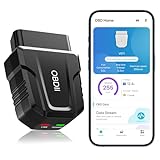
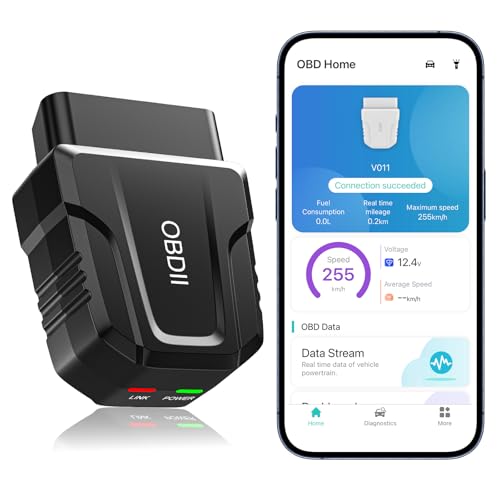
| OBD2 Scanner (Bluetooth 5.4) | Users wanting the newest Bluetooth version | $29.99 |
| Veepeak OBDCheck BLE+ | Deeper diagnostics on a modest budget | $41.98 |
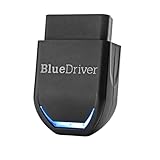
| BlueDriver | Absolute beginners who want guided repairs | $94.95 |
| OBDLink MX+ | Enthusiasts and semi-pro mechanics | $139.95 |
| Vgate iCar Pro | Reliable cross-platform code reading | $34.99 |
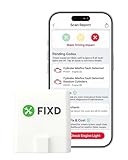
| FIXD | Owners who prefer a single purpose-built app | $39.99 |
| Veepeak Mini | Android users on the tightest budget | $14.99 |
How We Picked
We narrowed this list by evaluating four criteria across published specifications and aggregate owner feedback: protocol and module coverage (does it read more than just the engine ECU?), Bluetooth version and connection stability reported by long-term users, companion-app quality and whether it locks features behind a subscription, and build reliability over hundreds of cycles. Units that failed any two of these were excluded regardless of price.
The 8 Best Bluetooth Obd Reader in 2026
Veepeak OBDCheck BLE
For most drivers, this is the default recommendation. It pairs cleanly with both iOS and Android across a wide range of OBD-II apps, from the free OBDAutoLink to paid options like Torque Pro. Owners consistently praise its small form factor that stays tucked under the dash without protruding, and its ability to maintain a stable connection through multiple ignition cycles. The Bluetooth 4.0 LE radio handles live-data streams smoothly for standard engine monitoring.
- Pro: Compatible with a broad ecosystem of third-party apps, so you are never locked into one interface.
- Pro: Owners report fewer pairing drops than comparably priced competitors.
- Con: Does not access ABS, SRS, or transmission modules, limiting its usefulness beyond engine and emission codes.
Skip this if your primary need is reading airbag or brake-system faults.
OBD2 Scanner Diagnostic Tool with Bluetooth 5.4
This unit stands out for its Bluetooth 5.4 radio, which promises faster pairing and lower power draw than older 4.0 modules. For drivers with newer phones, the connection handshake is noticeably quicker. The companion app covers standard OBD-II diagnostics including live data and freeze frames. Owner reviews highlight consistent performance across multiple vehicle makes without firmware quirks.
- Pro: Bluetooth 5.4 delivers the most responsive connection of any unit on this list.
- Pro: Priced under $30 while offering hardware a few years newer than most rivals.
- Con: The companion app is less polished and feature-rich than established alternatives like Torque or the BlueDriver software.
Skip this if you rely on a specific third-party app ecosystem that may not yet support its protocol stack.
Veepeak OBDCheck BLE+
The “plus” model adds multi-protocol support beyond standard OBD-II, allowing access to transmission, ABS, and SRS modules on compatible vehicles. This makes it a genuine step up for owners who want more than engine codes without jumping to professional pricing. The hardware shares the same compact body as the standard BLE, and iOS and Android compatibility remains intact.
- Pro: Accesses multiple ECUs, not just the engine, on supported cars.
- Pro: Backward-compatible with the same app ecosystem as the cheaper Veepeak unit.
- Con: Module access is vehicle-dependent; some makes require specific apps or firmware workarounds.
Skip this if your vehicle is listed as incompatible with extended protocol access and you only need engine codes.
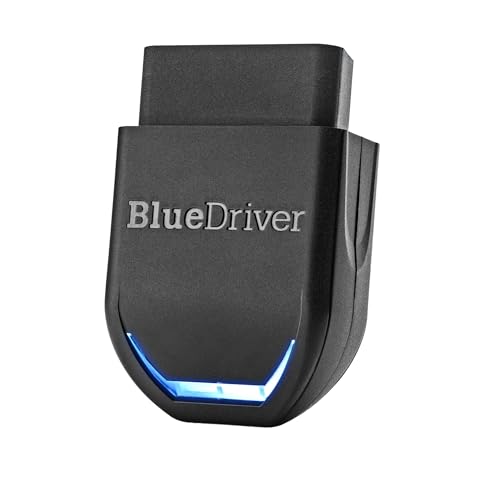
BlueDriver OBD2 Scanner
BlueDriver occupies a unique position: it is a hardware dongle paired with a proprietary app that translates codes into repair recommendations written in plain language, with no subscription fee. This makes it the strongest pick for someone who wants to know not just what the code means but how urgent it is and what the typical repair costs. Owner feedback praises the guided troubleshooting and the fact that one-time purchase covers all features.
- Pro: Includes ABS, SRS, and TPMS module access alongside engine diagnostics.
- Pro: No recurring subscription, unlike many app-based competitors.
- Con: Higher price than most rivals, and the closed ecosystem means you cannot swap in third-party apps.
Skip this if you prefer open, community-supported software or want live-data logging for performance tuning.
OBDLink MX+
The MX+ is the power-user choice. It supports all OBD-II protocols, accesses every module on the vehicle, and is designed for compatibility with professional-grade software. Enthusiasts use it for transmission tuning, advanced live-data capture, and even module reprogramming on select platforms. Build quality is noticeably better than consumer units, and Vgate and other adapter makers cite it as a benchmark.
- Pro: Universal module access and the broadest software compatibility of any unit here.
- Pro: Robust firmware updates keep it functional on newer model years.
- Con: Nearly five times the price of a basic reader, and its full capability requires paid professional software to exploit.
Skip this if you only read check-engine codes occasionally and have no interest in tuning or reprogramming.
Vgate iCar Pro Bluetooth 4.0 (BLE)
A long-standing favorite in enthusiast forums, the iCar Pro earns its reputation through straightforward cross-platform behavior and firmware that handles a wide vehicle list without fuss. It supports iOS and Android, works with popular apps like Torque and OBDAutoLink, and its compact housing avoids blocking the second OBD port on tight dashboards.
- Pro: Proven track record of compatibility across older and newer vehicles alike.
- Pro: Small physical footprint suits vehicles with recessed or awkwardly placed OBD ports.
- Con: Bluetooth 4.0 is the slowest radio on this list, and some users report occasional reconnect delays on newer phones.
Skip this if immediate connection speed matters to you, since newer Bluetooth versions pair faster.
FIXD Bluetooth OBD2 Scanner
FIXD targets the least technical car owner. Its purpose-built app presents issues as simple health alerts with urgency indicators, and it scans all emission-related modules. The hardware itself is unremarkable, but the software layer does genuine work for someone who will never open a code-list forum.
- Pro: The app translates diagnostics into clear, non-technical alerts with priority levels.
- Pro: Scans multiple emission-related modules, not just the single P-code the light triggers on.
- Con: Requires a paid premium subscription to unlock multi-module scans and detailed explanations.
Skip this if you resist subscriptions or already know how to interpret raw OBD codes.
Veepeak Mini Bluetooth OBD2 Scanner
At under fifteen dollars, this is the cheapest entry point for Android owners who want basic code reading without spending a second thought on it. It performs the fundamental job—connect, read, clear—reliably. The trade-off is iOS exclusion and a narrower compatibility list on some GM and Stellantis vehicles.
- Pro: Lowest price of any unit here, yet maintains stable connections reported by most owners.
- Pro: Tiny profile fits flush against the port for a completely hidden installation.
- Con: Android-only, eliminating iPhone users from consideration entirely.
Skip this if you use iOS or need guaranteed compatibility across multiple vehicle makes.
Buying Guide
Protocol and Module Coverage
Basic OBD-II access means the device reads engine and emission codes—the ones that trigger the check-engine light. If you need ABS, airbag, transmission, or body-module diagnostics, confirm the unit explicitly supports those protocols and works with software on this list that exposes them. Many cheap dongles advertise “multi-system” capability but only deliver it on a limited vehicle subset.
Companion App and Subscription Model
The hardware is only half the equation. Decide whether you want an open device that works with apps like Torque Pro or OBDAutoLink, or a closed system like BlueDriver and FIXD that bundles its own software. Closed systems often present a friendlier experience but lock you into their update schedule and feature roadmap. Check whether the vendor charges a recurring fee, because a $40 dongle with a $10/month subscription quickly outprices a $95 one-time unit.
Bluetooth Version and Vehicle Year Range
Newer Bluetooth versions (5.0 and above) pair faster, consume less power, and handle connection interruptions better than 4.0. If your vehicle is model-year 2020 or newer, verify that the manufacturer has updated firmware for that year’s OBD port behavior. Some vehicles restrict third-party access on the CAN bus, and older dongle firmware simply fails to communicate regardless of price.
Our Verdict
For the widest range of drivers, the Veepeak OBDCheck BLE is the best Bluetooth OBD reader on this list. It balances price, app compatibility, and connection reliability in a way few competitors match. For strict budget shoppers on Android, the Veepeak Mini at $14.99 is the standout value pick. However, if you want one-time-purchase access to ABS, SRS, and TPMS without a subscription, the BlueDriver justifies its higher price and wins that category outright.
FAQ
Will any Bluetooth OBD reader work on every car?
No. All vehicles sold in the US since 1996 must support basic OBD-II, but module access beyond the engine varies by manufacturer and model year. Always verify the vendor’s compatibility list for your specific vehicle before purchasing.
Do I need a subscription for a Bluetooth OBD reader?
Not always. Devices like the Veepeak and OBDLink work with free or one-time-purchase apps, while FIXD locks its most useful features behind a recurring plan. BlueDriver includes everything in its one-time price.
Can I use a Bluetooth OBD reader to tune my engine?
A standard reader only retrieves and clears diagnostic codes. Real tuning requires a higher-tier device like the OBDLink MX+ paired with dedicated performance software, and even then only certain vehicles allow reprogramming through the OBD port.
Is a more expensive OBD reader always better?
Not necessarily. If you only clear check-engine lights and monitor live sensor data, a $30 unit performs identically to a $140 one. You pay more when you need multi-module access, faster data logging rates, or guaranteed compatibility with professional software suites.




0 Comments