What's inside
As an Amazon Associate I earn from qualifying purchases. This post may contain affiliate links at no extra cost to you.
For most projects, choose Minwax Stainable Wood Filler for small to medium indoor repairs you plan to stain, choose Minwax High Performance Wood Filler for large, structural or outdoor repairs you plan to paint, and use Minwax Wood Putty only for final cosmetic touch-ups on already-finished wood.
Minwax makes several products with similar names but very different chemistry, and picking the wrong one is the main reason repairs crack, shrink, or reject stain. This guide breaks down each minwax wood filler by repair size, location, and finish so you can match the filler to your project the first time.
As an Amazon Associate we earn from qualifying purchases at no extra cost to you.
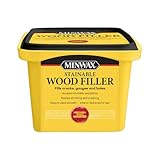


Minwax Wood Filler Options at a Glance
There are three core Minwax fillers you will find in 2026. They are not interchangeable versions of the same product – they are different materials designed for different jobs.
| Product | Chemistry / Base | Best For | Indoor / Outdoor | Stainable | Paintable | Dry / Hardening Time | Common Sizes |
|---|---|---|---|---|---|---|---|
| Minwax Stainable Wood Filler | Water-based, real wood fibers | Nail holes, cracks, gouges up to 3/4 inch deep | Indoor only | Yes – accepts Minwax oil-based stains | Yes | ~2 hours to dry, sandable in 2-3 hours, overnight before staining | 3.75 oz tube, 16 oz tub, 32 oz tub (quart) |
| Minwax High Performance Wood Filler | 2-part polyester resin with hardener | Large rotted areas, missing corners, door frames, deck boards | Indoor and Outdoor | No – will not absorb stain evenly | Yes – excellent | 10-15 min working time, hard in ~30 min, sandable in 2 hours | 12 oz can (with hardener tube), 32 oz can, 1 gallon can |
| Minwax Wood Putty | Oil-based, non-hardening | Pinholes and final touch-ups after finish is applied | Indoor (not structural) | No – pre-colored, not stainable | No – do not paint or stain over | Never hardens – remains pliable | 3.75 oz, 9.5 oz containers, available in 9 colors |
Minwax also sells Wood Hardener, a separate liquid consolidant often used before High Performance Wood Filler on punky or soft rotted wood. It is not a filler itself but improves adhesion for the two-part filler.
Decision Criteria: 4 Questions to Pick the Right Filler
1. How big is the repair?
- Under 1/4 inch (nail holes, screw holes, hairline cracks): Any filler works, but Stainable Wood Filler gives the cleanest result under stain and Wood Putty is fastest for pre-finished cabinets or trim where you want to fill after the topcoat.
- 1/4 inch to 3/4 inch (dents, gouges, chipped edges): Stainable Wood Filler is ideal indoors. Apply in thin layers no thicker than 1/4 inch per layer, letting each dry, to avoid shrinking and cracking.
- Over 3/4 inch, missing wood, or rotted sections: Only High Performance Wood Filler. Single-part fillers will shrink, crack, and fall out at this depth. The two-part polyester cures chemically rather than by evaporation, so it can be built up to several inches without shrinkage.
2. Will it be indoors or outdoors?
Stainable Wood Filler and Wood Putty are interior-only. They are not waterproof and will swell, soften, and crumble with repeated moisture and freeze-thaw cycles. If the repair will see rain, ground contact, or high humidity like exterior window sills, porch posts, or deck rails, High Performance Wood Filler is the only Minwax filler rated for exterior use. It resists water, resists shrinking, and holds screws and nails better once cured.
3. Do you need to stain it or paint it?
This is the most common mistake. Despite the name, Stainable Wood Filler does not stain identically to surrounding wood – it stains better than any other Minwax filler because it contains real wood fibers, but it will still be slightly lighter or darker than natural grain. For best results, use Minwax oil-based penetrating stains and test on a scrap patch first. Gel stains tend to sit on top and highlight the patch.
High Performance Wood Filler is paintable but not stainable. The cured polyester is dense and non-porous, so stain wipes off and leaves a blotchy, plastic-like spot. If you must have a stained look outdoors, you will need to paint with a solid-color stain or use an epoxy system tinted to match, not High Performance.
Wood Putty is neither stainable nor paintable. It is sold pre-colored to match Minwax stain colors (like Early American, Golden Oak, Provincial) and is meant to be pressed into a hole after staining and sealing. Stain, polyurethane, or paint will not adhere to it and will peel.
4. How much working time do you need?
- Stainable Wood Filler: Long open time. You can spread, smooth, and rework for 10-15 minutes. Cleanup is with water while wet.
- High Performance Wood Filler: Very short open time. Once you mix the filler with the cream hardener (roughly a 1-inch ribbon of hardener per golf-ball sized scoop of filler), you have about 10 minutes to apply before it starts to harden. Mix only what you can use quickly, especially in warm weather where cure time drops to 5-8 minutes.
- Wood Putty: Unlimited working time since it never cures.
Pick By Situation: Which Minwax Filler Should You Buy?
For staining new furniture, cabinets, or hardwood floors
Choose Minwax Stainable Wood Filler. Apply before staining. Overfill slightly, let dry overnight for deepest repairs, sand flush with 120-grit then 180-grit, remove all dust, then stain. Because the filler is lighter than solid wood until stained, seal the entire surface at the same time to blend color.
For painting interior trim, MDF, or baseboards
Either Stainable Wood Filler or High Performance Wood Filler works. Stainable is cheaper, easier to sand, and water cleanup is simpler for small nail holes. High Performance is better if the trim takes impacts, like door jambs or stair newels, because it cures harder and resists chipping.
For exterior rot, deck repair, or window restoration
Choose Minwax High Performance Wood Filler plus Wood Hardener if the wood is soft. Rake out loose rot, brush on hardener until the wood stops absorbing, let cure 2-4 hours, then apply the mixed filler. Shape with a putty knife before it fully hardens – once cured it sands like a hard plastic and is difficult to carve.
For quick touch-ups on finished furniture or prefinished flooring
Choose Minwax Wood Putty. Fill after your final coat of stain and polyurethane. Roll a small ball between your fingers, press firmly into the hole, and level with a plastic putty knife or credit card. Do not sand. If you need to remove it, scrape it out – it will not harden.
Coverage and Cost Per Repair: A Worked Example
Understanding coverage prevents buying too little for a large exterior repair or overpaying for a large tub when a small tube will do.
Stainable Wood Filler covers approximately 4-5 square feet per quart at 1/8 inch thickness. High Performance covers slightly less due to higher density, about 3-4 square feet per quart at the same thickness. For spot repairs, volume matters more than square footage.
Example calculation for a typical bedroom project – filling 40 nail holes from trim installation:
- Each nail hole is about 1/8 inch diameter and 1/8 inch deep: volume ~0.0015 cubic inches per hole
- 40 holes = 0.06 cubic inches total
- A 3.75 oz tube of Stainable Wood Filler contains about 6.8 cubic inches of product
- You will use less than 2% of the tube. Even accounting for waste and overfill, one small tube is more than enough and will remain usable for months if sealed tightly.
For a large exterior repair – rebuilding a 6 inch x 4 inch x 1 inch rotted corner on a window sill:
- Volume = 24 cubic inches
- A 12 oz can of High Performance Wood Filler contains about 23 cubic inches
- You will need essentially the full 12 oz can for one repair, plus hardener. For two or more sills, buy the 32 oz quart size, which is typically 30-40% cheaper per ounce than two small cans in general market pricing.
Durability and Ownership Realities
What wears first: With Stainable Wood Filler, the failure point is usually edge cracking if applied too thick or in an area with seasonal wood movement. On wide boards like tabletops, filler in cracks wider than 1/4 inch will often crack again in winter when the wood shrinks. High Performance fails at the bond line if applied over dusty, damp, or soft rotted wood without hardener – the filler itself stays intact but pops out as a plug.
Consumables and shelf life: Stainable Wood Filler will dry out in the tub once opened. Press plastic wrap directly onto the surface before closing the lid and store upside down to extend life to 12-18 months. If it becomes crumbly and water will not remix it, discard it. High Performance hardener tubes can harden in the tube after opening; keep the cap clean and buy a fresh tube if the hardener feels gritty. Unmixed filler lasts 2-3 years unopened.
Cleaning and sanding: Stainable Wood Filler sands to a fine dust – wear a dust mask and sand with the grain to avoid scratching surrounding wood. High Performance creates a harder, finer dust that quickly clogs sandpaper; use 80-grit to shape then 120-grit to finish, and clean the paper often. Neither filler is reversible with solvents once cured.
Common mistakes to avoid:
- Staining Wood Putty or High Performance filler and expecting a match – it will not absorb.
- Applying Stainable Wood Filler outdoors or in bathrooms where it will be exposed to standing water.
- Spreading High Performance filler without mixing in the hardener – it will never cure and will stay soft and gummy.
- Sanding Stainable filler before it is fully dry. If the sandpaper gums or the filler feels rubbery, wait another few hours. Sanding too early pulls the filler out of the hole.
- Leaving filler proud of the surface before staining. Stain will make any overfill highly visible as a halo. Sand completely flush and remove all filler dust from the grain before staining.
Final Recommendation
If you only buy one product for general woodworking, make it Minwax Stainable Wood Filler in the 16 oz tub. It handles 90% of interior furniture and trim repairs, is forgiving to apply, and is the only Minwax filler that gives a reasonable stain match.
If your project involves exterior wood, rot, or missing chunks larger than a coin, skip the single-part fillers and go directly to Minwax High Performance Wood Filler. It costs more and has a learning curve with the short working time, but it is the only option in the Minwax line that will survive outdoors and hold its shape without shrinking.
Keep a small tin of Wood Putty in a matching color in your finish kit for after-the-fact touch-ups. It is not a substitute for real filler, but for hiding that last nail hole after the topcoat is on, nothing is faster.
FAQ
Can you stain Minwax High Performance Wood Filler?
No. It will not take penetrating stain. If the repair must be stained, use Stainable Wood Filler for interior work. For exterior stained wood, consider an epoxy filler tinted with pigment or plan to paint the repair.
Is Minwax Stainable Wood Filler waterproof?
No. It is not rated for exterior or wet areas. For window sills, exterior doors, or any wood that gets wet, use High Performance Wood Filler, which is water-resistant when cured.
How long should wood filler dry before staining or painting?
For Stainable Wood Filler, wait at least 2-3 hours for shallow repairs and overnight for fills deeper than 1/4 inch. For High Performance, you can sand in about 2 hours and paint once sanded, but allow the full cure time listed on the can in cold or humid conditions.
0 Comments