What's inside
As an Amazon Associate I earn from qualifying purchases. This post may contain affiliate links at no extra cost to you.
When central air is not an option or you need to cool a single room quickly, upright portable air conditioners fill the gap. But they vary enormously in real-world performance. A unit rated 8,000 BTU might struggle in a 150-square-foot bedroom during a heatwave while a 14,000 BTU model handles a 700-square-foot living area without breaking a sweat. The disconnect between marketing claims and actual cooling capacity is the primary complaint in owner reviews across this category.
What separates a good upright air conditioner from a mediocre one comes down to honest BTU-to-room-size matching, noise level during sustained operation, and how manageable the condensate situation is over a full summer season. Smart features like WiFi control and voice assistant integration are genuinely useful but do not compensate for weak compressor output or poor exhaust sealing. The eight best upright air conditioners below span three price tiers and two cooling strategies.
As an Amazon Associate we earn from qualifying purchases at no extra cost to you.


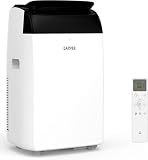


Our Top Picks
 BLACK+DECKER Portable Air Conditioner9,000 BTU (Without Heat)16.5 x 26 x 11.5 inches45.8 poundsCheck on Amazon
 BLACK+DECKER Smart Portable Air Conditioner14,000 BTU (Without Heat)17.1 x 28.1 x 13.8 inches68.3 poundsCheck on Amazon

Quick Picks
| Product | Best for | Price |
|---|---|---|
| Midea 8,500 BTU ASHRAE | Small rooms on a strict budget | $199.99 |
| Electactic 8,000 BTU 4-in-1 | Lowest price with LED display | $167.59 |
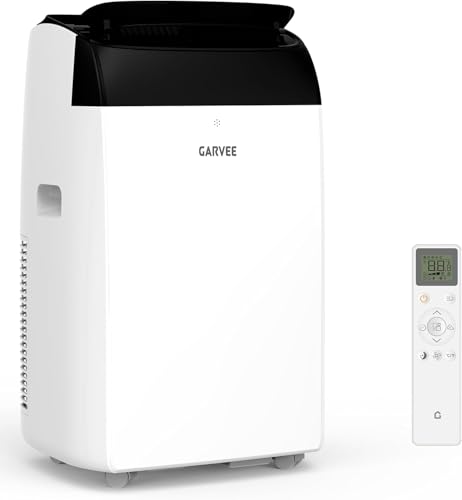
| Garvee 14,000 BTU 3-in-1 | Mid-range high-capacity cooling | $308.80 |
| BLACK+DECKER BPACT08WT | Brand-name reliability for apartments | $339.99 |
| Perfect Aire Casement 10,000 BTU | Casement or crank-out windows | $535.75 |
| BLACK+DECKER BPACT14WT Smart | Larger rooms with app control | $459.99 |
| Portable 8,000 BTU WiFi | Smart-home integration on a budget | $199.99 |
| GrowthWing 14,000 BTU Smart WiFi | Best value for large rooms | $399.99 |
How We Picked
We compared published cooling specs, listed prices, and aggregated owner feedback across these eight models. The criteria that mattered most: whether the stated BTU rating matches the claimed room size (many budget units overstate coverage), noise output reported by owners during overnight use, condensate handling (auto-evaporation versus manual draining), and long-term reliability signals from repeat purchases and warranty claims. Units with vague or contradictory room-size claims were deprioritized even if their price looked attractive.
The 8 Best Upright Air Conditioners in 2026
Midea 8,500 BTU ASHRAE Portable Air Conditioner
Midea’s compact unit targets anyone cooling a small bedroom or home office up to 150 square feet. At $199.99, it undercuts most name-brand equivalents while delivering adequate spot cooling for its rated footprint. Owners praise its straightforward setup and the fact that the exhaust hose does not require a window kit modification on standard sliding windows.
- Pros: Compact footprint fits tight spaces; ASHRAE rating gives an honest ceiling for room size.
- Cons: Single-mode simplicity means no dehumidifier or fan-only setting without the compressor running.
Skip this if your room exceeds 150 square feet or you need year-round dehumidification in a humid climate.
Electactic 8,000 BTU Portable Air Conditioner
At $167.59, the Electactic is the cheapest full-featured unit on this list. It bundles cooling, dehumidifying, fan, and sleep modes into one chassis with an LED display and remote control. The 360-degree casters make repositioning easy even on carpet. Owner reviews consistently highlight the quiet sleep mode as the standout feature for this price bracket.
- Pros: Four operating modes at the lowest listed price; smooth rolling casters.
- Cons: BTU rating is on the low side, so it will feel underpowered in anything beyond a small bedroom.
Skip this if you are cooling a shared living space or need rapid temperature drops during extreme heat.
Garvee 14,000 BTU 3-in-1 Portable Air Conditioner
The Garvee hits a sweet spot between capacity and cost. Its 14,000 BTU compressor delivers noticeably stronger cooling than sub-10,000 models without reaching the $400-plus tier. The 3-in-1 design covers cooling, fan, and dehumidifier modes. Owners report it handles mid-size rooms effectively, though the unit itself is bulkier than lower-capacity rivals.
- Pros: High BTU output for its price; triple-mode versatility eliminates the need for a separate dehumidifier.
- Cons: Heavier and wider chassis makes it harder to tangle in narrow doorways or small closets.
Skip this if space is at a premium or you need a truly slim-profile unit for tight corners.
BLACK+DECKER 9,000 BTU BPACT08WT
BLACK+DECKER’s established tool-brand name carries into this portable AC, and owners note the fit and finish reflects that pedigree. At $339.99 it is pricier than similarly rated units, but build quality and warranty support are the justifications cited in reviews. The white housing and simple control panel suit minimalist apartment aesthetics.
- Pros: Refined exterior and controls; trusted after-sales support from a major brand.
- Cons: 9,000 BTU is modest for the asking price compared to higher-capacity competitors.
Skip this if raw cooling power matters more than brand familiarity and design polish.
Perfect Aire 10,000 BTU Casement Window Air Conditioner
This is the outlier in the group: a casement window unit rather than a floor-standing portable. For rooms with crank-out windows where a portable AC cannot vent properly, the Perfect Aire solves the installation problem. It cools up to 450 square feet, includes a Follow Me remote sensor, and runs $535.75. The 23.5-inch height fits most standard casement openings.
- Pros: Sealed window installation eliminates the efficiency loss of portable hose setups; Follow Me sensor targets airflow where you sit.
- Cons: Cannot be relocated room to room; installation requires matching window type and dimensions.
Skip this if you need portability or your windows are sliding rather than casement style.
BLACK+DECKER Smart 14,000 BTU BPACT14WT
The larger BLACK+DECKER model adds WiFi and app control to the company’s 14,000 BTU platform. Owners highlight the ability to pre-cool a room before arriving home as the feature that justifies the premium over the non-smart version. Cooling performance matches expectations for its BTU rating in spaces up to mid-size living rooms.
- Pros: Reliable smart-home integration; strong compressor output backed by brand support.
- Cons: Highest price among portable uprights here at $459.99, and you are paying partly for the app.
Skip this if you do not care about remote control and want maximum BTU per dollar instead.
Portable 8,000 BTU WiFi Air Conditioner
This $199.99 unit packs WiFi, app control, a 24-hour timer, and four modes into the same price bracket as basic non-connected competitors. For smart-home enthusiasts on a budget, the feature set is hard to argue with. Owner feedback praises the sleep mode and timer scheduling for reducing overnight electricity use.
- Pros: App control and scheduling at a sub-$200 price; four-mode flexibility.
- Cons: WiFi reliability gets mixed reviews, and occasional connection drops frustrate users who rely on remote access.
Skip this if you want rock-solid connectivity without troubleshooting network settings yourself.
GrowthWing 14,000 BTU Smart WiFi Portable Air Conditioner
The GrowthWing earns its place by combining high cooling capacity with smart features at $399.99. Owners consistently cite the auto-evaporation system as the killer feature: it reuses condensate to improve condenser efficiency, which means fewer manual drain breaks during long heat spells. Voice control support and quiet operation round out a well-balanced package for large rooms up to 700 square feet.
- Pros: Auto-evaporation reduces maintenance; strongest BTU-to-price ratio among smart-capable models here.
- Cons: App interface is functional but less polished than BLACK+DECKER’s ecosystem.
Skip this if you need a smaller unit or your room is well under 500 square feet, where you would be paying for excess capacity.
Buying Guide
BTU Rating Versus Real Room Coverage
BTU ratings alone are misleading without context. ASHRAE standards test under controlled conditions that rarely match a sun-drenched room with high ceilings. A unit rated for 150 square feet will feel adequate in a shaded bedroom but overwhelmed in a top-floor apartment with western exposure. Match the BTU to your actual thermal load: add roughly twenty percent capacity if the room gets direct afternoon sun or houses heat-generating electronics.
Noise and Sleep-Mode Performance
Decibel figures from manufacturers are measured at distance and often ignore low-frequency hum that disrupts sleep. Owner reviews are more useful here: search for the word “sleep” or “night” to see real complaints. Units under $200 tend to run louder on high, while premium models like the GrowthWing maintain a gentler sound profile across all fan speeds.
Condensate Management: Auto-Evaporation Versus Manual Drain
In humid climates, a portable AC can produce a surprising amount of condensate overnight. Auto-evaporation systems redirect moisture back through the condenser, dramatically reducing how often you empty a tank or attach a drain hose. If you plan to run the unit for more than eight hours at a stretch without interruption, prioritize a model with this feature.
Our Verdict
The GrowthWing 14,000 BTU Smart WiFi is the top pick: it delivers the best balance of cooling power, smart features, and low-maintenance condensate handling for most rooms. The Electactic 8,000 BTU at $167.59 is the budget pick for anyone cooling a small bedroom who can live without connectivity extras. If your room has a casement window and you want sealed-installation efficiency, the Perfect Aire wins despite its higher cost because no portable unit can match a properly sealed window AC on raw cooling output per watt.
FAQ
Do portable air conditioners need a window kit?
Yes. Every portable AC in this roundup exhausts hot air through a hose that must be vented outdoors, almost always via a window. The kit is included with all eight models listed here, but compatibility depends on your window type and dimensions.
Can a portable AC cool more than one room?
Not effectively. A single portable unit cools the room it sits in, and doorways do not transfer enough airflow to condition adjacent spaces meaningfully. The 700-square-foot rating on the GrowthWing refers to a single open area, not multiple closed rooms.
Is ASHRAE 12,000 BTU the same as 5,000 BTU for sizing purposes?
No. ASHRAE and EER (Energy Efficiency Ratio) ratings use different measurement conditions. The Midea’s 8,500 ASHRAE figure roughly translates to a lower EER-equivalent number. Always compare units using the same standard to avoid being misled by larger-looking numbers on the box.
How much electricity does a portable AC use compared to central air?
A single-room portable unit draws far less power than running a central system for an entire house, typically costing a fraction per hour of operation. However, running multiple portables in different rooms can erase that savings quickly, so target only the spaces you actively occupy.




0 Comments