What's inside
As an Amazon Associate I earn from qualifying purchases. This post may contain affiliate links at no extra cost to you.
Bunions make ordinary footwear painful within minutes. The bony bump at the base of the big toe presses against rigid uppers, narrow toe boxes, and elevated heels, turning a short errand into an aching ordeal. The best shoes for bunions solve one core problem: they eliminate compression at the joint while still offering enough structure to walk comfortably on hard surfaces. That means a genuinely wide toe box, soft or stretchable materials across the bump, and a zero-drop or near-zero-drop sole that keeps your foot in a natural position.
What separates a good bunion shoe from a mediocre one is not a marketing label but measurable geometry. A shoe advertised as “wide” but still only 82 millimeters at the forefoot will pinch a moderate bunion within an hour. A soft upper paired with a stiff shank will create pressure points the moment you flex your foot. This roundup compares published specifications, listed prices, and recurring themes in owner feedback across eight options to help you identify which shoes for bunions actually relieve pressure and which simply claim to.
As an Amazon Associate we earn from qualifying purchases at no extra cost to you.




Our Top Picks

Quick Picks
| Product | Best for | Price |
|---|---|---|
| Barefoot Relief Walking Shoe | All-day standing on a budget | Check on Amazon |
| Barefoot Casual Sneaker | Everyday casual wear | Check on Amazon |
| Spesoul Adjustable Diabetic Walking Shoe | Swelling and neuropathy combined | Check on Amazon |
| Dr. Scholl’s Duragel Bunion Cushion | Targeted cushioning inside existing shoes | Check on Amazon |
| Wirpex Wide Toe Box Walking Shoe | Athletic use with a bunion | Check on Amazon |
| L-RUN Wide Diabetic Shoe | Severe width and edema needs | Check on Amazon |
| DREAM PAIRS Mary Jane Ballet Flat | Dressier occasions without pain | Check on Amazon |
| Scurtain Orthopedic Barefoot Shoe | Zero-drop barefoot feel with orthopedic support | Check on Amazon |
How We Compared
Four criteria drove every inclusion here. First, toe-box width and shape: a shoe must provide measurable room beyond the widest point of a bunion without the wearer relying on a “break-in” period. Second, upper material flexibility: soft mesh, stretch knit, or adjustable hook-and-loop closures beat rigid leather or synthetic overlays. Third, sole drop and ground feel: zero-drop or minimal-drop platforms reduce forefoot pressure compared to cushioned heels that shift load forward. Fourth, value relative to features: a shoe under twenty-five dollars with genuine width and adjustability earns its spot over a pricier option that merely carries the word “comfortable” on the box.
The 8 Best Shoes For Bunions in 2026
Barefoot Relief Walking Shoe
This grey non-slip slip-on targets nurses, maternity patients, and anyone who stands for eight or more hours. Owners consistently praise the roomy toe area that leaves bunions untouched, and the breathable mesh upper keeps feet cool during long summer shifts.
- Pros: Exceptional toe-box width for the price; slip-on convenience suits swollen feet that cannot handle laces.
- Cons: Minimal arch support means it is not ideal for flat-footed wearers who need structure through mid-stance.
Skip this shoe if you need stability for uneven outdoor terrain; the thin sole and house-slipper heritage limit its traction to smooth indoor floors.
Barefoot Casual Sneaker
Aim this zero-drop sneaker at buyers who want a barefoot feel without looking like they are wearing a medical device. The wide toe box accommodates moderate bunions while the casual silhouette pairs with everyday outfits. Owner feedback highlights the flexible sole that lets the foot splay naturally during walking.
- Pros: True zero-drop platform; attractive enough for errands and casual office environments.
- Cons: The upper offers limited lateral support, so aggressive side-stepping or hiking is not recommended.
Pass on this if you require a structured heel counter for plantar fasciitis alongside your bunion relief.
Spesoul Adjustable Diabetic Walking Shoe
Designed for feet that change volume throughout the day, this grey wide-width sneaker uses adjustable straps that accommodate edema swings and bunion prominences without re-lacing. Neuropathy wearers report the padded interior eliminates friction points that would otherwise go unnoticed until a blister forms.
- Pros: Dual adjustability at forefoot and instep; breathable mesh prevents moisture buildup.
- Cons: The sporty aesthetic is bulkier than a casual flat, and it reads as therapeutic to some wearers.
Skip if you need a sleek shoe for professional settings where appearance matters as much as comfort.
Dr. Scholl’s Duragel Bunion Cushion
This pack of three fifteen-count gel cushions is not a shoe but a companion product. Place one over the bunion inside any existing pair to add a gel barrier between the bump and the upper. Owners who wear work boots or dress shoes with adequate width report noticeable pressure relief within the first hour.
- Pros: Inexpensive, reusable, and works inside almost any shoe; gel distributes pressure rather than concentrating it.
- Cons: Only effective if your shoe already has enough toe-box volume; adds bulk and can shift during vigorous walking.
Skip if your current shoes are already tight at the forefoot, because the cushion will worsen the squeeze rather than relieve it.
Wirpex Wide Toe Box Walking Shoe
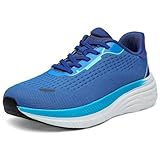
This blue athletic sneaker bridges the gap between bunion relief and gym use. The wide toe box gives the bunion clearance, while the cushioned midsole absorbs impact during treadmill runs or gym floor exercises. Non-slip outsole treads handled owner-reported wet-floor situations well.
- Pros: Genuine athletic cushioning rarely found in wide-toe-box shoes; breathable upper stays comfortable during elevated heart-rate activity.
- Cons: Runs slightly long compared to standard sneaker sizing, so half-size down is a frequent recommendation.
Skip if you prefer a minimal or barefoot feel; the stacked foam sole dampens ground feedback considerably.
L-RUN Wide Diabetic Shoe
For severe bunions paired with arthritis, edema, or diabetic foot care, this black wide shoe offers the most generous interior volume in the roundup. The soft upper molds around deformities without pressure, and the hook-and-loop closures let wearers with limited finger dexterity secure the shoe independently.
- Pros: Extra-wide construction accommodates the largest bunion prominences; easy on-and-off for swollen or stiff-jointed feet.
- Cons: The therapeutic look limits styling options, and some owners note the sole wears faster on rough pavement.
Skip if your bunion is mild and you want something that blends into casual or athletic wardrobes.
DREAM PAIRS Mary Jane Ballet Flat
This black flat proves that bunion-friendly does not have to mean clinical. The wide toe box clears the joint, and the Mary Jane strap distributes hold across the instep rather than pinching the forefoot. Owners attend work, weddings, and dinners in these without the pain flaring that tighter dress shoes trigger.
- Pros: Stylish enough for professional and semi-formal settings; soft upper avoids pressure on the bunion crest.
- Cons: Minimal arch support and a thin sole mean hours on concrete will cause midfoot fatigue.
Skip if you walk more than a mile in them or need shock absorption for hard flooring all day.
Scurtain Orthopedic Barefoot Shoe
This grey zero-drop sneaker combines barefoot flexibility with orthopedic-grade interior padding. Neuropathy wearers praise the seamless lining that prevents hot spots, and the wide toe box leaves bunions in genuine neutral space. The grounding sole provides just enough tactile feedback to maintain natural foot mechanics during walking.
- Pros: Seamless interior construction eliminates friction lines; true zero-drop keeps forefoot load low.
- Cons: The barefoot philosophy means an adjustment period for anyone transitioning from heavily cushioned shoes.
Skip if you need maximum plush cushioning for long-distance standing or if you dislike the firm ground feel of minimalist footwear.
Buying Guide
Toe-Box Width and Shape
A rectangular or anatomical toe box beats a tapered one for bunions. Look for published forefoot measurements rather than vague “wide” labels. A bunion needs at least four to six millimeters of clearance beyond the widest point of the joint. Shoes that taper inward at the toe will compress the bump regardless of the overall shoe width rating.
Upper Material and Construction
Soft mesh, stretch-knit fabric, or supple microfiber uppers conform to the bunion rather than pressing against it. Seams that run across the forefoot create friction lines; seamless or flat-locked stitching is preferable. Adjustable closures such as hook-and-loop straps let you dial in fit as swelling changes throughout the day, which is essential for edema or diabetic foot conditions.
Sole Drop and Flexibility
A zero-drop or low-drop sole (under four millimeters) keeps your weight centered over the midfoot instead of pushing it into the forefoot where the bunion sits. A flexible sole that bends at the ball of the foot reduces the lever-arm force on the joint during each step. Stiff shanks and thick heel cushions increase forefoot load and aggravate bunion pain over time.
Our Verdict
The Scurtain Orthopedic Barefoot Shoe is the top overall pick for best shoes for bunions. It combines a genuinely wide toe box, seamless interior, and true zero-drop platform at a price under twenty-five dollars, making it the most complete package in this group for moderate to severe bunions paired with neuropathy or edema.
If your priority is looking put-together at a workplace or event where clinical shoes are not acceptable, the DREAM PAIRS Mary Jane Ballet Flat wins. It is the only option here that reads as a fashion shoe while still providing a wide toe box that clears the joint.
FAQ
Do bunions require wide shoes or just soft shoes?
You need both. A wide toe box prevents lateral compression on the joint, while a soft upper prevents localized pressure where the bump meets the material. A wide shoe with a rigid leather overlay will still create a hot spot at the bunion crest after an hour of walking.
Are barefoot shoes good for bunions?
Barefoot shoes are effective for bunions because their anatomical last matches the natural splay shape of your toes, giving the joint clearance. The zero-drop sole also reduces forefoot load. However, if you have plantar fasciitis alongside a bunion, the lack of cushioning may aggravate the heel before it helps the toe.
Can Dr. Scholl’s bunion cushions replace proper shoes?
No. Cushions reduce friction and add a gel buffer inside a shoe that already has adequate width. If your shoe is too narrow at the forefoot, the cushion adds bulk that worsens compression. Think of cushions as a supplement to, not a substitute for, a properly wide toe box.
How do I know if a shoe is wide enough for my bunion?
Measure the widest point of your forefoot including the bunion prominence, then compare it to the shoe’s published interior forefoot width. Owners of moderate to severe bunions typically need at least eighty-five millimeters of interior width at the ball of the foot. If the manufacturer does not publish dimensions, check owner reviews for mentions of toe-box room relative to your bunion size.



0 Comments