RP Woodworks

  • Home
  • Reviews
  • Projects
  • Tools
  • Woodworking Techniques
  • About

Wood Finishing

Staining, sealing, oiling and clear-coating wood: product choice, application and fixes for common finish problems.

AI-generated editorial illustration of wood stain
Finish Problems & Fixes

How to Apply a Pigmented Finish Without Hiding Wood Texture

A pigmented finish adds color by leaving solid particles on and in the wood, rather than relying only on dissolved dye. That makes it easier to build a rich color, but it also makes it easy to bury the grain. The goal is controlled pigment: enough to change the wood’s Read more

By , 2 weeksSeptember 25, 2026 ago
AI-generated editorial illustration of wood paint
Painting & Priming

How to Seal Knots in Pine Before Painting

Pine knots contain resin that can bleed through paint as yellow, brown, or glossy stains. The problem is worst with fresh knots, large knots, and boards that are not fully dry. Ordinary water-based primer often looks fine at first, then develops discolored spots after several days or weeks. Sealing the Read more

By , 2 weeksSeptember 25, 2026 ago
AI-generated editorial illustration of wood stain
Staining & Dyes

How to Lighten an Oil-Based Wood Stain

Lightening an oil-based wood stain is easiest before it goes on the wood. Once the stain has dried and the pigment has settled into the pores, you cannot reliably make it lighter by wiping on mineral spirits. At that point, the practical choices are to remove some of the stain, Read more

By , 2 weeksSeptember 25, 2026 ago
AI-generated editorial illustration of wood stain
Staining & Dyes

How to Use a Pre-Stain Conditioner on Softwood

Softwood is easy to sand, cut, and finish, but it can be difficult to stain evenly. Pine, fir, spruce, and poplar have areas of dense grain beside porous end grain and softer sections. A liquid stain may soak into those areas at different rates, leaving dark blotches, streaks, and lap Read more

By , 2 weeksSeptember 25, 2026 ago
AI-generated editorial illustration of wood stain
Finish Problems & Fixes

How to Apply Stain to Reclaimed Wood Without Muddying the Grain

Reclaimed wood can look rich and dimensional, but stain can quickly turn that character into a dull brown surface. Old boards often contain uneven porosity, embedded dust, oxidized fibers, nail stains, and patches of previous finish. If you sand everything aggressively and flood the board with dark stain, the result Read more

By , 2 weeksSeptember 25, 2026 ago
AI-generated editorial illustration of wood paint
Painting & Priming

How to Paint Wood with an Extra-Smooth Enamel Finish

Why enamel works for wood Enamel paint is a good choice for furniture, cabinets, doors, trim, and other woodwork that needs a hard, washable surface. It dries to a tougher film than ordinary wall paint and is available in satin, semi-gloss, and gloss sheens. A higher sheen is easier to Read more

By , 2 weeksSeptember 25, 2026 ago
AI-generated editorial illustration of wood stain
Staining & Dyes

How to Dilute Wood Stain for a Lighter Custom Color

What Diluting Wood Stain Does Diluting wood stain reduces the amount of pigment or dye deposited on the surface with each coat. It does not simply make the stain “less dark” in every situation. A diluted stain may also look less even, build color more slowly, and reveal more of Read more

By , 2 weeksSeptember 25, 2026 ago
AI-generated editorial illustration of wood paint
Painting & Priming

How to Prime Resinous Wood Before Applying Paint

Resinous wood such as pine, knotty fir, cedar, spruce, and larch can produce a good painted finish, but it needs more preparation than low-resin hardwood. Sap and pitch can bleed through paint as yellow or brown marks, especially around knots. The problem may appear immediately or several weeks later when Read more

By , 2 weeksSeptember 25, 2026 ago
AI-generated editorial illustration of wood paint
Finish Problems & Fixes

How to Paint Wood Furniture with a Brush and Avoid Brush Marks

Painting wood furniture with a brush is inexpensive, controllable, and suitable for chairs, dressers, tables, and cabinet doors. The catch is that paint levels slowly on vertical surfaces, and every stiff bristle or overworked stroke can remain visible. A smooth result depends less on painting quickly than on choosing the Read more

By , 2 weeksSeptember 25, 2026 ago
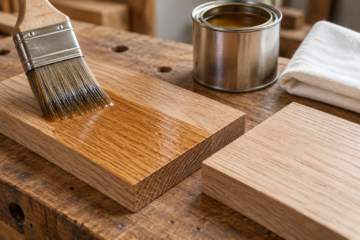
AI-generated editorial illustration: brush applying a clear wood finish to a board beside an unfinished offcut.
Finish Problems & Fixes

Best Finish for Stabilizing a Cracked Wood Slab

A finish can protect a cracked wood slab, but it cannot reliably stabilize a crack by itself. The best system is usually a two-part epoxy used to lock the crack together and fill the void, followed by a durable surface finish. For most tables, desks, and benches, that means low-viscosity Read more

By , 2 weeksSeptember 25, 2026 ago

Posts pagination

Previous 1 … 17 18 19 … 63 Next
Recent Posts
  • 3M Dust Mask Review: Choosing the Right Model for Woodworking
  • Minwax Wood Filler Review: Which Type to Choose for Your Project
  • Bondo Wood Filler Review: Best Uses, Limits, and Application
  • Plastic Wood Filler: Types, Uses, and What to Check Before You Buy
  • Famowood Wood Filler Review: Best Uses, Finish, and Limitations
Recent Comments
No comments to show.
Archives
  • October 2026
  • September 2026
Categories
  • Clear Coats & Topcoats
  • Finish Problems & Fixes
  • Finish Problems & Fixes
  • Gift Guides
  • Grain Filling & Sealing
  • Guides
  • Oils & Waxes
  • Painting & Priming
  • Painting & Priming
  • Sanding & Surface Prep
  • Shop Setup & Safety
  • Staining & Dyes
  • Staining & Dyes
  • Tool Troubleshooting
  • Tools
  • Wood Finishing
  • Wood Species & Lumber
  • Woodworking Techniques
Hestia | Developed by ThemeIsle