RP Woodworks

  • Home
  • Reviews
  • Projects
  • Tools
  • Woodworking Techniques
  • About

Wood Finishing

Staining, sealing, oiling and clear-coating wood: product choice, application and fixes for common finish problems.

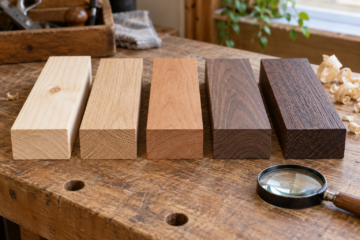
AI-generated editorial illustration: five wooden board samples showing different grain textures and colors.
Grain Filling & Sealing

How to Seal a Charred Wood Surface Before Topcoating

Charred wood can be sealed successfully, but it is not ready for finish just because the flame is out. The surface may contain loose carbon, soot, smoke oils, and moisture trapped below the burned layer. If those contaminants remain, a topcoat can peel, stay soft, or develop a dirty gray Read more

By , 2 weeksSeptember 25, 2026 ago
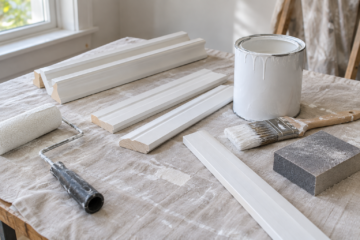
AI-generated editorial illustration of wood paint
Painting & Priming

How to Create a Distressed Painted Wood Finish

A distressed painted wood finish is meant to look worn, not neglected. The convincing version has variation: exposed edges, a few darker recesses, uneven color, and wear in places that would realistically receive handling. The process works on furniture, trim, shelving, crates, and other projects made from solid wood or Read more

By , 2 weeksSeptember 25, 2026 ago
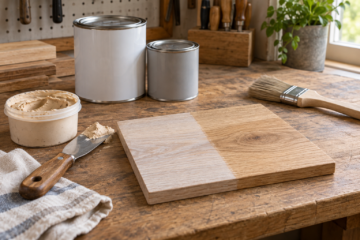
AI-generated editorial illustration of wood fillers and finishing prep
Clear Coats & Topcoats

How to Create a Cerused Finish on Open-Grain Oak

Cerusing is a finishing technique that emphasizes the open pores in wood with a contrasting color. On oak, the usual approach is a pale filler or wax rubbed into the grain over a darker base coat. The result is a whitewashed, limed, or two-tone appearance that works especially well on Read more

By , 2 weeksSeptember 25, 2026 ago
AI-generated editorial illustration of wood paint
Painting & Priming

How to Paint Over a Waxed Wood Surface

Why Wax Causes Problems Under Paint Wax is a poor paint base because it remains soft and water-repellent. Paint may appear to stick at first, then peel, fisheye, crack, or lift when the wood expands and contracts. Sanding alone usually does not solve the problem: it can flatten the surface Read more

By , 2 weeksSeptember 25, 2026 ago
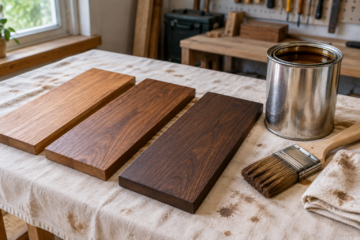
AI-generated editorial illustration of wood stain
Finish Problems & Fixes

How to Fix Uneven Stain Absorption on a Wood Panel

Uneven stain absorption usually comes from uneven preparation, differences in the wood itself, or both. Soft areas soak up stain quickly and turn dark, while dense grain, glue residue, sanding scratches, and end grain may stay lighter or develop blotches. The fix is rarely “add another coat.” Start by finding Read more

By , 2 weeksSeptember 25, 2026 ago
AI-generated editorial illustration of wood paint
Painting & Priming

How to Apply Primer Over a Previously Oiled Wood Surface

Applying primer over previously oiled wood is possible, but only after the oil has cured and the surface has been cleaned thoroughly. Primer does not reliably stick to a greasy, glossy, or continually oily surface. If you skip the preparation, the new coating may wrinkle, fish-eye, peel, or remain soft Read more

By , 2 weeksSeptember 25, 2026 ago
AI-generated editorial illustration of wood stain
Finish Problems & Fixes

How to Prevent Lap Marks When Applying Wood Dye

Lap marks are dark or uneven bands caused by overlapping wet areas of dye. They are most common on large panels, tabletops, doors, and other surfaces where the dye begins drying before you finish the section. Unlike many pigment stains, wood dye can soak deeply and color end grain aggressively, Read more

By , 2 weeksSeptember 25, 2026 ago
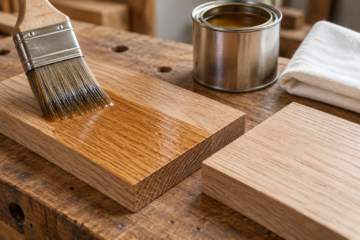
AI-generated editorial illustration: brush applying a clear wood finish to a board beside an unfinished offcut.
Clear Coats & Topcoats

How to Tint a Clear Wood Finish for a Subtle Color Shift

A clear wood finish can do more than protect a surface. With a small amount of compatible tint, it can warm pale maple, mute the orange in pine, add a smoky cast to oak, or make a repair blend more closely with surrounding wood. The goal is a transparent color Read more

By , 2 weeksSeptember 25, 2026 ago
AI-generated editorial illustration: brush applying a clear wood finish to a board beside an unfinished offcut.
Finish Problems & Fixes

How to Darken a Wood Finish Without Stripping the Existing Coat

Darkening wood without stripping the existing finish is possible, but the new color must bond to the old surface rather than soak deeply into bare wood. That changes the process. You are adding a compatible colored layer, not applying ordinary penetrating stain to unfinished timber. The most reliable approach is Read more

By , 2 weeksSeptember 25, 2026 ago
AI-generated editorial illustration of wood paint
Painting & Priming

How to Repair Paint Runs on Wood Trim

Paint runs on wood trim happen when a coat is applied too heavily, the paint stays wet too long, or gravity pulls paint into a low spot. They are most common on door casings, window trim, baseboards, and vertical cabinet parts. The repair is straightforward, but the timing matters: a Read more

By , 2 weeksSeptember 25, 2026 ago

Posts pagination

Previous 1 … 16 17 18 … 63 Next
Recent Posts
  • Famowood Wood Filler Review: Best Uses, Finish, and Limitations
  • Bondo Wood Filler Instructions: How to Mix, Apply, and Sand It
  • Best Epoxy Wood Fillers for Rot, Cracks, and Deep Repairs
  • Best Exterior Wood Filler for Siding, Trim, and Deck Repairs
  • Wood Stain Colors: Compare Popular Shades and Test Them
Recent Comments
No comments to show.
Archives
  • October 2026
  • September 2026
Categories
  • Clear Coats & Topcoats
  • Finish Problems & Fixes
  • Finish Problems & Fixes
  • Gift Guides
  • Grain Filling & Sealing
  • Guides
  • Oils & Waxes
  • Painting & Priming
  • Painting & Priming
  • Sanding & Surface Prep
  • Shop Setup & Safety
  • Staining & Dyes
  • Staining & Dyes
  • Tool Troubleshooting
  • Tools
  • Wood Finishing
  • Wood Species & Lumber
  • Woodworking Techniques
Hestia | Developed by ThemeIsle