RP Woodworks

  • Home
  • Reviews
  • Projects
  • Tools
  • Woodworking Techniques
  • About

Finish Problems & Fixes

Diagnosing and fixing blotchy stain, cloudy or sticky finishes, bleed-through, lap marks and peeling.

AI-generated editorial illustration of wood paint
Finish Problems & Fixes

How to Distress Painted Wood Without Exposing Too Much Grain

Distressing is supposed to reveal signs of wear, not turn a painted surface into bare wood. The trick is to remove paint in a few chosen places with light pressure, then stop before sanding reaches the wood’s open grain. That takes less sanding than many tutorials suggest, especially on soft Read more
By , 2 weeksSeptember 24, 2026 ago
AI-generated editorial illustration: brush applying a clear wood finish to a board beside an unfinished offcut.
Finish Problems & Fixes

How to Apply Danish Oil Without Sticky Residue

Danish oil leaves a sticky surface when too much remains on the wood as it cures. The fix is not another thick coat: apply thinly, give the oil time to soak in, then wipe the surface completely dry. The exact drying time depends on the product, room conditions, and wood, Read more

By , 2 weeksSeptember 24, 2026 ago
AI-generated editorial illustration: brush applying a clear wood finish to a board beside an unfinished offcut.
Finish Problems & Fixes

How to Apply Water-Based Polyurethane Without Cloudy Overlap Marks

Cloudy overlap marks usually come from laying a fresh pass over finish that has started to tack up, or from uneven film thickness. Water-based polyurethane dries quickly, so the fix is not to brush more carefully for longer; it is to plan each coat so you can keep a wet Read more

By , 2 weeksSeptember 24, 2026 ago
AI-generated editorial illustration: wood glue bottle beside an edge-glued board assembly and spreader.
Finish Problems & Fixes

How to Remove Glue Smears from Oak Before Staining

Glue smears on oak can vanish in ordinary light and show up plainly after stain goes on. The reason is simple: dried glue seals the pores, so stain cannot soak in evenly. The fix is to remove the glue before staining, then check the surface under angled light. Sanding harder Read more

By , 2 weeksSeptember 24, 2026 ago
AI-generated editorial illustration: wood glue bottle beside an edge-glued board assembly and spreader.
Finish Problems & Fixes

How to Prevent Glue Lines from Showing Through a Clear Finish

Glue lines show through a clear finish because glue seals the wood fibers. Stain and finish then soak in differently on either side of the joint, leaving a pale or glossy stripe. The reliable fix is to keep glue off the visible surface, remove residue before finishing, and test the Read more

By , 2 weeksSeptember 24, 2026 ago
AI-generated editorial illustration: wood glue bottle beside an edge-glued board assembly and spreader.
Finish Problems & Fixes

How to Avoid Glue Squeeze-Out Stains on Wood Projects

Glue squeeze-out is easy to ignore while a project is clamped, but it can become a visible stain after sanding and finishing. The problem is not usually the glue itself changing color. It is glue residue sealing the wood pores, so stain, dye, or oil cannot penetrate evenly. The result Read more

By , 2 weeksSeptember 24, 2026 ago
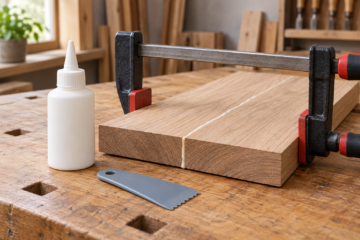
AI-generated editorial illustration: wood glue bottle beside an edge-glued board assembly and spreader.
Finish Problems & Fixes

How to Remove Dried Wood Glue Before Applying Stain

Dried wood glue can leave a pale, hard patch that barely shows on bare wood but turns into a light or glossy blotch under stain. The reliable fix is usually to remove the glue mechanically, then check the surface with water or mineral spirits before staining. The right method depends Read more

By , 2 weeksSeptember 24, 2026 ago
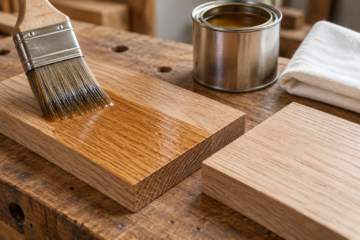
AI-generated editorial illustration: brush applying a clear wood finish to a board beside an unfinished offcut.
Finish Problems & Fixes

How to Apply a Clear Finish Without Brush Marks

Why brush marks happen Brush marks usually come from finish that is too thick, a brush that drags, or a coat that starts drying before you can level it. Dust, sanding scratches, and raised grain can also show through a clear coat, even when the application looks smooth while wet. Read more

By , 2 weeksSeptember 24, 2026 ago
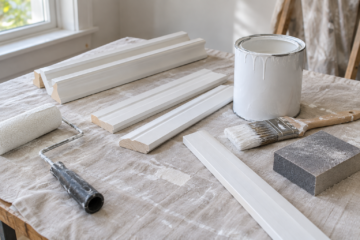
AI-generated editorial illustration of wood paint
Finish Problems & Fixes

How to Remove Old Paint from Detailed Wood Molding

Removing old paint from detailed wood molding is slower than stripping a flat board. The grooves hold softened paint, but they also make it easy to gouge the wood, round over crisp edges, or leave residue that spoils the next finish. Work in small sections, use a stripper suited to Read more

By , 2 weeksSeptember 24, 2026 ago
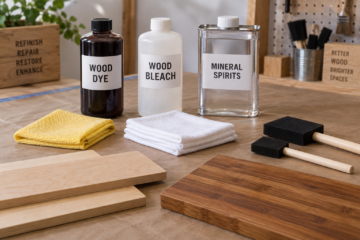
AI-generated editorial illustration of wood refinishing dyes bleach and tack cloth
Finish Problems & Fixes

How to Apply Dye to Wood Without Overlapping Color

Overlap marks happen when one area of wood absorbs more dye than the next. The usual cause is simple: the first pass dries or begins to set before the next pass reaches it. Dye can color wood evenly, but it does not hide uneven sanding, glue, or end grain. Prepare Read more

By , 2 weeksSeptember 24, 2026 ago

Posts pagination

Previous 1 … 7 8 9 Next
Recent Posts
  • Best Woodworking Clamps: Which Types to Buy and How Many You Need
  • Best Pocket Hole Jigs in 2026: Kreg, Massca and Milescraft Compared
  • Best Dovetail Jigs: Fixed, Multi-Template and Variable-Spacing Options Explained
  • Best Compact Wood Routers: Corded vs Cordless Picks for Edge Work and Trimming
  • How to Repair a Wood Split Caused by a Screw (Even in Thin Teak)
Recent Comments
No comments to show.
Archives
  • October 2026
  • September 2026
Categories
  • Clear Coats & Topcoats
  • Finish Problems & Fixes
  • Gift Guides
  • Grain Filling & Sealing
  • Guides
  • Oils & Waxes
  • Painting & Priming
  • Sanding & Surface Prep
  • Shop Setup & Safety
  • Staining & Dyes
  • Tool Troubleshooting
  • Tools
  • Wood Finishing
  • Wood Species & Lumber
  • Woodworking Techniques
Hestia | Developed by ThemeIsle