RP Woodworks

  • Home
  • Reviews
  • Projects
  • Tools
  • Woodworking Techniques
  • About

Finish Problems & Fixes

Diagnosing and fixing blotchy stain, cloudy or sticky finishes, bleed-through, lap marks and peeling.

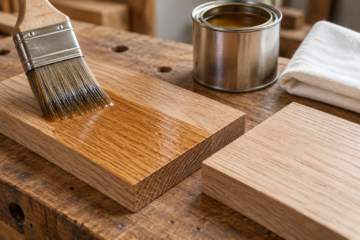
AI-generated editorial illustration: brush applying a clear wood finish to a board beside an unfinished offcut.
Finish Problems & Fixes

How to Apply a Clear Finish to Wood Without Trapping Dust

Dust trapped in a clear finish usually comes from one of three places: the wood, the room, or the applicator. You can reduce all three, but a dust-free shop is not necessary. The practical goal is to remove loose particles before each coat, avoid stirring up more dust while the Read more
By , 2 weeksSeptember 25, 2026 ago
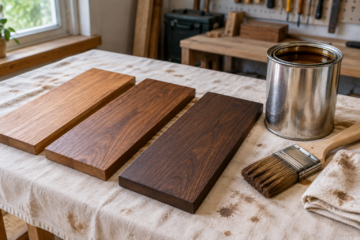
AI-generated editorial illustration of wood stain
Finish Problems & Fixes

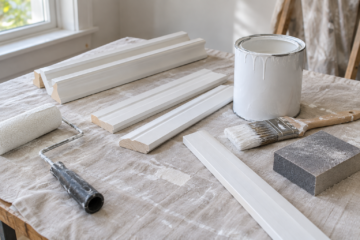
How to Stain Wood Molding Without Leaving Brush Streaks

Brush streaks usually come from using a brush on a stain that dries too quickly, applying too much product, or failing to wipe away the excess. On molding, narrow profiles and corners make all three problems more noticeable. The most reliable approach is to test the stain, apply a thin Read more

By , 2 weeksSeptember 25, 2026 ago
AI-generated editorial illustration: brush applying a clear wood finish to a board beside an unfinished offcut.
Finish Problems & Fixes

How to Apply a Water-Based Clear Coat Without Lap Marks

Lap marks happen when one pass of finish starts to dry before it blends into the next. Water-based clear coats set quickly, so they leave less time to correct a slow or interrupted application than oil-based finishes do. The fix is a clean, well-prepared surface, a manageable work area, and Read more

By , 2 weeksSeptember 25, 2026 ago
AI-generated editorial illustration: brush applying a clear wood finish to a board beside an unfinished offcut.
Finish Problems & Fixes

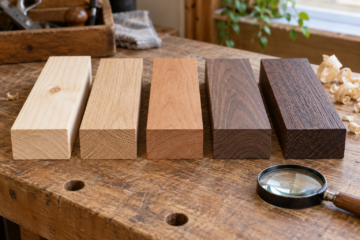
How to Choose a Finish for Open-Grain Wood Without Filling It

Open-grain woods such as oak, ash, walnut, and mahogany have pores that remain visible under a clear finish. You can leave those pores unfilled and still protect the wood; the surface will simply feel and look less glass-smooth than a filled finish. Your main choice is whether to emphasize the Read more

By , 2 weeksSeptember 25, 2026 ago
AI-generated editorial illustration: five wooden board samples showing different grain textures and colors.
Finish Problems & Fixes

Best Wood for Painted Bathroom Cabinet Doors That Resist Peeling

Painted bathroom cabinet doors usually peel because moisture reaches a weak spot in the finish or the paint never bonded well to the surface. Wood choice matters, but so do flatness, edge sealing, sanding, primer, and ventilation. For most painted doors, maple or a good-quality paint-grade hardwood is a dependable Read more

By , 2 weeksSeptember 25, 2026 ago
AI-generated editorial illustration of wood paint
Finish Problems & Fixes

How to Paint Raw Wood Without Brush Marks

Painting raw wood without brush marks is mostly a preparation and paint-flow problem. Bare wood absorbs paint unevenly, raises its grain, and can leave rough fibers that catch a brush. The solution is not simply buying a more expensive brush. You need to seal the wood, use the right coating, Read more

By , 2 weeksSeptember 25, 2026 ago
AI-generated editorial illustration of wood stain
Finish Problems & Fixes

How to Stain Wood Around Knots Without Creating Dark Rings

Knots are one of the hardest parts of staining pine, fir, spruce, and other resinous woods. The surrounding grain may absorb stain evenly while the knot stays pale, turns nearly black, or develops a dark ring around its edge. That ring is usually caused by a combination of resin, compressed Read more

By , 2 weeksSeptember 25, 2026 ago
AI-generated editorial illustration of wood stain
Finish Problems & Fixes

How to Apply Oil-Based Stain Without Sticky Residue

Why oil-based stain stays sticky Oil-based stain is meant to color wood, not form a thick protective film. The pigment and binder left on the surface after application should be thin enough to dry. If excess stain sits in pores or on top of the wood, it can remain tacky Read more

By , 2 weeksSeptember 25, 2026 ago
AI-generated editorial illustration of wood stain
Finish Problems & Fixes

How to Keep Water-Based Stain from Raising Grain Unevenly

Water-based stain can leave a rough, blotchy surface because water swells wood fibers. The problem is usually most visible on end grain, soft springwood, and areas that were sanded unevenly. You can reduce it by preparing the surface consistently, controlling how much water reaches the wood, and sanding raised fibers Read more

By , 2 weeksSeptember 25, 2026 ago
AI-generated editorial illustration of wood stain
Finish Problems & Fixes

How to Stain Birch Without Dark Spots or Streaks

Birch is easy to sand and pleasant to work with, but it can be surprisingly difficult to stain evenly. Its tight grain and pale color absorb stain inconsistently: end grain and locally more porous areas often turn dark, while broad faces can look pale or streaky. The reliable approach is Read more

By , 2 weeksSeptember 25, 2026 ago

Posts pagination

Previous 1 … 5 6 7 … 9 Next
Recent Posts
  • Best Woodworking Clamps: Which Types to Buy and How Many You Need
  • Best Pocket Hole Jigs in 2026: Kreg, Massca and Milescraft Compared
  • Best Dovetail Jigs: Fixed, Multi-Template and Variable-Spacing Options Explained
  • Best Compact Wood Routers: Corded vs Cordless Picks for Edge Work and Trimming
  • How to Repair a Wood Split Caused by a Screw (Even in Thin Teak)
Recent Comments
No comments to show.
Archives
  • October 2026
  • September 2026
Categories
  • Clear Coats & Topcoats
  • Finish Problems & Fixes
  • Gift Guides
  • Grain Filling & Sealing
  • Guides
  • Oils & Waxes
  • Painting & Priming
  • Sanding & Surface Prep
  • Shop Setup & Safety
  • Staining & Dyes
  • Tool Troubleshooting
  • Tools
  • Wood Finishing
  • Wood Species & Lumber
  • Woodworking Techniques
Hestia | Developed by ThemeIsle