RP Woodworks

  • Home
  • Reviews
  • Projects
  • Tools
  • Woodworking Techniques
  • About

Sanding & Surface Prep

Sanding schedules, abrasives, grit choice and surface prep that decide how good a finish can look.

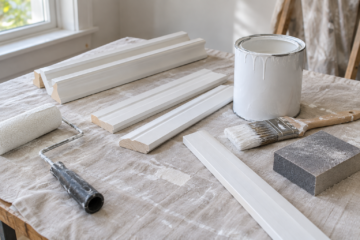
AI-generated editorial illustration of wood paint
Sanding & Surface Prep

How to Sand a Painted Wood Surface Before Recoating

Sanding a painted wood surface before recoating is mainly about removing loose paint, dulling the existing finish, and creating a clean, even surface for the next coat. You usually do not need to strip sound paint back to bare wood. Over-sanding wastes time, exposes soft wood, and can create visible Read more

By , 2 weeksSeptember 25, 2026 ago
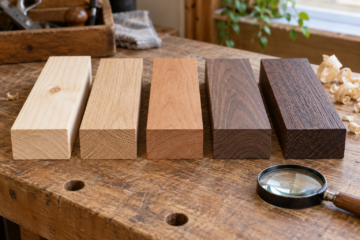
AI-generated editorial illustration: five wooden board samples showing different grain textures and colors.
Sanding & Surface Prep

How to Sand a Wood Slab Around Natural Voids

Natural voids are what make a wood slab distinctive, but they also make sanding more difficult. A random-orbit sander can round over an edge, catch in a cavity, or leave shiny scratches where the abrasive cannot reach. The safest approach is to treat the slab as two surfaces: the broad, Read more

By , 2 weeksSeptember 25, 2026 ago
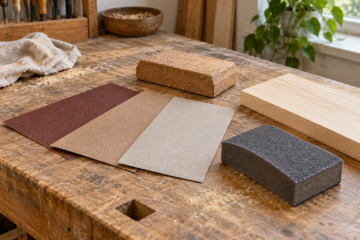
AI-generated editorial illustration of sandpaper
Sanding & Surface Prep

How to Sand Between Coats of Water-Based Finish

Water-based finishes usually need light sanding between coats to remove dust nibs, knock down raised grain, and give the next coat a clean surface to grip. This is not the same as sanding bare wood. The finish film is thin, and aggressive sanding can cut through it, expose stain, or Read more

By , 2 weeksSeptember 25, 2026 ago
AI-generated editorial illustration of sandpaper
Sanding & Surface Prep

How to Sand Wood Corners Without Removing Too Much Material

Sanding a wood corner is a small job with a high risk of visible damage. A sharp outside corner has very little surface area, so a few extra strokes can round it over. An inside corner can trap sanding dust, lose its crisp line, or develop a low spot where Read more

By , 2 weeksSeptember 25, 2026 ago
AI-generated editorial illustration of sandpaper
Sanding & Surface Prep

Best Abrasive for Preparing Veneer Without Breakthrough

Veneer is thin enough that ordinary sanding habits can ruin it quickly. A furniture veneer may be about 0.6 mm thick, while older shop-made panels and rotary-cut sheets can vary considerably. Sand through one corner and the damaged area may show as a pale patch, a dark glue line, or Read more

By , 2 weeksSeptember 25, 2026 ago
AI-generated editorial illustration of sandpaper
Sanding & Surface Prep

Best Sanding Method for Curved Wood Furniture Parts

Curved wood furniture parts—chair arms, cabriole legs, rounded drawer fronts, rocker rails, and bent laminations—need a different sanding strategy from flat panels. The goal is to smooth the surface without flattening the curve, rounding crisp transitions, or leaving deep scratches that show through stain and finish. The most reliable method Read more

By , 2 weeksSeptember 25, 2026 ago
AI-generated editorial illustration of sandpaper
Sanding & Surface Prep

Best Sandpaper Grit for Smoothing Wood Filler

Choosing the right sandpaper grit for wood filler depends on the filler’s hardness, how much material you need to remove, and the finish going over it. For most repairs, the practical sequence is 80 or 100 grit to level the patch, 120 grit to remove scratches, and 180 grit to Read more

By , 2 weeksSeptember 25, 2026 ago
AI-generated editorial illustration of sandpaper
Sanding & Surface Prep

How to Sand a Wood Board Flat Without Rounding Its Edges

Sanding a board flat is less about removing scratches and more about controlling the tool. A power sander can quickly make a smooth-looking surface that is actually dished in the middle, crowned at the ends, or rounded along every edge. The safest method depends on how uneven the board is, Read more

By , 2 weeksSeptember 25, 2026 ago
AI-generated editorial illustration of sandpaper
Sanding & Surface Prep

Best Abrasive for Reclaimed Wood with Embedded Dirt

Reclaimed wood with embedded dirt is harder to sand than ordinary rough lumber. Soil, grit, old paint, and small bits of roofing material can clog abrasives or tear fresh scratches across the surface. The best approach is not to start with the finest sandpaper. Clean and inspect the boards first, Read more

By , 2 weeksSeptember 25, 2026 ago
AI-generated editorial illustration of sandpaper
Sanding & Surface Prep

Best Sandpaper for Sanding Between Clear Coats

Sanding between clear coats is a light leveling step, not a full sanding operation. The goal is to remove dust nibs, tiny bubbles, brush marks, and minor roughness so the next coat bonds to a uniformly dull surface. The best sandpaper is usually fine enough to avoid deep scratches but Read more

By , 2 weeksSeptember 25, 2026 ago

Posts pagination

Previous 1 … 5 6 7 … 12 Next
Recent Posts
  • Best Woodworking Clamps: Which Types to Buy and How Many You Need
  • Best Pocket Hole Jigs in 2026: Kreg, Massca and Milescraft Compared
  • Best Dovetail Jigs: Fixed, Multi-Template and Variable-Spacing Options Explained
  • Best Compact Wood Routers: Corded vs Cordless Picks for Edge Work and Trimming
  • How to Repair a Wood Split Caused by a Screw (Even in Thin Teak)
Recent Comments
No comments to show.
Archives
  • October 2026
  • September 2026
Categories
  • Clear Coats & Topcoats
  • Finish Problems & Fixes
  • Gift Guides
  • Grain Filling & Sealing
  • Guides
  • Oils & Waxes
  • Painting & Priming
  • Sanding & Surface Prep
  • Shop Setup & Safety
  • Staining & Dyes
  • Tool Troubleshooting
  • Tools
  • Wood Finishing
  • Wood Species & Lumber
  • Woodworking Techniques
Hestia | Developed by ThemeIsle