Our Top Picks
What's inside
As an Amazon Associate I earn from qualifying purchases. This post may contain affiliate links at no extra cost to you.
Putting a trolling motor on a kayak turns a paddling day into a fishing day, because you stop spending your energy on distance and start spending it on the water in front of you. But a kayak is not a jon boat, and the mistake most buyers make is shopping by thrust alone. A kayak is light, narrow, and usually has no transom, so the motor has to be matched to the hull weight, the mounting method, and the battery you can realistically carry on board.
This guide is for anglers adding power to a sit-on-top or sit-inside kayak, a canoe, or a small boat, with the 2026 fishing season in mind. Eight transom-mount motors are compared, using only what each listing title states: thrust in pounds, shaft length, voltage, saltwater or freshwater construction, and speed settings. Confirm mounting requirements, battery needs, and weight on the product page before you buy.
Quick Picks
As an Amazon Associate we earn from qualifying purchases at no extra cost to you.
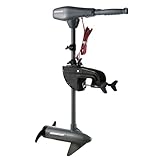


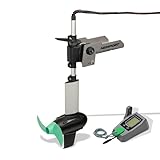

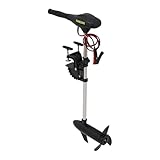
| Product | Best for | Key spec from the title |
|---|---|---|
| Newport Kayak Series 36lb | Lighter kayaks, saltwater | 36 lb thrust, 24 inch shaft, LED battery indicator |
| Newport Kayak Series 55lb | Heavier loaded kayaks | 55 lb thrust, 24 inch shaft, saltwater |
| Minn Kota Endura C2 30 lb | Freshwater paddlers | 30 lb thrust, 30 inch shaft, freshwater |
| Newport NK300 Electric Kayak Motor | Range and power seekers | 3HP equivalent, 36V brushless, up to 66 miles |
| Newport NV-Series 36lb | Kayak, canoe, small boat | 36 lb thrust, 12V, 30 inch shaft, saltwater |
| 68LB Thrust 8 Speed Outboard | Maximum thrust on a budget | 68 lb thrust, 8 speeds, 30 inch shaft |
| 40lb Thrust Brush Electric Motor | Adjustable-handle flexibility | 40 lb thrust, 12V, 6 speed, telescopic handle |
| 55lb Thrust 8 Speed Kayak Motor | Mid-range thrust with LED display | 55 lb thrust, 8 speeds, 30 inch shaft, LED indicator |
How to Choose
Match thrust to the weight you are pushing
A common rule of thumb is about 2 pounds of thrust per 100 pounds of loaded boat weight, with extra for wind and current. A kayak with an angler and gear is usually well under 500 pounds, which is why 30 to 55 pounds of thrust is typically plenty. More thrust means more battery drain and a heavier motor on a hull that is easy to overload. The 68 pound units suit a heavier, wider craft more than a slim kayak. Remember that thrust ratings are measured under ideal conditions, so a modest buffer is wise, but a huge buffer simply adds weight you will be paddling around when the battery runs low.
Choose a shaft length that works for your hull
Shafts of 24 inches suit low-freeboard boats, while 30 inch shafts help keep the propeller submerged in chop. A shaft that is too short can pull the prop out of the water over waves. A shaft that is too long gets in the way in shallow water and may hit the bottom. Measure the distance from your mounting point to the waterline, and leave room for the prop to sit a few inches below the surface even when the bow dips.
Think about voltage, battery, and range
Most motors here run on a 12V battery, which is a common size. The NK300 uses a 36V brushless drive and claims extended range, but it is a different type of system with a larger battery requirement, and it behaves more like a small outboard than a quiet trolling motor. A deep-cycle battery adds noticeable weight to a kayak, so plan its position for balance, keeping it low and near the center so the kayak stays stable when you lean to net a fish. Brushed motors are generally cheaper but less efficient than brushless designs.
Check saltwater construction, speed settings, and mounting
If you fish in saltwater, look for a motor described as saltwater rated, because corrosion destroys freshwater motors quickly. More speed settings give finer control while trolling. A transom mount needs a solid mounting point, and many kayaks require an aftermarket bracket. A battery indicator helps you avoid being stranded far from shore. Whatever the motor, plan to rinse it with fresh water after each trip. A fused wire run and a secure battery box matter too, because a loose battery in a tippy boat is a hazard.
The 8 Best Options
Newport Kayak Series 36lb Thrust Saltwater Trolling Motor
This Newport is a transom-mounted saltwater electric trolling motor with a 36 pound thrust, a 24 inch shaft, and an LED battery indicator. It is aimed at standard kayaks where moderate thrust is enough. It is the lightest-thrust option in the Kayak Series, which usually means a lighter motor head to hang off the stern.
- Strength: saltwater construction suits coastal fishing.
- Strength: a short 24 inch shaft suits low-freeboard kayaks.
- Trade-off: 36 pounds of thrust may feel light for a heavily loaded boat.
Skip it if you fish in chop and need the prop deeper.
Newport Kayak Series 55lb Thrust Saltwater Trolling Motor
The 55 pound variant keeps the 24 inch shaft and saltwater build but adds thrust. It is a better match for a larger kayak, a loaded fishing kayak, or windy water. Anglers who fish tidal flats or open bays often prefer the extra push when the breeze picks up.
- Strength: 55 pounds gives extra margin against wind and current.
- Strength: it keeps the LED battery indicator.
- Trade-off: greater thrust means a heavier battery draw.
Skip it if you paddle a light kayak on calm water.
Minn Kota Endura C2 Transom-Mount Trolling Motor
The Endura C2 offers 30 pounds of thrust and a 30 inch shaft, and is described as a freshwater motor. It is for anglers on lakes and ponds who want a straightforward, modest-thrust motor with a freshwater focus. It makes sense for paddlers who stay on inland water and want to keep things simple.
- Strength: a 30 inch shaft helps the prop stay submerged.
- Strength: 30 pounds of thrust is plenty for a typical kayak.
- Trade-off: it is freshwater only, so it is not meant for saltwater use.
Skip it if you fish in saltwater.
Newport NK300 Electric Kayak Motor
The NK300 is a different category: a 36V brushless direct-drive motor billed as a 3HP equivalent with extended range of up to 66 miles. It aims at kayak anglers who want to cover real distance, not only troll slowly. Buyers should read the battery and mounting requirements closely, since the system is more involved than a standard trolling motor.
- Strength: brushless direct drive suggests efficient operation.
- Strength: the stated range of up to 66 miles is exceptional for a kayak motor.
- Trade-off: a 36V system implies a larger battery and a higher level of commitment.
Skip it if you want a simple 12V trolling motor.
Newport NV-Series 36lb Thrust Trolling Motor 12V
This Newport runs on 12V, is saltwater rated, and has a 30 inch shaft with an LED battery indicator. The title names kayaks, canoes, and small boats, making it a versatile choice for anglers with more than one vessel. The 30 inch shaft is longer than the Kayak Series 24 inch option, so check clearance on your hull.
- Strength: saltwater rating and a 30 inch shaft add versatility.
- Strength: it works across kayak, canoe, and small boat use.
- Trade-off: 36 pounds of thrust is modest for larger loads.
Skip it if you need higher thrust.
68LB Thrust Trolling Motor, 8 Speed
This motor lists 68 pounds of thrust, eight speeds, a six inch adjustable handle, a 30 inch shaft, and an LED indicator. It targets buyers who want maximum thrust on a transom mount. For a canoe or a wide fishing platform it may make sense, but a slim kayak will rarely use that much push.
- Strength: eight speeds give fine control over trolling pace.
- Strength: 68 pounds of thrust handles heavy loads and wind.
- Trade-off: much more thrust than a kayak needs means more weight and battery drain.
Skip it if your hull is a light, narrow kayak.
40lb Thrust Brush Electric Trolling Motor
This 12V brushed motor lists six speeds, five forward and three reverse, with a telescopic handle that adjusts from 19 to 24.5 inches. The adjustable handle helps you steer from a seated position. The five forward and three reverse split is a handy detail for backing away from a snag.
- Strength: the telescopic handle suits seated steering.
- Strength: five forward and three reverse speeds add control.
- Trade-off: a brushed motor is generally less efficient than a brushless design.
Skip it if you need a saltwater rating stated in the title.
55lb Thrust Trolling Motor, 8 Speed Kayak Motor
The 55 pound unit lists eight speeds, a six inch extendable handle, a 30 inch shaft, and an LED indicator. It sits in the middle of the thrust range for owners who want power without going to extremes, and it mirrors the 55 pound Newport at the same thrust with a longer shaft.
- Strength: 55 pounds of thrust and eight speeds balance power and control.
- Strength: the LED indicator tracks battery status.
- Trade-off: the title does not state saltwater construction.
Skip it if you fish in saltwater and want a stated rating.
Which One Fits Your Situation
Saltwater kayak fishing
The Newport Kayak Series 36lb or 55lb are both saltwater rated with a 24 inch shaft. Choose the 55 if your kayak is loaded or the water gets windy.
Freshwater lakes and ponds
The Minn Kota Endura C2 with 30 pounds of thrust and a 30 inch shaft is a simple, appropriate match.
Long-distance runs and range
The Newport NK300 targets anglers who want range and power, with a stated range of up to 66 miles.
Multiple small boats
The Newport NV-Series 36lb 12V works across kayaks, canoes, and small boats, which suits anglers who swap hulls.
Common Mistakes
- Choosing thrust without considering the weight of the battery you must carry.
- Mounting the motor on a kayak without a rigid bracket.
- Using a freshwater motor in saltwater.
- Selecting a shaft too short for choppy water.
- Skipping a rinse after a day on salt water.
Related guides
- How To Strip Old Varnish From Furniture Without Sanding
- Random Orbital Sanders For Furniture Refinishing
- How Long To Wait Between Coats Of Polycrylic
Frequently Asked Questions
How much thrust does a kayak need?
Thirty to fifty-five pounds is typical for most kayaks. Larger loads and strong wind justify the upper end. A light solo paddler on a pond will rarely need more than the lowest rating on this list.
Can I use a trolling motor on any kayak?
Most need a transom bracket or mounting plate. Check that your kayak can support the motor and the battery weight, and keep the combined load within the hull’s stated capacity. Some anglers add a small mounting plate to spread the clamping force on thin plastic.
What battery do I need?
Most 12V models use a deep-cycle marine battery. A 36V system like the NK300 needs a larger battery setup.
Is brushless better than brushed?
Brushless motors are generally more efficient and quieter, while brushed motors cost less. The better choice depends on your budget and how long you fish.


0 Comments