

Our Top Picks
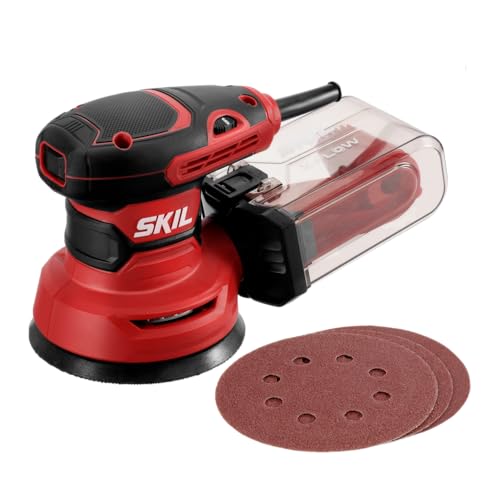
 SKIL 5” Random Orbital Sander with Cyclonic Dust5 inches7.87 x 4.8 x 5.51 inches3.44 poundsCheck on Amazon


What's inside
As an Amazon Associate I earn from qualifying purchases. This post may contain affiliate links at no extra cost to you.
A sander that is fine for stripping a deck rail can be a poor choice for finish prep. Finishing work asks different things of the tool: gentle speed control so a stain or topcoat is not scorched through, low vibration so the pad stays flat on a veneered panel, and dust handling that keeps stray grit away from a wet film. The keyword here is “for finishing,” which means the final passes at 180, 220, and 320 grit matter more than raw stock removal, and the buyer is usually smoothing a tabletop, a cabinet door, or a set of chair spindles before a coat goes on.
This roundup is for hobbyists and small-shop woodworkers shopping in 2026 who want a five- or six-inch random orbital sander that can sit between coats without leaving swirl marks. The list mixes corded and cordless models, a pneumatic option for shops with a compressor, and a few budget-minded corded sanders that arrive with abrasives in the box. Details come from the listing titles, so confirm voltage, pad size, and battery needs on the listing before you order.
Quick Picks
As an Amazon Associate we earn from qualifying purchases at no extra cost to you.



| Product | Best for | Key spec from the title |
|---|---|---|
| SKIL SR211601 | Budget corded sanding | 5-inch pad, cyclonic dust box, 3 sanding sheets |
| DEWALT DCW210B | Cordless users with existing 20V batteries | 20V MAX, brushless motor, tool only |
| DEWALT DCW230B | Larger panels and tabletops | 20V MAX XR, 6 in. pad, cordless |
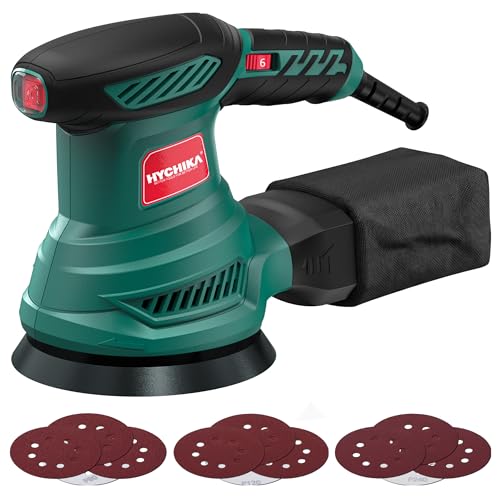
| HYCHIKA 5-Inch | Variable speed on a budget | 13000RPM, 6 variable speeds, 12 sandpapers |
| DEWALT DWE6423 | Dependable corded sanding | 5-inch, variable speed, corded electric |
| DCA 3.0 AMP | Low-vibration light finishing | 6 speeds, max 12,000 OPM, dust bag |
How to Choose
Pad size and orbit style
Five-inch pads are the standard for furniture and cabinet work because replacement discs are cheap and easy to find, and the smaller footprint lets the sander reach inside face frames and around leg joints. A six-inch pad covers more area per pass, which helps on a long tabletop or a desk, but it is less nimble in tight spots. For finish prep, a random orbit action is what you want, since it avoids the straight-line scratches that a plain orbital pattern can leave behind and that show up as soon as stain hits the wood.
Speed control and power source
Variable speed matters more for finishing than top speed does. Dropping the pad speed on the last grit reduces heat and the chance of burning through a thin veneer or a stain layer. Oak and ash with open pores tolerate more speed, while cherry and pine can scorch or blotch when the pad runs fast, so a dial that goes low is worth having. Look for a dial or trigger that lets you step down, and read the title for the number of speed settings. Corded models never run out of charge in the middle of a tabletop, while cordless sanders trade that for freedom from the cord, which is easy to drag across a fresh coat. Tool-only listings do not include a battery or charger, so factor that in.
Dust collection and abrasives
Between coats, fine dust that lands in a wet film becomes tiny bumps you can feel. A sander with a cyclonic box or a dust bag, and ideally a port that fits a shop vacuum, keeps the surface cleaner. Hook-and-loop pads are the norm, so check that the discs you own match the hole pattern. Bundled sandpaper is handy for starting out, but a decent sander paired with quality discs in 180 to 320 grit usually gives a better finish than a cheap bundle of mixed abrasives.
Weight, vibration, and where budget models cut corners
Finishing means long sessions with light pressure, so a comfortable grip and low vibration matter. Heavy sanders tire your wrist, and rough-running ones leave marks in softer woods. Budget models often skimp on bearing quality, dust seals, and pad stiffness, so the pad can wobble or wear out sooner. Titles that mention low vibration are a hint, not a guarantee, and a sanding pad worn smooth is a common source of poor results. Never press down hard; let the pad and the abrasive do the cutting. Use a dust mask and eye protection while sanding. Pressure should be only the weight of the tool, and the sander should keep moving so a single spot is never worked longer than a few seconds.
The 6 Best Options
SKIL SR211601 5-Inch Random Orbital Sander
A corded five-inch random orbital sander with a cyclonic dust box and three sanding sheets included, per the listing. It suits first-time buyers who want a straightforward sander for small furniture, shelving, and trim without a big investment.
- The cyclonic dust box is built to collect debris at the source, which helps keep a work area tidier.
- Sanding sheets are included so the tool can be put to work right out of the box, which suits a first project such as a bookshelf or a bench top.
- Trade-off: the title does not state a speed range, so check the listing if you need fine control for veneer, where heat builds up quickly.
Skip it if you want multiple speed settings on a dial or plan to run it for hours at a time in a production shop, where a more robust brand tier makes more sense.
DEWALT DCW210B 20V MAX Orbital Sander
A tool-only cordless sander in the 20V MAX family, with a brushless motor and dust collection named in the title. It is a fit for woodworkers who already own compatible batteries and chargers and want a sander that follows them around the shop without a cord.
- The brushless motor is highlighted in the title as part of the design.
- Cordless operation avoids a cord dragging over a freshly coated piece, a real concern when you are scuff-sanding between coats of varnish.
- Trade-off: tool only means the battery and charger are bought separately, so total cost depends on what you already own.
Skip it if you have no 20V batteries yet and want the cheapest way to start sanding, since a corded model avoids the extra purchase. Buyers who sand for several hours straight should also plan for a spare battery.
DEWALT DCW230B 20V MAX XR 6-Inch Random Orbital Sander
A cordless six-inch random orbital sander from the XR line, listed as a tool only. The wider pad suits builders who prep tabletops, doors, and long panels, where covering more ground per pass cuts the time between coats.
- The 6 in. pad covers more surface than a five-inch model on large flat parts.
- It uses the 20V MAX platform, so it pairs with batteries you may already own, and the XR label in the title points to the higher-spec line.
- Trade-off: a bigger pad is clumsier in tight corners and around moldings.
Skip it if your projects are mostly small boxes, chairs, and cabinet frames, where a five-inch pad reaches details more easily and replacement discs are easier to find. Also confirm that the six-inch hook-and-loop discs you want are stocked, because the choices are narrower than for five-inch pads.
HYCHIKA 5-Inch Random Orbital Sander
A corded palm sander with a 13000RPM motor, six variable speeds, twelve sandpaper sheets, and dust collection, according to the title. It targets hobbyists who want speed control and a start-up pack of abrasives at a modest tier.
- Six variable speeds give room to slow down for the final finishing grit.
- Twelve included sheets let a beginner start sanding without extra purchases, covering the first few jobs while you learn which grits you use most.
- Trade-off: it is a budget-oriented brand, so check the listing for build details on the pad and dust port.
Skip it if you plan to use it daily in a professional setting, where a well-known tool brand with service support may be a better long-term bet. Anyone who values a long track record behind the pad and the motor should compare the warranty terms first.
DEWALT DWE6423 5-Inch Variable Speed Random Orbit Sander
A corded electric five-inch random orbit sander with variable speed. It appeals to shop owners who want a plug-in tool that never runs out of charge and that can step down for light passes between coats on furniture.
- Variable speed supports a lighter touch on stain and finish layers.
- A corded power source means no battery to charge or replace, and the tool is ready whenever the shop outlet is.
- Trade-off: the cord can snag on a fresh finish or on a workbench edge, so manage it carefully.
Skip it if you want to work away from outlets or prefer a sander bundled with sheets, since the title does not mention included abrasives. You will need to buy discs separately, so budget a little extra for good 180 to 320 grit sheets.
DCA 3.0 AMP Random Orbital Sander
A corded five-inch palm sander listed in the title at 3.0 amp, with six speeds up to 12,000 OPM, ten sandpapers, a dust bag, and a low-vibration design. It suits hobbyists who finish small furniture and want a gentle sander with abrasives included.
- Six speeds and a 12,000 OPM ceiling allow a range from careful to quicker work.
- The dust bag and ten sandpapers are included for immediate use, and the low vibration claim in the title suits long sessions with a light grip.
- Trade-off: it comes from a smaller brand, so confirm warranty and parts availability on the listing.
Skip it if you want a name-brand tool with a broad accessory ecosystem or a cordless platform. Buyers who need a vacuum hose connection should read the listing closely, since the title mentions a bag rather than a hose port.
Which One Fits Your Situation
Finishing a dining table or a long desk
The DEWALT DCW230B makes sense because the six-inch pad covers a large flat top in fewer passes, and cordless operation keeps a cord off the freshly sanded surface.
Building cabinets and small furniture on a budget
The HYCHIKA 5-Inch is a sensible starter. Six speeds and twelve included sheets give a new woodworker everything needed to begin, with the variable speed helping on stained surfaces.
Already invested in 20V tools
The DEWALT DCW210B is the natural pick, since tool-only pricing works in your favor when batteries are already on the shelf.
Sanding between coats with a light touch
The DCA 3.0 AMP and the DEWALT DWE6423 both fit. The DCA bundles abrasives and a dust bag, while the DWE6423 offers a corded, variable-speed setup from a larger tool brand.
Common Mistakes
- Running the sander at top speed on the last grit, which can burn stain or cut through veneer.
- Jumping from 80 grit straight to 320 and skipping the middle steps, leaving scratches that appear under finish.
- Using worn discs because they still look intact, when the hook-and-loop backing has stopped gripping.
- Tilting the sander on its edge, which creates divots and uneven sanding patterns.
- Buying a tool-only cordless model without checking that you own a compatible battery and charger.
Related guides
- Are Kayaking Gloves Necessarytips To Warm You Up While Kayaking
- 2 Person Mylar Emergency Shelter Tube Tent With Paracord Review
- Ohgeni 20 Raised King Air Mattress With Built In Pump Review
Frequently Asked Questions
What grit should a finishing sander end on?
Most woodworkers finish at 180 to 220 grit before stain and 320 between clear coats. Always go through the grits in order, and wipe off dust between each step.
Is a five-inch or six-inch pad better for furniture?
Five-inch is the more common choice for furniture because it fits tight spots and discs are widely available. A six-inch pad helps on large tops but is less agile around details.
Do cordless sanders have enough power for finishing?
Finishing is a light-duty task, so many cordless models handle it well. Check the listing for the battery platform and whether the battery is included, then match the choice to the tools you already use.
Can a sander replace hand sanding entirely?
Not completely. Corners, profiles, and edges often still need a sanding block or hand work, so a power sander speeds up flat surfaces while hand sanding handles the details. A final light hand pass along the grain also helps hide any faint circular marks.
Related guides
More from Amazon
Programs that pair well with the guide above. Offers and eligibility are set by Amazon and may change.
A free business account with business pricing and bulk-buying tools for work, shop or home office.
Create a business accountFree shipping on eligible items, Prime Video and more. Eligible new members can start with a free trial.
Start a Prime free trialAudiobooks and podcasts to listen to on the go. Eligible new members can start with a free trial.
Try Audible freeAd-free music streaming. Eligible new subscribers can start with a free trial.
Try Music Unlimited freeAs an Amazon Associate we earn from qualifying purchases.


Write Your Review
No reviews yet. Be the first to share your experience!