What's inside
As an Amazon Associate I earn from qualifying purchases. This post may contain affiliate links at no extra cost to you.
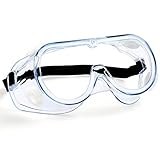
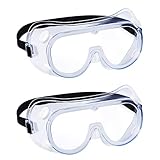
The best lab safety goggles for science students are indirect-vented, ANSI Z87.1-marked goggles with anti-fog lenses, enough splash coverage for the experiment, and a frame that fits over ordinary glasses when needed.
For most school laboratories, choose a sealed or indirect-vented model rather than open safety glasses. Safety glasses protect against many flying particles, but they leave gaps around the sides and are not the right choice for liquid splashes. If your class involves corrosives, biological materials, pressurized reactions, or cryogenic substances, follow the laboratory’s written PPE rules; goggles may need to be combined with a face shield or other protection.
As an Amazon Associate we earn from qualifying purchases at no extra cost to you.


Quick picks by student situation
| Situation | Best design | Useful target specifications | Examples to investigate |
|---|---|---|---|
| Occasional chemistry or biology labs | Indirect-vent splash goggles | ANSI Z87.1 marking, anti-fog lens, soft TPE seal, under 100 g | Uvex Stealth or comparable indirect-vent goggles |
| Students who wear prescription glasses | OTG goggles with a wide bridge and adjustable strap | At least 145 mm external width, 40 mm or more lens height, anti-fog coating | Uvex Stealth OTG or a certified OTG equivalent |
| Frequent splash-heavy work | Soft-seal, indirect-vent or non-vented chemical-splash goggles | Full facial seal, broad peripheral coverage, replaceable strap if available | 3M GoggleGear 2890 or a comparable chemical-splash model |
| Very tight student budget | Reusable basic splash goggles | ANSI marking, anti-fog coating, replaceable or washable strap | Certified models from Pyramex, Sellstrom, or similar safety suppliers |
Product names are starting points, not substitutes for checking the actual pair. Safety markings, coatings, and regional versions can change, so look for “ANSI Z87” or “ANSI Z87.1” and, where applicable, the splash or high-impact marking specified by your school or laboratory.
What matters most when comparing lab goggles
Splash coverage
Coverage is the main reason to buy goggles instead of ordinary safety glasses. A useful splash model has a continuous frame or soft seal that reaches the forehead, cheeks, and nose. Indirect vents allow limited airflow through covered channels while helping prevent liquid droplets from entering directly. Direct ventilation holes improve airflow but are less suitable for chemical splash work.
Non-vented goggles offer the strongest barrier against liquid entry, but they fog more easily. They make sense for short, high-splash procedures when the laboratory requires them. For general student use, indirect ventilation is usually the better compromise between protection and visibility.
Anti-fog performance
Fogging depends on temperature, humidity, facial fit, hair, mask use, and how much the student moves—not just on the coating. Look for a lens explicitly described as anti-fog rather than merely “clear.” A dual-lens design or a lens with an internal anti-fog treatment can help, but neither remains perfect indefinitely.
Do not wipe a fogged lens with a sleeve or paper towel. Dry rubbing can create fine scratches that scatter light and make future fogging seem worse. Rinse off dust first, then wash with mild soap or the manufacturer’s approved lens cleaner.
Ventilation versus containment
Ventilation is a trade-off. Indirect vents generally reduce heat and moisture buildup, while sealed goggles provide better splash containment. Avoid modifying vents, drilling the frame, or removing foam channels. An alteration can change the protection level and may invalidate the manufacturer’s certification.
For routine demonstrations and low-splash activities, indirect-vent goggles are generally more comfortable. For strong acids, bases, solvents, or procedures directed toward the face, use the school’s designated chemical-splash model and follow the instructor’s rules.
Prescription compatibility
OTG means “over the glasses.” These goggles need enough internal depth and width to avoid pressing against prescription frames. A nominally large exterior does not guarantee a comfortable fit: the bridge, side arms, and seal shape matter just as much.
Students with prescription glasses should try the goggles on with their normal frames before class. The seal should sit against the face rather than against the prescription lenses. If the goggles push the glasses upward, leave gaps at the cheeks, or cause the prescription frames to contact the protective lens, choose a larger OTG design or ask an optician about prescription-rated safety eyewear.
Comfort and fit
Comfort affects whether students keep the goggles correctly positioned. Prioritize:
- A wide, flexible seal that does not create sharp pressure points.
- An adjustable strap that stays flat and does not loosen during movement.
- A bridge that does not press painfully on the nose.
- Enough interior space for eyelashes and, if applicable, prescription frames.
- A viewing area that allows downward and peripheral vision without turning the head.
A light frame is useful, but weight should not override coverage. As a practical comparison, many reusable student goggles weigh roughly 70–120 g; the difference is noticeable during a long laboratory period, but a poorly sealed 70 g pair is a worse choice than a comfortable 100 g pair with reliable coverage.
Head-to-head: indirect-vent versus sealed goggles
| Feature | Indirect-vent goggles | Non-vented sealed goggles |
|---|---|---|
| Splash protection | High for ordinary laboratory splashes when properly fitted | Highest containment, subject to the model’s certification |
| Fog resistance | Usually better | Usually worse without a strong anti-fog system |
| Typical comfort | Better for longer sessions | Warmer and more humid inside |
| Cleaning difficulty | Vent channels need careful rinsing | Fewer openings, but the seal needs thorough cleaning |
| Best use | General chemistry and biology instruction | Procedures with unusually high splash or vapor concerns, when required |
Cleaning and ownership costs
Reusable goggles are economical only when they are maintained. A simple ownership calculation illustrates the difference: a $12 pair used for 24 laboratory sessions costs about $0.50 per session before replacement. If the same goggles are discarded after three sessions because the lens is scratched or the strap is contaminated, the cost rises to $4 per session.
After each use, wash the lens and seal with lukewarm water and a mild, non-abrasive detergent. Rinse completely and air-dry in a clean location. Use a soft microfiber cloth only after loose particles have been rinsed away. Do not use acetone, household glass cleaner, abrasive powder, or concentrated disinfectant unless the manufacturer specifically approves it; these can damage coatings, seals, or plastics.
Keep goggles in a clean pouch or rigid case rather than loose in a backpack with pens and laboratory tools. Replace them when the lens is deeply scratched, permanently cloudy, cracked, distorted, or no longer holds its seal. Replace a stretched, split, or chemically damaged strap as well. A removable strap is a practical advantage for shared classroom equipment.
Common buying mistakes
- Choosing fashion safety glasses: side shields do not provide the same splash coverage as goggles.
- Ignoring the certification: “protective” marketing is not enough; check the actual ANSI marking.
- Buying the cheapest sealed pair: poor anti-fog performance can lead to repeated removal during an experiment.
- Assuming OTG means universal fit: test the goggles over the exact prescription frames you wear.
- Cleaning with solvents: this can remove anti-fog coatings or weaken the lens.
- Sharing without cleaning: classroom goggles should be disinfected according to school policy and the manufacturer’s instructions.
Bottom line
For most science students, the strongest all-purpose choice is an ANSI-marked, indirect-vent splash goggle with an anti-fog lens, adjustable strap, soft seal, and easy-to-clean surfaces. Choose an OTG model if you wear glasses, and move to a sealed chemical-splash design when the experiment or instructor requires more containment. Fit and maintenance matter as much as the brand: a certified goggle that seals comfortably and stays clear is more useful than a technically impressive model that students constantly adjust or remove.
This is general product-selection information, not a substitute for your school’s risk assessment or laboratory supervisor’s instructions. For prescription requirements, unusual chemical hazards, or persistent eye discomfort, consult the relevant safety professional or optometrist.
0 Comments