What's inside
- Quick comparison of the best indoor herb garden kits
- Best picks by situation
- AeroGarden Harvest: best overall for a small kitchen
- Click & Grow Smart Garden 9: best for quiet, low-maintenance growing
- 12-pod hydroponic gardens: best value, with more variation
- How much do the herbs really cost?
- Which herbs each kit can realistically support
- Ownership details that determine whether a kit lasts
- Bottom line
- Quick comparison of the best indoor herb garden kits
- Best picks by situation
- AeroGarden Harvest: best overall for a small kitchen
- Click & Grow Smart Garden 9: best for quiet, low-maintenance growing
- 12-pod hydroponic gardens: best value, with more variation
- How much do the herbs really cost?
- Which herbs each kit can realistically support
- Ownership details that determine whether a kit lasts
- Bottom line
As an Amazon Associate I earn from qualifying purchases. This post may contain affiliate links at no extra cost to you.
The best indoor herb garden kits for most kitchens are the AeroGarden Harvest for a compact, adjustable-light setup, the Click & Grow Smart Garden 9 for low-effort growing, and a larger 12-pod hydroponic garden for households that cook with herbs several times a week.
The right choice depends less on the number of planting holes than on light coverage, refill costs, reservoir size, and whether you want to buy proprietary pods or start from ordinary seed. A countertop garden can grow useful quantities of basil, parsley, mint, chives, and cilantro, but it will not replace a full outdoor bed.
As an Amazon Associate we earn from qualifying purchases at no extra cost to you.


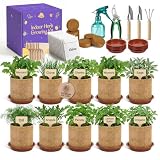

Quick comparison of the best indoor herb garden kits
| Kit or type | Growing capacity | Approximate footprint | Water capacity | Light and noise | Typical price range |
|---|---|---|---|---|---|
| AeroGarden Harvest | 6 pods | About 12 x 4.5 in base; roughly 17 in tall with light | About 2.5 L | LED bar; quiet pump, roughly 40 dB or less in normal use | $70–$130 |
| Click & Grow Smart Garden 9 | 9 pods | About 18.2 x 7.6 in; roughly 15.6 in tall | About 4 L | Full-height LED panel; no circulation pump, so nearly silent | $180–$250 |
| iDOO 12-pod hydroponic garden | 12 pods | Usually about 12 x 8 in; height varies by model | Roughly 4–5 L | LED panel and aeration pump; audible bubbling or fan noise | $80–$150 |
| Large modular garden, such as Gardyn | Dozens of plants | About 2 sq. ft. of floor space or more | Several gallons, depending on model | Large LED array; fans and pumps are more noticeable | $500–$1,000 plus supplies |
Dimensions and capacities can vary by model revision. Treat these figures as buying guides, and check the current specification sheet before ordering replacement parts or planning a tight shelf.
Best picks by situation
| Your situation | Best fit | Why | Main compromise |
|---|---|---|---|
| You want six dependable plants in little space | AeroGarden Harvest | Compact reservoir, adjustable light, simple timer, and strong support for common herbs | The pump makes some noise and proprietary pods cost more than loose seed |
| You want the quietest, easiest system | Click & Grow Smart Garden 9 | Passive watering and pre-seeded soil pods require little setup | Replacement pods are relatively expensive and the light is less flexible |
| You cook with herbs frequently and want maximum output per dollar | 12-pod hydroponic garden | More planting positions and lower purchase cost than many premium systems | Quality varies between models; pumps, fans, and plastic fittings can wear sooner |
| You need a large, managed indoor crop | Gardyn or another modular vertical garden | Much greater plant capacity and vertical use of space | High initial cost, larger footprint, and more cleaning and replacement parts |
AeroGarden Harvest: best overall for a small kitchen
The six-pod AeroGarden Harvest is a sensible middle ground. Its light bar covers a compact planting area well, and its height adjustment lets you keep the light close to seedlings before raising it as basil or mint grows. The built-in timer removes the need to remember daily light cycles.
It realistically supports six small herbs, although vigorous plants such as basil, mint, and oregano will eventually crowd one another. A practical arrangement is two basil plants, one parsley, one chive, one thyme, and one cilantro. For a longer harvest, remove weaker seedlings and prune basil frequently rather than allowing all six plants to become mature bushes.
The main ownership cost is the pod system. Pre-seeded pod packs commonly cost about $15–$25 for six, while compatible grow sponges and loose seed can reduce the per-plant cost substantially. The reservoir normally needs topping up every few days once plants are large. Expect a quiet hum and occasional pump noise rather than silence.
Click & Grow Smart Garden 9: best for quiet, low-maintenance growing
The Smart Garden 9 uses soil-filled pods and passive water delivery instead of a circulating pump. That makes it a strong choice for a bedroom, home office, or open-plan kitchen where bubbling or motor noise would be irritating. The nine-pod layout also gives plants more horizontal separation than many six-pod units.
Its pre-filled pods are convenient: insert the pod, add the cover, fill the reservoir, and let the programmed light run. The trade-off is ongoing cost. Proprietary pods are typically around $3–$5 each, depending on the pack and herb, so nine occupied positions can represent $27–$45 in planting material before shipping or accessories.
The system is best for basil, parsley, chives, thyme, dill, cilantro, and smaller leafy herbs. It is less suitable for aggressive mint or several full-size basil plants unless you prune hard. Because the light is designed around the supplied garden, it offers less flexibility for unusually tall plants than an adjustable hydroponic light bar.
12-pod hydroponic gardens: best value, with more variation
Generic 12-pod systems sold under brands such as iDOO can provide the most growing positions for a modest price. Their LED panels commonly include a blue-and-red growing mode, a white-light mode, an adjustable height column, a timer, and an aeration pump. The larger reservoir reduces refill frequency compared with three- or six-pod units.
These gardens are a good match for households that use herbs often and are willing to perform basic maintenance. Their extra space can support three or four basil plants, but do not fill every opening with fast-growing plants. A better mix is four high-use plants, four slower herbs, and four spare or lettuce positions.
The compromise is consistency. Inspect the lid fit, pump connector, light adjustment, and replacement sponge availability before buying. Some inexpensive models have fans that become louder as dust accumulates, and thin plastic light columns can loosen if moved while loaded. A replacement pump or light may be difficult to source for an obscure model.
How much do the herbs really cost?
Consider a six-pod system using a $20 pre-seeded pod pack. If four plants provide usable leaves for eight weeks, the pod cost is $20 ÷ 32 plant-weeks, or about $0.63 per plant-week. That excludes electricity, nutrients, and the garden itself.
Using loose seed changes the calculation. A $4 seed packet may contain enough seed for dozens of attempts, while six reusable growing sponges might cost $8–$15. The first planting may cost roughly $12–$20, and later plantings can be much cheaper. However, germination is less predictable, and seed choice matters: untreated, compact herb varieties perform better than sprawling cultivars.
Electricity is usually a minor part of ownership. A 20-watt light running for 14 hours daily uses about 8.4 kilowatt-hours per month. At $0.20 per kilowatt-hour, that is approximately $1.70 monthly, before adding pump or fan consumption.
Which herbs each kit can realistically support
- Easy choices: basil, chives, parsley, thyme, oregano, and compact cilantro.
- Good with frequent pruning: mint, dill, lemon balm, and multiple basil varieties.
- Usually poor choices: rosemary grown from seed, woody sage, large tomato plants, and anything that needs extensive root or canopy space.
- Planting rule: use one pod for one vigorous plant unless the manufacturer specifically supplies multiple-seed spacing.
Basil tends to outgrow countertop gardens first. Harvest the top leaves above a pair of leaf nodes, and remove flower buds promptly if you want continued leafy growth. Mint should be isolated where possible because its roots and canopy can dominate neighboring pods.
Ownership details that determine whether a kit lasts
Clean the reservoir between crops rather than simply topping it up forever. Drain the water, wipe the tank and lid, rinse the pump or aerator, and remove roots that have entered the pump area. Mineral deposits on the light support or reservoir can usually be loosened with diluted white vinegar, followed by thorough rinsing. Do not pour vinegar through a live electrical pump.
The parts most likely to need attention are pump impellers, air tubing, light fans, pod baskets, and height-adjustment joints. Keep the light dry, leave clearance around ventilation openings, and do not allow roots to form a dense mat that blocks water circulation. A slightly cloudy reservoir, algae on exposed nutrient solution, or a sour smell means the system needs cleaning rather than more fertilizer.
Before choosing, measure the complete height with the light raised, not just the base. Leave several inches above the light for heat and access. Also check whether replacement pods, sponges, nutrient solution, and a pump are available separately. A cheaper garden that cannot be repaired may cost more over two growing seasons than a better-supported compact kit.
Bottom line
Choose the AeroGarden Harvest if you want the most balanced compact system and adjustable light. Choose the Click & Grow Smart Garden 9 if quiet operation and simple pod-based setup matter more than low consumable cost. Choose a reputable 12-pod hydroponic kit if you cook with herbs frequently and accept pump noise and routine cleaning. For a household seeking dozens of plants, move to a modular vertical garden rather than expecting a countertop unit to provide that capacity.

0 Comments