RP Woodworks

  • Home
  • Reviews
  • Projects
  • Tools
  • Woodworking Techniques
  • About

Painting & Priming

Priming and painting wood for a smooth, durable painted finish.

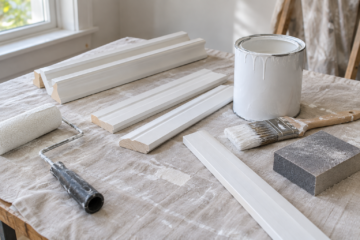
AI-generated editorial illustration of wood paint
Painting & Priming

How to Prepare Previously Painted Wood for New Paint

Good new paint starts with the old paint. If the existing coating is dirty, glossy, loose, or contaminated with grease, the new finish may peel, blister, or show every dent underneath it. Preparing previously painted wood is not difficult, but it is more than giving the surface a quick scuff. Read more
By , 1 weekSeptember 25, 2026 ago
AI-generated editorial illustration of wood paint
Painting & Priming

How to Prepare Routed Edges for Paint

Routed edges are easy to make look good and surprisingly easy to make look worse than a square edge. The cutter leaves a clean profile, but it also creates end grain, inside corners, sharp transitions, and sometimes small ridges from router chatter. Paint will highlight every one of those defects. Read more

By , 1 weekSeptember 25, 2026 ago
AI-generated editorial illustration of wood paint
Painting & Priming

How to Seal MDF Before Applying Primer

MDF has a smooth face but thirsty, porous edges. If you apply primer directly to unsealed MDF, the faces may look fine while the edges turn fuzzy, swollen, or uneven. Paint can also dry with different sheen and texture from one area to another. Sealing MDF before priming is mainly Read more

By , 1 weekSeptember 25, 2026 ago
AI-generated editorial illustration of wood paint
Painting & Priming

How to Prepare Wood Filler for a Seamless Paint Finish

A seamless paint finish starts before the paint goes on. Wood filler must be mixed to the right consistency, pressed firmly into the defect, and sanded without leaving a soft or visible patch. Poor preparation commonly shows up as sink marks, flashing, pinholes, or a different sheen around every filled Read more

By , 1 weekSeptember 25, 2026 ago
AI-generated editorial illustration of wood paint
Painting & Priming

How to Prepare MDF Edges for a Smooth Paint Finish

MDF edges are more absorbent and softer than the faces. If you paint them without sealing first, the edge drinks primer, raises fuzzy fibers, and often looks rougher after every coat. The fix is not simply more paint. A smooth result comes from hardening and filling the edge before applying Read more

By , 1 weekSeptember 25, 2026 ago
AI-generated editorial illustration of wood paint
Painting & Priming

How to Fill Nail Holes in Wood Before Painting

How to Fill Nail Holes in Wood Before Painting Small nail holes are easy to fill, but they are also easy to make visible. Paint will not hide a shallow dent, a dark shadow, or a ring of raised wood around the fastener. The best results come from treating the Read more

By , 1 weekSeptember 25, 2026 ago
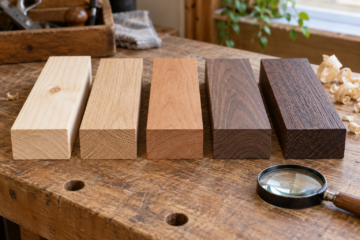
AI-generated editorial illustration: five wooden board samples showing different grain textures and colors.
Painting & Priming

How to Choose Between Hardwood and Softwood for Painted Projects

The short answer For painted projects, hardwood is not automatically better. Softwood is usually the better buy for large trim, shelving, utility furniture, and outdoor projects where low cost and easy machining matter. Hardwood earns its price when you need a harder surface, cleaner edges, better dent resistance, or a Read more

By , 1 weekSeptember 25, 2026 ago
AI-generated editorial illustration of wood paint
Painting & Priming

How to Prepare a Wood Surface for Paint Adhesion

Paint adhesion depends more on preparation than on the paint itself. Wood can look clean and still contain sanding dust, wax, silicone, resin, or mill glaze that prevents a coating from gripping. A good preparation job creates a clean, slightly keyed surface, removes anything that can bleed through, and gives Read more

By , 1 weekSeptember 25, 2026 ago
AI-generated editorial illustration of wood paint
Painting & Priming

How to Create a Distressed Painted Wood Finish

A distressed painted wood finish is meant to look worn, not neglected. The convincing version has variation: exposed edges, a few darker recesses, uneven color, and wear in places that would realistically receive handling. The process works on furniture, trim, shelving, crates, and other projects made from solid wood or Read more

By , 1 weekSeptember 25, 2026 ago
AI-generated editorial illustration of wood paint
Painting & Priming

How to Paint Over a Waxed Wood Surface

Why Wax Causes Problems Under Paint Wax is a poor paint base because it remains soft and water-repellent. Paint may appear to stick at first, then peel, fisheye, crack, or lift when the wood expands and contracts. Sanding alone usually does not solve the problem: it can flatten the surface Read more

By , 1 weekSeptember 25, 2026 ago

Posts pagination

Previous 1 2 3 4 … 14 Next
Recent Posts
  • Best Woodworking Clamps: Which Types to Buy and How Many You Need
  • Best Pocket Hole Jigs in 2026: Kreg, Massca and Milescraft Compared
  • Best Dovetail Jigs: Fixed, Multi-Template and Variable-Spacing Options Explained
  • Best Compact Wood Routers: Corded vs Cordless Picks for Edge Work and Trimming
  • How to Repair a Wood Split Caused by a Screw (Even in Thin Teak)
Recent Comments
No comments to show.
Archives
  • October 2026
  • September 2026
Categories
  • Clear Coats & Topcoats
  • Finish Problems & Fixes
  • Gift Guides
  • Grain Filling & Sealing
  • Guides
  • Oils & Waxes
  • Painting & Priming
  • Sanding & Surface Prep
  • Shop Setup & Safety
  • Staining & Dyes
  • Tool Troubleshooting
  • Tools
  • Wood Finishing
  • Wood Species & Lumber
  • Woodworking Techniques
Hestia | Developed by ThemeIsle