RP Woodworks

  • Home
  • Reviews
  • Projects
  • Tools
  • Woodworking Techniques
  • About

Finish Problems & Fixes

Diagnosing and fixing blotchy stain, cloudy or sticky finishes, bleed-through, lap marks and peeling.

AI-generated editorial illustration: brush applying a clear wood finish to a board beside an unfinished offcut.
Finish Problems & Fixes

How to Avoid Runs When Brushing Finish on Vertical Wood

Why runs happen on vertical wood A run forms when the finish stays fluid long enough to flow downhill before it sets. On a vertical door, cabinet side, or panel, gravity pulls excess finish toward the bottom edge. The risk rises when you apply a thick coat, use a slow-drying Read more
By , 1 weekSeptember 25, 2026 ago
AI-generated editorial illustration: brush applying a clear wood finish to a board beside an unfinished offcut.
Finish Problems & Fixes

How to Fix Fish Eyes in a Wood Topcoat

Fish eyes are small, round craters that appear when a wet finish pulls away from contaminated spots on a wood surface. They may look like tiny dimples, pinholes, or circular openings with a raised ring around them. The usual cause is silicone, wax, oil, polish, or another substance with lower Read more

By , 1 weekSeptember 25, 2026 ago
AI-generated editorial illustration: brush applying a clear wood finish to a board beside an unfinished offcut.
Finish Problems & Fixes

How to Prevent Dust Nibs in a Fresh Wood Coating

Dust nibs are small raised specks trapped in a wet or drying finish. They usually come from airborne dust, lint, sanding residue, or debris picked up by a brush or roller. They are frustrating because even a clean-looking board can collect particles while the coating is still tacky. The best Read more

By , 1 weekSeptember 25, 2026 ago
AI-generated editorial illustration: brush applying a clear wood finish to a board beside an unfinished offcut.
Finish Problems & Fixes

How to Remove Brush Marks from a Dried Wood Finish

Brush marks in a dried wood finish usually come from three problems: the finish was applied too thickly, the brush was dragged after the coating started to set, or the surface was not smooth enough between coats. The fix depends on whether the marks are shallow ridges, deep runs, trapped Read more

By , 1 weekSeptember 25, 2026 ago
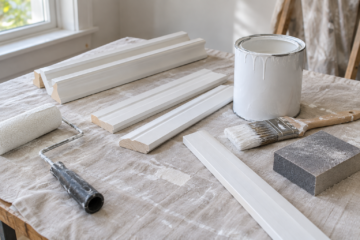
AI-generated editorial illustration of wood paint
Finish Problems & Fixes

How to Touch Up a Painted Wood Edge Without Flashing

A painted wood edge flashes when the touch-up area reflects light differently from the surrounding finish. You may see a dull patch, a shiny halo, a darker strip, or a visible edge after the paint dries. This is usually caused by uneven porosity, differences in film thickness, sanding scratches, or Read more

By , 1 weekSeptember 25, 2026 ago
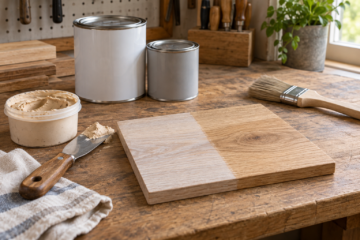
AI-generated editorial illustration of wood fillers and finishing prep
Finish Problems & Fixes

How to Create a Pickled Finish on Wood Without Excess Residue

A pickled finish gives wood a pale, weathered look by leaving white or light-colored pigment in the grain while the surrounding surface stays relatively natural. The effect works especially well on oak, ash, and other open-grained woods. The difficult part is controlling the filler: too much remains on the surface, Read more

By , 1 weekSeptember 25, 2026 ago
AI-generated editorial illustration of wood stain
Finish Problems & Fixes

How to Fix Uneven Stain Absorption on a Wood Panel

Uneven stain absorption usually comes from uneven preparation, differences in the wood itself, or both. Soft areas soak up stain quickly and turn dark, while dense grain, glue residue, sanding scratches, and end grain may stay lighter or develop blotches. The fix is rarely “add another coat.” Start by finding Read more

By , 1 weekSeptember 25, 2026 ago
AI-generated editorial illustration of wood stain
Finish Problems & Fixes

How to Prevent Lap Marks When Applying Wood Dye

Lap marks are dark or uneven bands caused by overlapping wet areas of dye. They are most common on large panels, tabletops, doors, and other surfaces where the dye begins drying before you finish the section. Unlike many pigment stains, wood dye can soak deeply and color end grain aggressively, Read more

By , 1 weekSeptember 25, 2026 ago
AI-generated editorial illustration: brush applying a clear wood finish to a board beside an unfinished offcut.
Finish Problems & Fixes

How to Darken a Wood Finish Without Stripping the Existing Coat

Darkening wood without stripping the existing finish is possible, but the new color must bond to the old surface rather than soak deeply into bare wood. That changes the process. You are adding a compatible colored layer, not applying ordinary penetrating stain to unfinished timber. The most reliable approach is Read more

By , 1 weekSeptember 25, 2026 ago
AI-generated editorial illustration of wood stain
Finish Problems & Fixes

How to Apply a Pigmented Finish Without Hiding Wood Texture

A pigmented finish adds color by leaving solid particles on and in the wood, rather than relying only on dissolved dye. That makes it easier to build a rich color, but it also makes it easy to bury the grain. The goal is controlled pigment: enough to change the wood’s Read more

By , 1 weekSeptember 25, 2026 ago

Posts pagination

Previous 1 2 3 4 … 9 Next
Recent Posts
  • Best Woodworking Clamps: Which Types to Buy and How Many You Need
  • Best Pocket Hole Jigs in 2026: Kreg, Massca and Milescraft Compared
  • Best Dovetail Jigs: Fixed, Multi-Template and Variable-Spacing Options Explained
  • Best Compact Wood Routers: Corded vs Cordless Picks for Edge Work and Trimming
  • How to Repair a Wood Split Caused by a Screw (Even in Thin Teak)
Recent Comments
No comments to show.
Archives
  • October 2026
  • September 2026
Categories
  • Clear Coats & Topcoats
  • Finish Problems & Fixes
  • Gift Guides
  • Grain Filling & Sealing
  • Guides
  • Oils & Waxes
  • Painting & Priming
  • Sanding & Surface Prep
  • Shop Setup & Safety
  • Staining & Dyes
  • Tool Troubleshooting
  • Tools
  • Wood Finishing
  • Wood Species & Lumber
  • Woodworking Techniques
Hestia | Developed by ThemeIsle