RP Woodworks

  • Home
  • Reviews
  • Projects
  • Tools
  • Woodworking Techniques
  • About

Sanding & Surface Prep

Sanding schedules, abrasives, grit choice and surface prep that decide how good a finish can look.

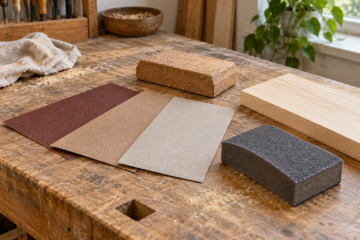
AI-generated editorial illustration of sandpaper
Sanding & Surface Prep

How to Sand Inside Routed Grooves and Recesses

Routed grooves and recesses are easy to cut and surprisingly awkward to sand. A router leaves ridges, burn marks, fuzzy end grain, and sharp transitions that a random-orbit sander cannot reach. The best approach is to match the sanding tool to the shape of the cut, remove defects in stages, Read more

By , 1 weekSeptember 25, 2026 ago
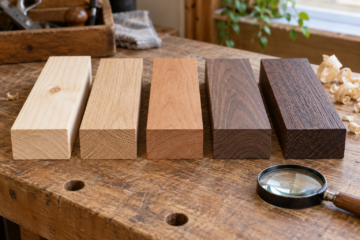
AI-generated editorial illustration: five wooden board samples showing different grain textures and colors.
Sanding & Surface Prep

How to Prevent Cross-Grain Scratches on Wood

Cross-grain scratches show up when sanding, scraping, brushing, or wiping across the wood fibers instead of following them. They are especially obvious after staining, because pigment collects in the scratches and creates dark lines that do not match the surrounding grain. The fix is mostly procedural: use the right abrasive, Read more

By , 1 weekSeptember 25, 2026 ago
AI-generated editorial illustration of sandpaper
Sanding & Surface Prep

How to Progress Through Sandpaper Grits on Softwood

Softwood is easy to sand, but it is also easy to damage. Pine, fir, spruce, cedar, and similar woods have soft earlywood that cuts quickly beside harder latewood. A coarse abrasive can leave deep scratches, while excessive sanding can make the surface uneven or close the pores enough to affect Read more

By , 1 weekSeptember 25, 2026 ago
AI-generated editorial illustration of sandpaper
Sanding & Surface Prep

How to Sand Wood Profiles Without Flattening the Detail

Profiles—bead, cove, ogee, quarter-round, and carved trim—are easy to damage because their appearance depends on small changes in shape. Sand too aggressively and a crisp shoulder becomes a soft hump. Sand across a bead and you can create flat spots that show under paint. The goal is not to make Read more

By , 1 weekSeptember 25, 2026 ago
AI-generated editorial illustration of sandpaper
Sanding & Surface Prep

How to Sand Between Coats of Oil-Based Finish

Sanding between coats of an oil-based finish is mainly about removing dust nibs, raised fibers, and minor surface defects so the next coat levels cleanly. It is not about stripping the previous coat back to bare wood. A light, even scuff is usually all that is needed. When to Sand Read more

By , 1 weekSeptember 25, 2026 ago
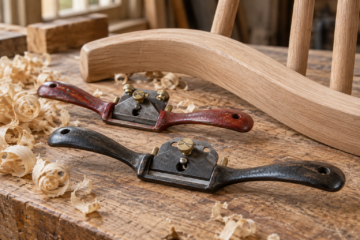
AI-generated editorial illustration of spokeshave
Sanding & Surface Prep

How to Sand Wood with a Spokeshave-Ready Surface

A spokeshave works best on wood that is straight, supported, and free of loose fibers—not necessarily wood that has been sanded to a fine finish. Sanding the wrong way can round edges, clog the grain with abrasive dust, or hide high spots that the blade needs to remove. The goal Read more

By , 1 weekSeptember 25, 2026 ago
AI-generated editorial illustration of sandpaper
Sanding & Surface Prep

How to Sand a Wood Surface Before Applying Stain

Sanding is the part of staining that determines whether the finished wood looks even or blotchy. Stain does not hide scratches, glue, dents, or uneven sanding. It highlights them. The goal is not to make the surface as smooth as glass; it is to create a clean, consistently textured surface Read more

By , 1 weekSeptember 25, 2026 ago
Editorial illustration: random orbital sander beside circular sanding discs.
Sanding & Surface Prep

How to Remove Swirl Marks from a Random Orbital Sander

Swirl marks from a random orbital sander are usually shallow, circular scratches left by a dirty abrasive disc, excessive pressure, poor dust removal, or stopping the sander while the pad is spinning. They may be hard to see on bare wood, then become obvious after stain or finish is applied. Read more

By , 1 weekSeptember 25, 2026 ago
AI-generated editorial illustration of sandpaper
Sanding & Surface Prep

How to Sand Thin Wood Stock Without Distortion

Thin wood stock is easy to ruin because sanding removes material unevenly and generates heat quickly. A sheet 1/8 inch thick can cup, bow, or develop a low spot after only a few aggressive passes. The safest approach is to support the work continuously, use light pressure, sand in controlled Read more

By , 1 weekSeptember 25, 2026 ago
AI-generated editorial illustration: five wooden board samples showing different grain textures and colors.
Sanding & Surface Prep

How to Sand End Grain Without Creating Dark Edges

Dark edges on end grain are usually caused by sanding dust and finish collecting in the pores, not by the wood suddenly changing color. End grain absorbs stain, oil, and some clear finishes much faster than face grain. It also develops a slightly rounded, over-sanded edge easily. That combination creates Read more

By , 1 weekSeptember 25, 2026 ago

Posts pagination

Previous 1 2 3 4 … 12 Next
Recent Posts
  • Best Woodworking Clamps: Which Types to Buy and How Many You Need
  • Best Pocket Hole Jigs in 2026: Kreg, Massca and Milescraft Compared
  • Best Dovetail Jigs: Fixed, Multi-Template and Variable-Spacing Options Explained
  • Best Compact Wood Routers: Corded vs Cordless Picks for Edge Work and Trimming
  • How to Repair a Wood Split Caused by a Screw (Even in Thin Teak)
Recent Comments
No comments to show.
Archives
  • October 2026
  • September 2026
Categories
  • Clear Coats & Topcoats
  • Finish Problems & Fixes
  • Gift Guides
  • Grain Filling & Sealing
  • Guides
  • Oils & Waxes
  • Painting & Priming
  • Sanding & Surface Prep
  • Shop Setup & Safety
  • Staining & Dyes
  • Tool Troubleshooting
  • Tools
  • Wood Finishing
  • Wood Species & Lumber
  • Woodworking Techniques
Hestia | Developed by ThemeIsle