RP Woodworks

  • Home
  • Reviews
  • Projects
  • Tools
  • Woodworking Techniques
  • About

Sanding & Surface Prep

Sanding schedules, abrasives, grit choice and surface prep that decide how good a finish can look.

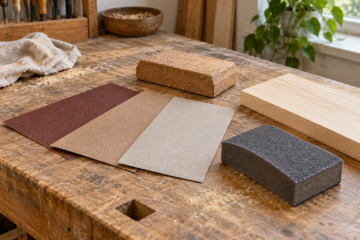
AI-generated editorial illustration of sandpaper
Sanding & Surface Prep

How to Sand Wood Edges Without Rounding Them Over

Sanding a wood edge flat is easy. Sanding it without softening the corner is harder, especially on plywood, thin boards, and parts that will be painted or stained. A few extra strokes with a flexible sanding pad can turn a crisp 90-degree edge into a visibly rounded profile. The basic Read more

By , 2 weeksSeptember 25, 2026 ago
AI-generated editorial illustration of sandpaper
Sanding & Surface Prep

How to Sand End Grain for a Consistent Stain Color

End grain absorbs stain faster than face grain because its open fibers act like tiny straws. That is why the ends of a board can turn noticeably darker, even when you sanded the whole project with the same grit. The fix is not simply “sand the end more.” You need Read more

By , 2 weeksSeptember 25, 2026 ago
AI-generated editorial illustration of sandpaper
Sanding & Surface Prep

How to Choose Between Orbital and Hand Sanding for Wood Prep

Orbital and hand sanding can both prepare wood for stain, paint, or clear finish, but they suit different jobs. A random-orbit sander removes material quickly across broad surfaces; hand sanding offers better control on edges, profiles, and spots where a powered pad could leave marks. For many projects, the best Read more

By , 2 weeksSeptember 25, 2026 ago
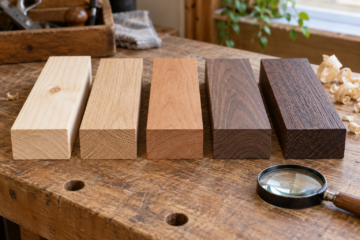
AI-generated editorial illustration: five wooden board samples showing different grain textures and colors.
Sanding & Surface Prep

How to Remove Mill Marks Before Staining a Wood Panel

Mill marks are shallow ridges, dips, and repeating cutter lines left by a planer, jointer, or saw. They may look minor on unfinished wood, but stain makes them more obvious by collecting in the low spots and darkening torn fibers. The reliable fix is not to apply more stain or Read more

By , 2 weeksSeptember 25, 2026 ago
AI-generated editorial illustration of sandpaper
Sanding & Surface Prep

How to Sand a Wide Wood Panel Evenly by Hand

Wide wood panels are difficult to sand evenly because your hands naturally press harder in some areas than others. That creates shallow dips, rounded edges, and visible sanding swirls that often appear only after stain or finish is applied. The solution is not more pressure. It is a rigid, flat Read more

By , 2 weeksSeptember 25, 2026 ago
AI-generated editorial illustration: five wooden board samples showing different grain textures and colors.
Sanding & Surface Prep

Best Wood for a Stained Coffee Table That Hides Minor Scratches

For a stained coffee table that will hide minor scratches, choose a wood with visible grain rather than an exceptionally smooth, pale species. Oak is usually the safest choice: its open grain breaks up small surface marks, it accepts common stains predictably, and replacement boards are easy to find. A Read more

By , 2 weeksSeptember 25, 2026 ago
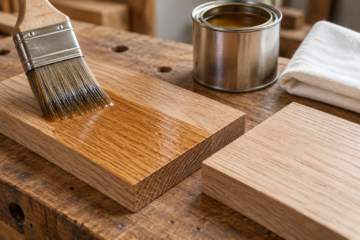
AI-generated editorial illustration: brush applying a clear wood finish to a board beside an unfinished offcut.
Sanding & Surface Prep

How to Prepare Rough-Sawn Wood for a Smooth Clear Finish

Rough-sawn boards are not ready for clear finish straight off the stack. Saw marks, torn fibers, uneven thickness, and dirt all show through a transparent coating. The goal is to create a flat, clean surface without sanding away so much wood that you lose thickness or flatten useful grain. The Read more

By , 2 weeksSeptember 25, 2026 ago
AI-generated editorial illustration of sandpaper
Sanding & Surface Prep

How to Sand Between Coats of Water-Based Polyurethane

Why sand between coats Water-based polyurethane can dry quickly, but a dry coat is not always ready for the next one. Sanding lightly knocks down dust nibs and raised grain, and gives the next coat a better mechanical grip. The goal is a smooth, dull surface—not to remove the finish Read more

By , 2 weeksSeptember 25, 2026 ago
AI-generated editorial illustration of sandpaper
Sanding & Surface Prep

How to Avoid Sanding Swirl Marks on Hardwood

Sanding swirl marks usually come from a random-orbit sander carrying grit or dust across the floor, or from moving to a finer abrasive before the previous scratches are gone. They may look harmless in ordinary light, then show up as pale arcs or cloudy patches under stain or a window. Read more

By , 2 weeksSeptember 25, 2026 ago
AI-generated editorial illustration of sandpaper
Sanding & Surface Prep

How to Sand a Wood Table Top Flat Before Applying Finish

A flat-looking tabletop can still have dips, ridges, or finish left from milling. Sanding can remove shallow defects and prepare the surface for a coating, but it cannot reliably flatten a badly warped or cupped top. The key is to check the surface before starting, use a suitable sanding method, Read more

By , 2 weeksSeptember 25, 2026 ago

Posts pagination

Previous 1 … 9 10 11 12 Next
Recent Posts
  • Best Woodworking Clamps: Which Types to Buy and How Many You Need
  • Best Pocket Hole Jigs in 2026: Kreg, Massca and Milescraft Compared
  • Best Dovetail Jigs: Fixed, Multi-Template and Variable-Spacing Options Explained
  • Best Compact Wood Routers: Corded vs Cordless Picks for Edge Work and Trimming
  • How to Repair a Wood Split Caused by a Screw (Even in Thin Teak)
Recent Comments
No comments to show.
Archives
  • October 2026
  • September 2026
Categories
  • Clear Coats & Topcoats
  • Finish Problems & Fixes
  • Gift Guides
  • Grain Filling & Sealing
  • Guides
  • Oils & Waxes
  • Painting & Priming
  • Sanding & Surface Prep
  • Shop Setup & Safety
  • Staining & Dyes
  • Tool Troubleshooting
  • Tools
  • Wood Finishing
  • Wood Species & Lumber
  • Woodworking Techniques
Hestia | Developed by ThemeIsle